
Amblyomma moreliae
Amblyomma moreliae
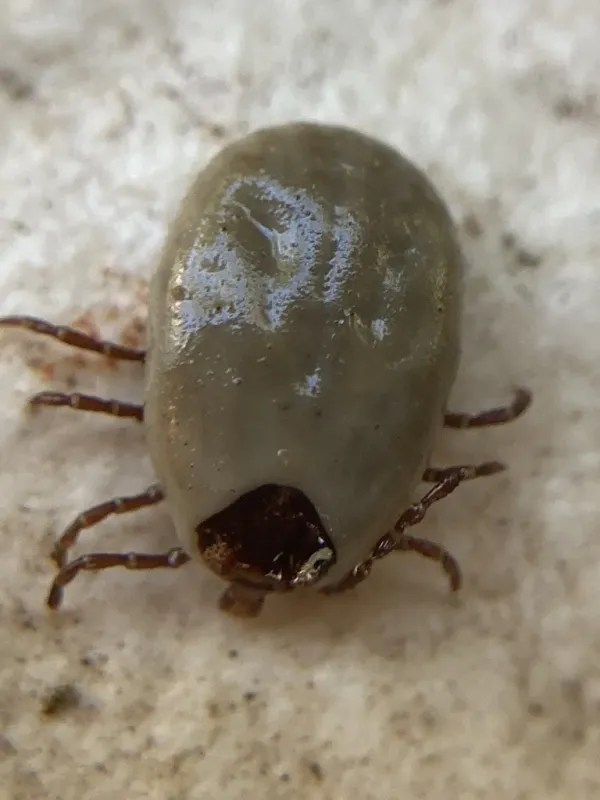
Description
How to identify
Amblyomma moreliae is a species of ixodid tick belonging to the family Ixodidae. Like other members of the Amblyomma genus, this tick is distinguished by its long hypostome, a specialized mouthpart that allows for deep attachment to the host's skin.
The morphology of this species shows distinct sexual dimorphism, where adult females are generally larger and have a patterned scutum, while males are characterized by a full, hard chitinous shield. This structure is essential for their survival during the parasitic phase of their life cycle.
Taxonomically, the species is classified under the order Parasitiformes. It has evolved to specialize in parasitizing reptiles, particularly snakes, which defines its ecological niche and geographical distribution pattern in various climates.
Identification in a controlled environment is typically performed via microscopy, focusing on the specific configuration of the genital pores and the shape of the scutum. Accurate identification is crucial for distinguishing this species from other tick populations in the same habitat.
While the tick is not a threat to plant crops, its presence in agricultural landscapes can disrupt the health of wildlife and livestock if the ecological balance is shifted, necessitating proper management and observation.
What it damages
Amblyomma moreliae is an obligate hematophagous parasite, meaning it feeds exclusively on the blood of vertebrates. Consequently, it does not cause direct physical damage to plants or agricultural crop production.
However, it poses a significant indirect threat to the livestock sector and exotic animal breeding. By attaching to animals, these ticks can weaken their hosts, cause skin irritation, and potentially act as vectors for blood-borne pathogens that might be transmitted to other animals.
In farming environments, the presence of these parasites can lead to reduced weight gain in animals, increased stress levels, and added veterinary costs for treatment and prevention. This makes them a pest of concern for animal welfare managers.
The damage caused is primarily physiological and health-related rather than agricultural. Farmers and keepers must prevent the spread of these ticks to maintain the overall productivity and health standards of their facilities.
Because these ticks thrive in specific environmental conditions, managing their populations is vital to preventing them from becoming an endemic problem within a facility or a local grazing area.
When it appears
The life cycle of Amblyomma moreliae is highly dependent on ambient temperature and humidity levels. Their activity levels generally peak during warmer, more humid periods, which coincide with the need to find new hosts for their blood meals.
Each developmental stage, from larvae to nymphs and adults, requires a host to progress. This progression is accelerated in warmer weather, potentially leading to increased population densities during the summer and autumn months.
During the winter, these ticks typically enter a state of diapause, residing in leaf litter or soil crevices to protect themselves from extreme cold. They remain inactive until conditions improve in the following spring.
Understanding these seasonal patterns is essential for effective pest management. By predicting the timing of the tick's activity, keepers can implement preventive measures before the population reaches critical levels.
In enclosed or temperature-controlled environments, such as enclosures for reptiles, seasonal cues may be absent, allowing the ticks to breed year-round, which requires constant vigilance and proactive sanitation.
Control measures
Controlling Amblyomma moreliae involves a combination of chemical acaricides and strict sanitation practices. Applying approved chemical treatments to the living environment and, if necessary, the animals themselves, is the standard method for population reduction.
Sanitation plays a major role in prevention. Removing organic debris, such as leaf litter and damp bedding from cages or grazing areas, significantly reduces the survival rate of tick larvae and nymphs by eliminating their shelter.
Quarantine protocols for any new animals introduced into a herd or collection are essential to prevent the introduction of these parasites. Inspecting new arrivals thoroughly is a key preventive step.
Integrated pest management strategies are increasingly used to minimize the reliance on chemical agents. This includes monitoring populations and employing biological controls if available, which can provide a safer alternative in sensitive environments.
- Regular inspection of animal hides
- Application of specialized acaricides
- Sanitation and removal of potential tick habitats
- Strict quarantine for incoming animals
Taxonomy
- Latin name
- Amblyomma moreliae
- Family
- Ixodidae
- EPPO code
- AMBYMO
Discussion
No discussions yet — be the first.