
Red-legged tick
Rhipicephalus evertsi
Description
How to identify
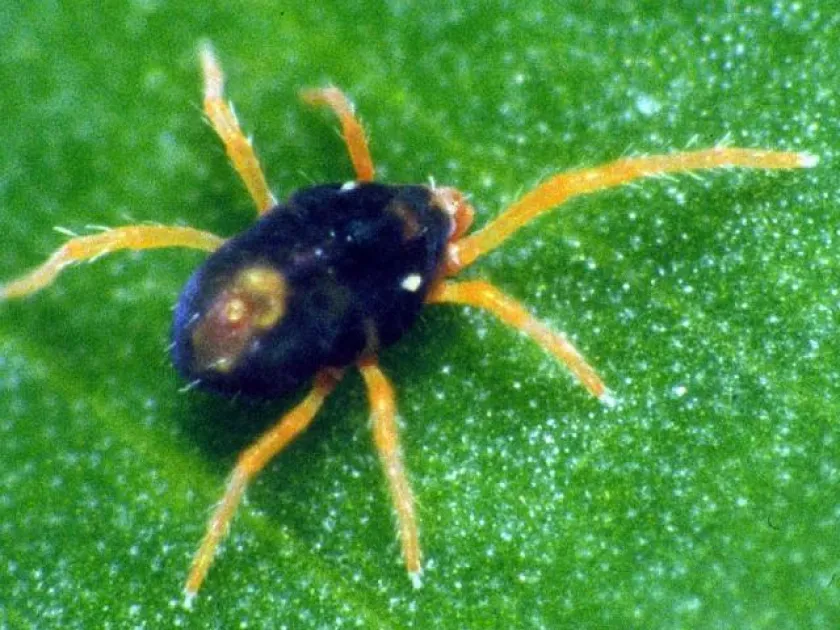
The red-legged tick (Rhipicephalus evertsi) is a species of hard tick belonging to the Ixodidae family. Its common name is derived from the distinct reddish-brown color of its legs.
Adult ticks possess a heavily punctated dorsal shield. They are robust parasites capable of surviving in various environments, particularly within tropical and subtropical regions.
They utilize specialized sensory organs, such as Haller's organ, to detect host chemical and thermal signatures from a distance, facilitating efficient questing behavior.
The mouthparts are adapted for deep penetration and secure attachment to the host's skin, allowing the tick to feed on blood for extended periods without detachment.
Identification often requires careful examination of the basis capituli and the structure of the spiracular plates, which is typically performed by professionals in veterinary labs.
What it damages
While not a pest of crops, Rhipicephalus evertsi is a significant threat to agriculture by causing extensive harm to livestock populations, including cattle, sheep, and goats.
The primary damage is caused by the extraction of large quantities of blood, which leads to anemia, reduced physical condition, and significant losses in animal productivity.
Beyond blood loss, these ticks act as vectors for severe diseases such as East Coast fever (theileriosis), babesiosis, and anaplasmosis, which can devastate livestock herds.
Attachment sites are prone to secondary bacterial infections, tissue necrosis, and skin damage, which reduces the commercial value of hides and carcasses.
Younger stages of the tick, specifically larvae and nymphs, often cluster in sensitive areas of the host, leading to localized inflammation and severe discomfort for the animal.
When it appears
This species follows a two-host life cycle. Larvae and nymphs feed on the same host, then drop off to molt in the soil, while adults seek a second host to complete their cycle.
Tick activity is highly dependent on environmental conditions, with peak infestations typically occurring during warm, humid seasons which favor survival and reproduction.
In regions with distinct rainy seasons, tick population density often surges following the onset of rains, creating a higher risk period for livestock grazing.
Adult ticks can survive for several months without a blood meal, allowing them to remain on pastures and wait for the return of suitable hosts even during leaner periods.
The developmental duration is sensitive to host availability; therefore, tick populations fluctuate based on the management of grazing cycles and livestock movement.
Signs of infestation
One of the most obvious signs of infestation is abnormal grooming behavior, as animals attempt to relieve the irritation caused by tick attachment.
Veterinarians typically inspect vulnerable areas such as the perineum, the area beneath the tail, and the inner thighs, where Rhipicephalus evertsi prefers to feed.
Animals may exhibit signs of lethargy, reduced appetite, and poor body condition, which are often overlooked until the infestation has become widespread.
- Visible clusters of ticks on the host's skin.
- Inflamed or swollen bite wounds.
- Signs of anemia, such as pale mucous membranes.
- General poor performance and weight loss in young animals.
If unexplained morbidity or mortality occurs within the herd, a thorough inspection for ectoparasites is essential to identify the underlying cause.
Control measures
Effective control relies heavily on the regular application of acaricides via dipping, spraying, or pour-on formulations to kill ticks residing on the animals.
Implementing a rotational grazing strategy can significantly reduce tick populations by starving larvae of suitable hosts during their developmental window.
Quarantine and treatment of new livestock arrivals are critical to preventing the introduction of ticks into clean herds or new geographical areas.
In some regions, integrated pest management including the use of poultry that feed on ticks or botanical repellents can supplement chemical control methods.
Consistent monitoring and timely intervention are necessary to keep tick numbers below the economic injury level and prevent the transmission of tick-borne pathogens.
Taxonomy
- Latin name
- Rhipicephalus evertsi
- Family
- Ixodidae
- EPPO code
- RHIPEV
Discussion
No discussions yet — be the first.