
Blue tick
Rhipicephalus decoloratus
Description
How to identify
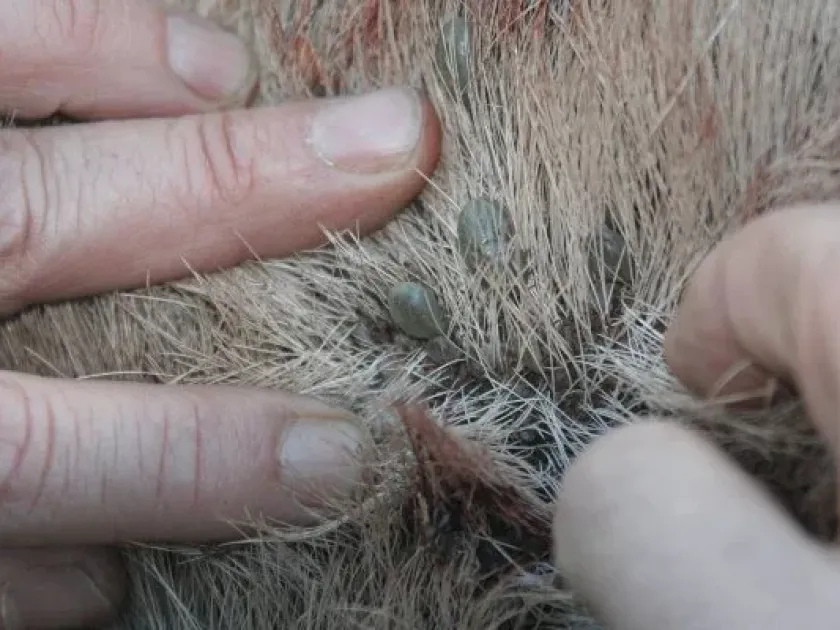
The blue tick (Rhipicephalus decoloratus) is a one-host ixodid tick belonging to the Ixodidae family. It derives its name from the characteristic blue-grey color of the females once they are fully engorged with blood.
Adults possess a moderately sclerotized scutum and developed eyes, which assist them in navigating their environment. The mouthparts are relatively short and specifically adapted for deep attachment to the animal's skin.
Males of this species are significantly smaller than females and have a darker coloration. They actively crawl across the host's body in search of females, a behavior that distinguishes this species from many other ixodid ticks.
Identification is primarily based on morphological features, including the shape of the scutum, leg structure, and the positioning of the spiracular plates. Microscopic examination is often necessary for accurate diagnosis.
It is vital to distinguish Rhipicephalus decoloratus from closely related species, as their vector capacity for pathogens varies significantly. Correct classification is essential for selecting the appropriate parasite management strategy.
What it damages
The blue tick is an obligate ectoparasite that primarily infests cattle, horses, sheep, goats, and certain wild ungulates. While it does not damage crops, it causes severe economic losses in the livestock industry.
The primary danger lies in the tick's role as a vector for pathogens causing babesiosis and anaplasmosis. These blood-borne parasitic diseases often lead to mass mortality in herds and a sharp decline in animal productivity.
During heavy infestations, animals lose significant amounts of blood, resulting in anemia, physical exhaustion, and stunted growth rates in young livestock. The tick also causes damage to the skin and reduces hide quality.
Constant skin irritation from tick bites causes severe itching and distress in animals, which negatively impacts appetite and overall weight gain. Secondary bacterial infections can often develop at the bite sites, leading to abscesses.
The total economic impact includes veterinary treatment costs, medication expenses, and losses stemming from premature culling or animal death, especially in smaller farming operations.
When it appears
The life cycle of the blue tick takes place entirely on a single host, making it a persistent threat to cattle populations. Larvae typically attack animals during warmer months.
Once attached, the larva feeds, molts into a nymph, and eventually matures into an adult. This entire process takes approximately 20 to 25 days, allowing for rapid generation turnover.
Tick activity is directly correlated with environmental temperature and humidity levels. Populations peak during the summer and early autumn when conditions are optimal for egg survival in the external environment.
Under grazing conditions, parasites spread quickly throughout the herd, as engorged females drop off the host to lay eggs directly into the soil and grass cover.
Multiple generations can develop in a single season, creating a near-continuous threat to livestock during the grazing period. Understanding these life cycle phases is critical for timing chemical interventions.
Signs of infestation
The primary sign of infestation is the presence of swellings, scabs, and blood traces on the animal’s skin, particularly in areas with thinner skin such as the udder, perineum, and groin.
Clinical inspection reveals characteristic blue or grey formations, which are engorged female ticks. They are firmly attached to the skin and are difficult to remove manually.
Animal behavior changes significantly; they become restless and constantly attempt to scratch themselves against trees or fences, frequently resulting in secondary skin trauma.
Reduced productivity, manifested as a drop in milk yield or stalled weight gain, serves as an indirect but crucial signal of a high parasitic load on the farm.
The appearance of specific disease symptoms, such as fever, jaundice of the mucous membranes, or hemoglobinuria, indicates the progression of tick-borne infections transmitted through bites.
Control measures
Effective control is based on the systematic application of acaricides, used to treat livestock throughout the grazing season to prevent tick attachment.
- Utilizing insecticidal dipping vats for herd treatment.
- Applying long-acting spot-on formulations to the animals' backs.
- Conducting regular visual inspections and manual parasite removal.
- Implementing pasture rotation to break the tick reproductive cycle.
- Vaccinating herds against specific tick-borne pathogens.
Managing tick populations on the pasture itself is also essential, including mowing tall grass where larvae often congregate before seeking a host.
An integrated pest management strategy must combine veterinary chemical treatments with agricultural practices designed to reduce the density of ticks in grazing zones.
Taxonomy
- Latin name
- Rhipicephalus decoloratus
- Family
- Ixodidae
- EPPO code
- BOOPDE
Discussion
No discussions yet — be the first.