
Brown ear tick
Rhipicephalus appendiculatus
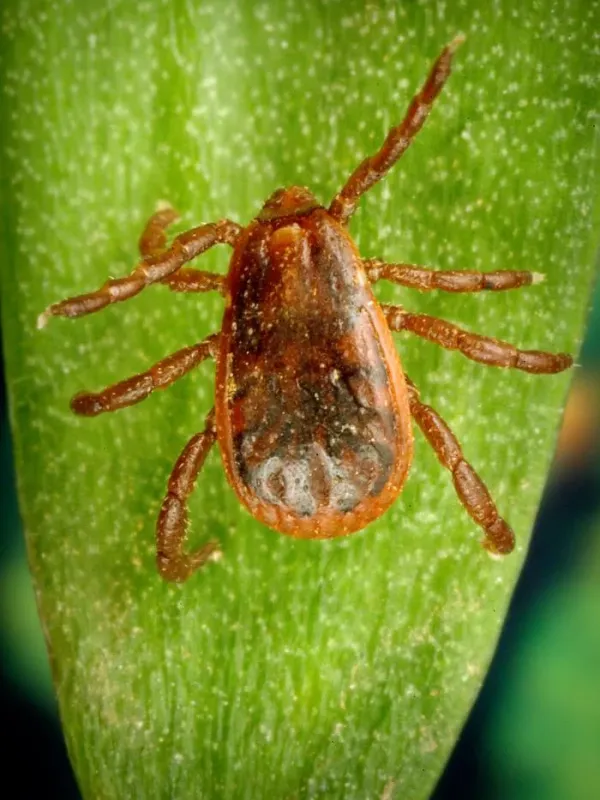
Description
How to identify
The brown ear tick belongs to the family Ixodidae and is a representative of the order Parasitiformes. It is an ectoparasite that undergoes a complex life cycle, requiring blood meals from vertebrate hosts to complete its development.
Adult specimens typically exhibit a dark brown or reddish-brown body color. Their body is flattened, equipped with a specialized mouthpart (capitulum) that allows them to anchor firmly onto the host's skin.
Males and females of this species display sexual dimorphism in terms of body size and sclerotization. After taking a blood meal, females engorge significantly, resembling the shape of a bean seed.
The tick's development cycle involves four stages: egg, six-legged larva, nymph, and adult. A new host is required for a blood meal after each molting phase.
This is a three-host tick species, meaning it attaches to three different animal individuals during its life cycle, which can last from a few months to a year depending on climatic conditions.
What it damages
The parasite primarily infests domestic and wild cattle. It may also attack sheep, goats, and certain species of wild ungulates when present in the habitat.
The primary economic damage is not just due to blood loss, but because the tick acts as a major vector for dangerous pathogens, specifically the protozoan causing East Coast fever (theileriosis).
Massive infestation leads to severe animal emaciation, reduced milk production, and decreased meat yield. In severe cases, anemia caused by heavy tick burdens can lead to the mortality of young calves.
Tick presence causes intense skin irritation, inflammation, and potential secondary bacterial infections at the bite sites. Animals often show significant distress, affecting their overall physiological well-being.
The economic burden includes veterinary treatment costs, expenditure on acaricidal products, and loss of genetic merit in livestock due to the impact of chronic tick-borne diseases.
When it appears
Tick activity is strictly governed by environmental conditions, particularly humidity and ambient temperature. Periods with moderate warmth are most favorable for their questing behavior.
In regions with distinct rainy seasons, the peak activity usually coincides with the beginning or end of the wet season. During these times, ticks climb to the tips of grass blades, waiting for passing hosts.
During dry seasons, ticks retreat into leaf litter or the upper soil layers to maintain moisture levels, often entering a diapause state until conditions become suitable for activity.
The optimal temperature range for the development of larvae and nymphs is between 20 and 28 degrees Celsius. At temperatures below 10 degrees, metabolic processes slow down, and tick activity drops significantly.
Seasonality dictates the timing of preventive herd treatments. Regular monitoring of tick density in grazing areas allows farmers to predict potential outbreaks and manage them accordingly.
Signs of infestation
The primary sign of infestation is the visual detection of adult ticks on the animal's body. They typically cluster on areas with thin skin, such as inside the ear pinnae, around the eyes, and under the tail.
Bite sites are characterized by redness, swelling, and occasionally the formation of pustules. Infested animals often shake their heads or rub against fences and trees to relieve severe itching.
Clinical signs of tick-borne diseases include high body temperature, lethargy, loss of appetite, and swollen lymph nodes in cattle.
In cases of systemic herd infestation, a decline in body condition is observed, which cannot be corrected through improved nutrition alone.
Confirmatory diagnosis often involves laboratory blood analysis to detect the presence of haemosporidia transmitted by the bites of this specific tick species.
Control measures
The primary defense strategy is the regular chemical treatment of livestock using acaricides. These are administered via sprays, dipping baths, or specialized ear tags.
- Application of insecticidal-acaricidal solutions through regular spraying.
- Use of specialized ear tags impregnated with repellent substances.
- Timely vaccination of livestock against tick-borne diseases.
- Rotation of pastures to break the life cycle of the tick.
- Clearing high grass and brush from grazing areas and near holding pens.
Adhering to a strict treatment schedule is crucial to target all tick stages present on the host. Improper application of chemicals can lead to the development of acaricide resistance within the tick population.
Integrated pest management includes strict quarantine measures when purchasing new livestock to prevent the introduction of the parasite into clean or protected herds.
Taxonomy
- Latin name
- Rhipicephalus appendiculatus
- Family
- Ixodidae
- EPPO code
- RHIPAP
Discussion
No discussions yet — be the first.