
Blue cattle tick
Rhipicephalus annulatus
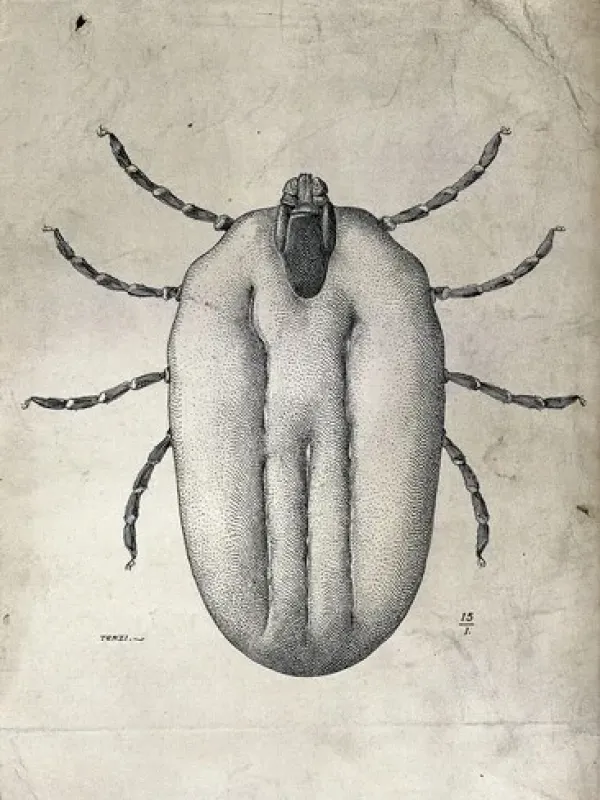
Description
How to identify
The blue cattle tick, Rhipicephalus annulatus (formerly known as Boophilus annulatus), is an important ixodid tick species. It is widely recognized as a major ectoparasite affecting cattle populations globally.
Adult ticks have a brownish-yellow appearance. Females undergo significant morphological changes after a blood meal, becoming engorged and oval-shaped. Males remain smaller, with a chitinous shield covering their dorsal side.
This species is characterized by its short mouthparts, which are adapted for firm attachment to the host's skin. Its legs are well-developed, enabling effective movement across the animal's coat to locate a suitable feeding site.
A key biological feature of R. annulatus is its one-host life cycle. The entire developmental process, from larva to adult, occurs on a single bovine host, which makes the population highly efficient in colonizing livestock.
After engorgement, the female drops to the ground and lays thousands of eggs in the soil. The success of these eggs depends heavily on environmental humidity and temperature, making warm, humid regions the primary habitat for the species.
##damage##The primary hosts for this tick are cattle. In some instances, it may also infest water buffaloes and, under specific conditions, other wild or domestic ungulates, leading to severe animal welfare issues.
Beyond the damage caused by direct blood-feeding, the blue cattle tick is a primary vector for Babesia species, the causative agents of bovine babesiosis (piroplasmosis). This disease can be fatal if not detected and treated promptly.
Tick infestation causes intense irritation, skin lesions, and secondary dermatitis. The resulting stress and anemia in the affected animals lead to significantly reduced meat and milk production, impacting farm profitability.
In addition to physiological damage, the loss of weight and body condition in growing animals leads to stunted development. The parasitic load can be so high that it renders animals lethargic and unable to thrive on pasture.
The transovarial transmission mechanism, where the female tick passes pathogens directly to its offspring, ensures that the threat remains persistent in the pasture, requiring continuous management and vigilance.
##season##Tick activity is highly seasonal, primarily beginning in the spring when temperatures rise. As the soil warms, the larvae hatch and climb onto vegetation to wait for a passing bovine host.
Summer is the period of peak infestation, especially in areas with high precipitation or irrigation. The optimal temperature ranges allow for rapid developmental cycles, meaning multiple generations can occur during a single season.
As autumn approaches and temperatures drop, the activity of the blue cattle tick decreases. In temperate zones, the tick population may go into a dormant phase or die out during the harsh winter months.
The timing of tick emergence on pastures is critical for farmers to schedule their preventative treatments. Monitoring should be intensive during the first months of the grazing season to prevent rapid build-up of the tick population.
Environmental factors, such as sudden heatwaves or droughts, significantly influence the mortality rate of larvae on the ground, which in turn affects the level of challenge to the cattle herd.
##signs##The earliest sign of a tick infestation is increased restlessness among the herd. Cattle may rub against fence posts or trees, which often leads to visible skin abrasions and hair loss in specific areas.
Visible inspection reveals clusters of ticks, particularly on areas with thinner skin such as the dewlap, udder, inside the thighs, and under the tail, where the parasite prefers to attach.
Localized inflammation is a common sign. The skin around the attachment site may appear swollen, red, and irritated. In severe cases, the wounds can become infected, leading to pus formation and localized necrosis.
If the ticks carry babesiosis, the animal will show systemic signs including high fever, depression, and loss of appetite. The mucous membranes may turn yellow due to jaundice caused by red blood cell destruction.
A dark or reddish discoloration of the urine (hemoglobinuria) is a diagnostic symptom of severe babesiosis. This indicates that the blood cells are breaking down rapidly, and the animal requires immediate emergency veterinary care.
##control##Control measures rely heavily on the application of acaricides. These can be administered via dipping vats, spray races, or pour-on formulations. Rotation of chemical classes is essential to manage the risk of tick resistance.
Pasture management is a non-chemical alternative that is highly effective. Moving cattle between pastures (rotational grazing) ensures that the larval population on the ground dies before a new host is introduced.
Land management, including the clearing of scrub and tall weeds, reduces the humidity and shade at the ground level. This makes the environment less hospitable for the survival of eggs and larvae.
Biological control methods are increasingly being studied, including the use of entomopathogenic fungi, though these are often supplemental to traditional chemical treatments in large-scale operations.
- Strict quarantine protocols for all new cattle entering the herd.
- Routine, systematic physical examinations of all animals during the grazing season.
- Proper disposal of manure and maintenance of stable hygiene to limit local tick breeding sites.
Taxonomy
- Latin name
- Rhipicephalus annulatus
- Family
- Ixodidae
- EPPO code
- BOOPAN
Discussion
No discussions yet — be the first.