
Ranatra
Ranatra
Description
How to identify
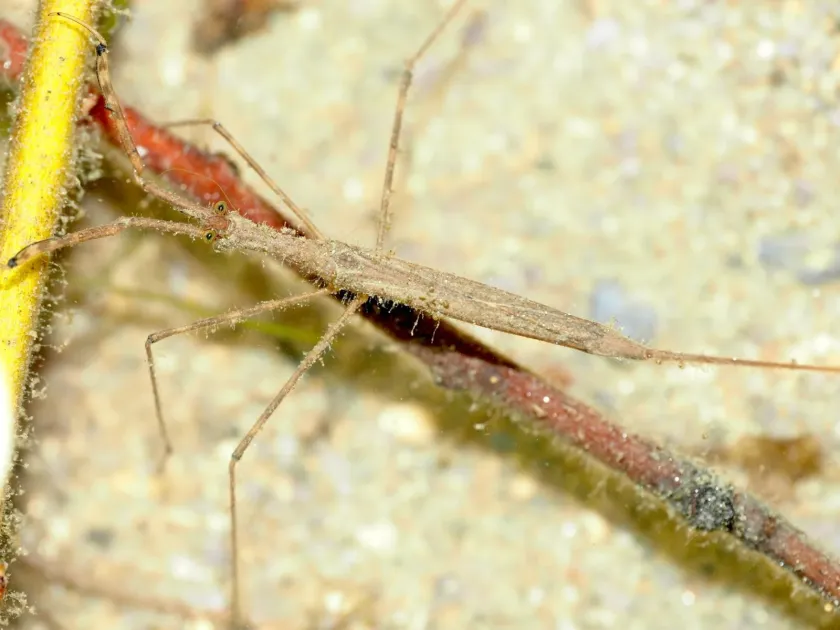
Ranatra is a genus of aquatic insects in the family Nepidae, commonly known as water stick insects or water scorpions. They are characterized by their slender, elongated body structure.
The insect possesses a long breathing tube (siphon) at the tip of the abdomen, allowing it to take in air from the surface while submerged.
The front legs are modified into raptorial appendages that function similarly to claws, enabling the insect to grasp and hold onto prey effectively.
Their coloration is typically brown or tan, providing excellent camouflage against aquatic vegetation, twigs, and debris on the pond bottom.
Ranatra species are capable fliers, which facilitates their movement between different bodies of water in search of resources or during the seasonal migration.
What it damages
Ranatra is not a plant pest; it does not feed on crops, vegetables, or any terrestrial agricultural plants, making it harmless to gardens and fields.
The insect is a strictly carnivorous predator that feeds on aquatic invertebrates, mosquito larvae, tadpoles, and small fish fry.
The only agricultural context where Ranatra might be considered a nuisance is in fish farming, specifically in hatcheries, due to its predatory nature.
It plays a significant role in aquatic ecosystems by helping to keep populations of certain aquatic insects and mosquito larvae in check.
No damage to crops, roots, or fruit is ever associated with this insect, as its mouthparts are designed exclusively for piercing prey and sucking fluids.
When it appears
Ranatra becomes active in the spring when water temperatures rise sufficiently to allow for normal physiological activity and metabolism.
Mating and egg-laying usually occur during the late spring and early summer, when females insert their eggs into the tissues of submerged plants.
Larval development takes place throughout the summer months, with nymphs passing through several instars while hunting actively in warm water.
By late autumn, adults prepare for winter dormancy, typically settling into the mud or detritus at the bottom of the pond or along the banks.
The life cycle is tightly regulated by seasonal temperatures, and the insects remain relatively dormant during the colder winter months.
Signs of infestation
Detection is best achieved by inspecting the shallow edges of stagnant water bodies where the insect hangs motionlessly among vegetation.
Look for a long, stick-like silhouette that remains stationary until a smaller prey item drifts within reach of its raptorial front legs.
The presence of empty exoskeletons or signs of high predation on mosquito larvae can indicate a healthy and active population of these insects.
They are difficult to see due to their effective mimicry, often requiring careful observation of the shoreline and floating plant debris.
If handled, a Ranatra might exhibit "death-feigning" behavior, becoming rigid and still to avoid detection by potential predators.
Control measures
Since Ranatra is not an agricultural pest, there is no need for chemical intervention, pesticides, or other control methods in farming or gardening.
In aquaculture, if the predator population becomes problematic for young fish fry, manual removal of submerged vegetation is the primary recommendation.
Maintaining clear water and removing excess organic waste or decaying plants can help reduce the suitability of a pond for egg-laying.
Biological control through existing aquatic predators such as fish and birds is usually sufficient to maintain the population at a natural balance.
No specific management plan is required for this insect in any standard farming practice as it provides ecological benefits rather than agricultural losses.
Taxonomy
- Latin name
- Ranatra
- Order
- Hemiptera (bugs, aphids, leafhoppers)
- Family
- Nepidae
- EPPO code
- RANASP
Discussion
No discussions yet — be the first.