
Water scorpion
Nepa rubra
Description
How to identify
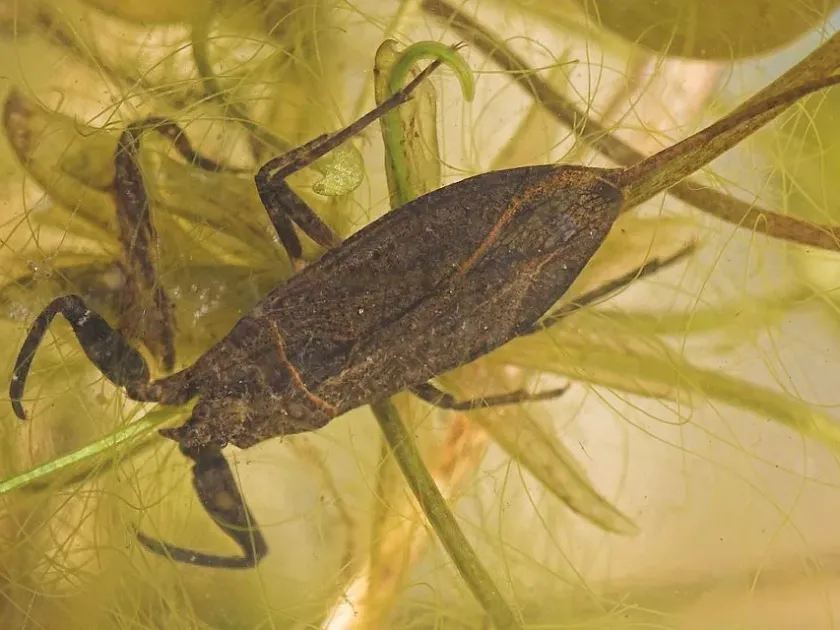
The water scorpion (Nepa rubra) is a large aquatic insect belonging to the family Nepidae within the order Hemiptera. Its common name is derived from its superficial resemblance to a terrestrial scorpion, featuring raptorial front legs and a long posterior breathing tube.
The body is flattened and oval-shaped, typically brown in color, which provides excellent camouflage against mud and submerged debris. Adults usually measure between 18 and 22 mm, excluding the breathing siphon.
The forelegs are modified into powerful, claw-like appendages used to grasp and hold prey securely. Despite possessing wings, water scorpions are poor flyers and prefer to spend their lives crawling along the bottom of the pond.
Respiration occurs through a pair of long abdominal appendages that form a tube. By extending the tip of this tube above the water surface, the insect can breathe while remaining submerged in wait for prey.
These insects inhabit stagnant or slow-moving water bodies, including ponds, marshes, and ditches. They are ambush predators that rely on their cryptic coloration to remain unseen by both their prey and potential enemies.
What it damages
While not a traditional agricultural pest for crops, the water scorpion is considered a nuisance in aquaculture and ornamental fish ponds. They are notorious for feeding on small fish fry, larvae, and other small aquatic animals.
In fish hatcheries, high populations of water scorpions can lead to significant economic losses by decimating young fish stocks. Their ability to catch and immobilize prey quickly makes them efficient predators in shallow water.
Besides fish, they prey upon tadpoles and various aquatic invertebrates, which can disrupt the balance of small pond ecosystems. They are known to be opportunistic and will consume whatever small animal life comes within their reach.
Though they primarily feed on animals, they can occasionally damage tender water plants when they bore into stems to deposit their eggs. This physical damage can sometimes cause localized wilting or tissue necrosis in aquatic vegetation.
Management is generally recommended only in confined environments like breeding ponds, where the loss of fry must be minimized for the economic viability of the aquatic operation.
When it appears
Water scorpions emerge from their winter dormancy as the water temperatures rise during the spring. This is the period when adults start hunting actively in the littoral zones of ponds.
The breeding season typically occurs in late spring and early summer. Females insert their eggs into the stems of submerged or emergent aquatic plants, providing a protected environment for the developing embryos.
Nymphs hatch and go through five developmental stages throughout the summer. They look like smaller, wingless versions of the adults and continue to hunt and grow as the water remains warm.
As autumn approaches and temperatures drop, the insects slow down their metabolism. They move towards the bottom of the pond, burying themselves in mud or dense vegetation to undergo hibernation through the winter months.
The life cycle is highly dependent on temperature, and in warmer regions, the period of activity is longer, potentially allowing for more successful breeding cycles compared to cooler climates.
Signs of infestation
A primary indicator of a water scorpion infestation is a sudden and unexplained decline in fish fry populations within a pond. Empty exoskeletons or remnants of prey may sometimes be found near the bottom.
Visual observation in shallow areas can reveal the insects hanging from aquatic plants, with their breathing tubes protruding slightly above the water surface to facilitate gas exchange.
During routine cleaning or netting operations, one may find adult water scorpions clinging to the mesh of the net, often with their raptorial legs firmly locked onto the fabric.
Signs of oviposition, appearing as small punctures or scars on the stems of water lilies, reeds, or cattails, indicate the presence of females and the likely development of a new generation.
Disturbance of the bottom substrate in shallow ponds might cause the insects to emerge from their hiding spots, as they are easily startled by sudden movements in the water column.
Control measures
Mechanical control is the most effective method, starting with the reduction of dense aquatic vegetation. Clearing reeds and cattails deprives the insects of hiding spots and egg-laying sites.
Regular maintenance of pond bottoms, including the removal of excess silt and decaying leaf litter, eliminates the overwintering habitats that allow the population to persist.
In small or ornamental ponds, intensive netting during the spring months can significantly reduce the number of breeding adults, effectively limiting the population growth for the season.
Chemical control via insecticides is strongly discouraged, as these substances are usually non-selective and will kill fish and other beneficial pond inhabitants, leading to ecological collapse.
Encouraging natural predators, such as larger fish or specific types of water birds, can help maintain an ecological balance where the water scorpion population remains at manageable, non-harmful levels.
Taxonomy
- Latin name
- Nepa rubra
- Order
- Hemiptera (bugs, aphids, leafhoppers)
- Family
- Nepidae
- EPPO code
- NEPXRU
Discussion
No discussions yet — be the first.