
Water scorpion
Nepa cinerea
Description
How to identify
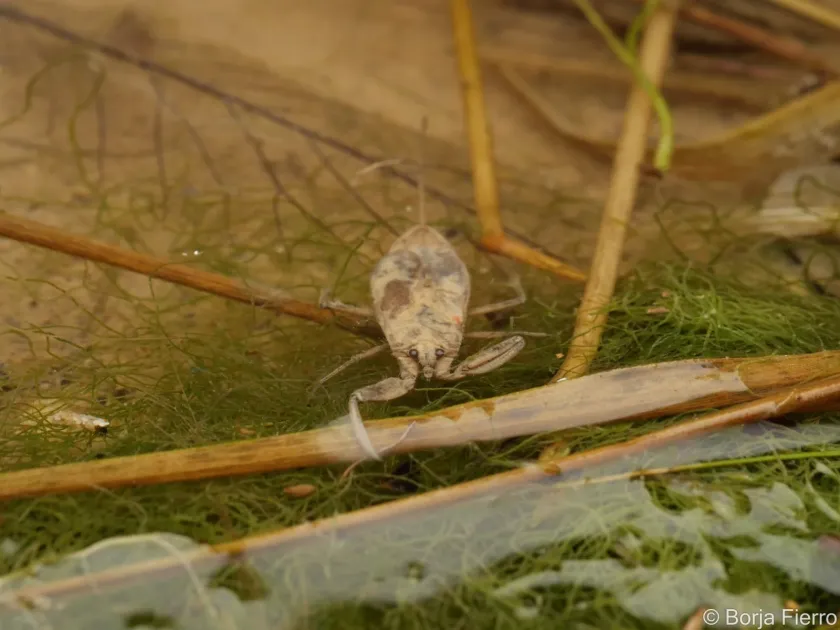
The water scorpion (Nepa cinerea) is an aquatic insect belonging to the family Nepidae. It is characterized by a flattened, oval-shaped body that mimics dead leaves, allowing it to remain well-hidden in muddy substrates.
Its most distinctive feature is the pair of raptorial front legs, which look like scorpion claws and are specifically adapted for capturing prey. Additionally, the insect possesses a long, tube-like structure at the end of its abdomen used for breathing air at the water's surface.
Adults reach a body length of approximately 20–22 mm. Despite having wings, they rarely engage in flight and prefer to stay within the water, moving slowly through the vegetation.
The life cycle involves an incomplete metamorphosis, consisting of the egg, nymph, and adult stages. Females lay their eggs within aquatic plant stems, which provides protection from predators and environmental instability.
These insects are ambush predators that rely on camouflage and stillness to catch victims. They are typically found in shallow, stagnant, or slow-moving waters where vegetation is dense.
What it damages
The water scorpion is considered a significant pest in aquaculture, particularly in nursery ponds dedicated to rearing fish fry. It poses a direct threat to the survival of young fish by acting as a voracious predator.
Once the front legs grasp a victim, the insect pierces the prey's skin and injects digestive enzymes that liquify the internal tissues, which are then consumed. This feeding strategy is highly effective against small, vulnerable fry.
Large populations of water scorpions can significantly reduce the yield of fish hatcheries, causing substantial economic losses by decimating the fish population during their most sensitive developmental stages.
Besides targeting fish, they compete for food resources with other aquatic organisms and can prey upon the eggs of various fish species, further disrupting the ecological balance of the pond.
The damage is most severe during the spring and early summer months, coinciding with the period when fish fry are most abundant and vulnerable in the nursery ponds.
When it appears
Activity begins in early spring, as temperatures rise and the insects emerge from their winter dormancy to mate. This is when the population starts to disperse and colonize suitable areas of the pond.
The summer months are characterized by peak metabolic activity and rapid development of nymphs. During this time, they feed aggressively to store energy for the subsequent molting stages and eventual wintering.
As water temperatures begin to drop in late autumn, the water scorpions decrease their hunting activity. They search for optimal locations in the pond to settle for the winter season.
Wintering occurs in the deep parts of the pond, usually within the mud or among submerged debris. They remain in a state of hibernation until the following spring thaw allows for renewed activity.
The population dynamics follow a strict seasonal pattern, with one generation per year being standard for this species in temperate climates.
Control measures
Effective management begins with proper pond maintenance, including regular dredging to remove deep silt and organic debris that provide wintering habitats for the bugs.
Reducing the density of submerged and emergent aquatic vegetation is crucial, as this limits the number of ambush sites and egg-laying locations available to the water scorpion.
Biological control methods include the introduction of predatory fish species that feed on water scorpions, helping to keep their population numbers in check naturally without the need for chemical intervention.
Winter drainage of ponds is a highly effective cultural control method, as freezing the pond floor eliminates populations that hibernate in the sediment.
Regular monitoring of fry ponds, particularly during the early stages of fish development, is essential to detect outbreaks and implement manual control measures like netting if the infestation levels become critical.
Taxonomy
- Latin name
- Nepa cinerea
- Order
- Hemiptera (bugs, aphids, leafhoppers)
- Family
- Nepidae
- EPPO code
- NEPXCI
Discussion
No discussions yet — be the first.