
Water scorpion
Nepa
Description
How to identify
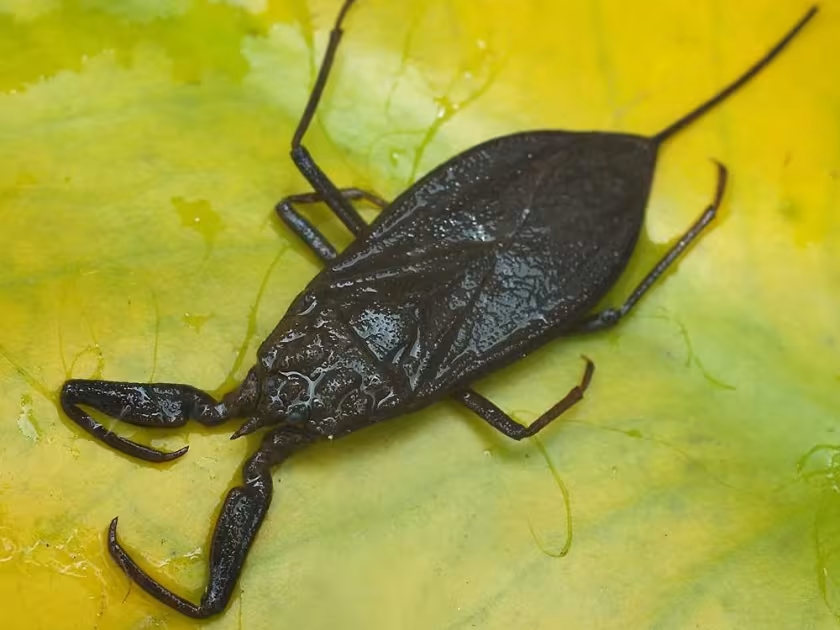
The water scorpion (Nepa cinerea) is an aquatic insect belonging to the order Hemiptera and the family Nepidae. Despite its name and appearance, it is not a true scorpion but a predatory water bug.
Its body is flat and elliptical, brownish in color, which provides excellent camouflage among decaying vegetation at the bottom of stagnant or slow-moving water bodies.
The most distinctive feature is the long breathing tube at the end of the abdomen. This tube allows the insect to breathe atmospheric oxygen while keeping its head submerged in search of prey.
The forelegs are modified into raptorial appendages that snap shut like a trap, allowing the water scorpion to seize and hold its victims securely.
Adults reach a length of approximately 20 mm. Although they possess wings, they are poor flyers and are rarely seen in flight, usually remaining within the water habitat throughout their life cycle.
What it damages
The water scorpion is not considered an agricultural pest. It does not feed on any agricultural crops, horticultural plants, or vegetation, and therefore causes zero economic damage to farmers.
As a specialized predator, its role is restricted to aquatic environments where it hunts smaller aquatic insects, crustaceans, and occasionally small tadpoles or fish fry.
In aquaculture or private fish ponds, it may be considered a nuisance because it competes with or preys upon young fish, potentially affecting the growth of fry.
The insect possesses a piercing-sucking mouthpart, which is strictly adapted for consuming liquid food from animal prey, making it incapable of injuring plant tissues.
Due to its specialized diet and habitat, it does not pose a threat to field, greenhouse, or garden cultivation, and it does not require any pest management interventions in an agricultural setting.
Control measures
There are no chemical or biological control programs for the water scorpion in agriculture because it is not recognized as a plant pest.
If management is required for fish ponds, physical control measures such as removing excess aquatic vegetation and dredging the pond bottom can reduce their hiding spots.
Chemical control is strongly advised against, as any pesticides applied to water bodies will cause significant environmental damage to non-target aquatic organisms.
Maintaining a balanced ecosystem with healthy populations of fish, frogs, and birds is the most effective way to regulate the population naturally.
Monitoring the health of aquatic environments is generally sufficient; there is no need to implement specific protective measures against this insect in the agricultural context.
Taxonomy
- Latin name
- Nepa
- Order
- Hemiptera (bugs, aphids, leafhoppers)
- Family
- Nepidae
- EPPO code
- NEPXSP
Discussion
No discussions yet — be the first.