
Pterostichus vernalis
Pterostichus vernalis
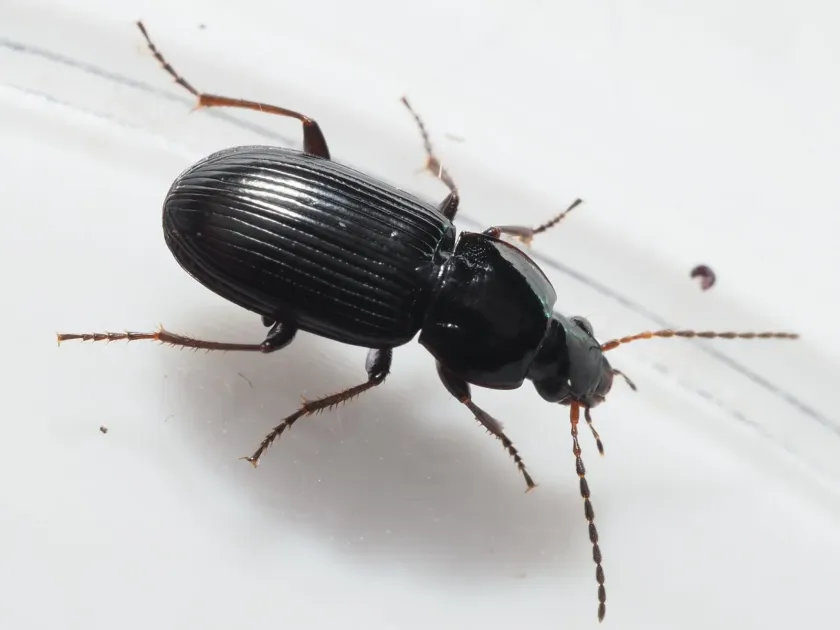
Description
How to identify
Pterostichus vernalis is a species of ground beetle belonging to the family Carabidae within the order Coleoptera. These beetles are typically small, with a dark, often metallic or black appearance and elongated bodies adapted for burrowing.
The species is primarily nocturnal, remaining hidden under soil debris, stones, or inside soil cracks during the daylight hours to avoid desiccation and predators. Their flattened morphology allows for efficient movement within soil layers.
The life cycle is closely linked to soil moisture levels, which are critical for the development of both the larval and pupal stages within the substrate. Adult beetles emerge early in the spring season.
While many ground beetles are beneficial predators, some species of the genus Pterostichus can exhibit phytophagous behavior, causing damage to agricultural seedlings under specific conditions.
Identification is often based on the adult beetle's specific morphological features and their presence in high numbers in the surface layers of agricultural fields shortly after the spring thaw.
What it damages
The primary economic damage caused by Pterostichus vernalis involves the consumption of sprouting seeds and young seedlings. Larvae and adults can bite through the germinating embryos, often killing the plant before it emerges.
Agricultural crops most susceptible to damage include cereals such as wheat, barley, and rye, especially when planting conditions lead to slow germination rates. Vegetables directly seeded in open fields are also at risk.
Damage often manifests as reduced crop emergence density. The beetles feed on stems and cotyledons, causing mechanical injuries that lead to plant stunting, wilting, or complete plant loss.
These feeding activities can predispose crops to secondary infections, such as root rot or fungal pathogens, by creating entry points in the sensitive plant tissues.
In cases of severe infestation, the cumulative impact on the crop stand can be significant enough to necessitate the reseeding of large portions of the field, leading to financial losses.
When it appears
Activity of the adult beetles begins in early spring, synchronized with the warming of the soil and the start of the planting season for spring crops. This period coincides with their emergence from winter diapause.
The peak risk period for crops occurs during the initial germination phase. Once the seedlings have reached a more advanced growth stage, they become less attractive to the beetles.
During the summer months, adult activity shifts towards reproduction. Eggs are laid in moist soil, where the next generation develops through the season, typically maintaining a univoltine cycle.
Autumn brings about a reduction in surface activity as the beetles seek deeper soil layers or sheltered areas to overwinter, effectively ending the season of primary crop damage.
The timing of the appearance of these beetles is highly dependent on local climatic conditions, with wetter and colder springs typically extending the duration of potential risk for young crops.
Signs of infestation
The first indicator of an infestation is the appearance of irregular gaps in the crop rows where seedlings have failed to emerge or have been severely stunted by pest activity.
Close inspection of the soil around affected areas usually reveals damaged remnants of seedlings, characterized by jagged edges on leaves or completely severed hypocotyls near the soil line.
- Missing seeds or consumed seed hulls upon digging into the soil.
- Presence of beetles or larvae under leaf litter or debris near damaged patches.
- Evidence of localized wilting of young seedlings due to root zone or stem damage.
Infestations typically occur in patches, often related to areas of the field with higher soil moisture or proximity to grassy borders where the beetle population can persist.
Diagnostic efforts should include night scouting or the use of pitfall traps to confirm the presence and density of the beetles, as their secretive nature makes them hard to see during the day.
Control measures
Effective management begins with sound agricultural practices, such as deep tillage, which disturbs the soil environment and disrupts the overwintering and development sites of the beetles.
Implementing a diverse crop rotation is essential, as it prevents the buildup of the pest population by removing the consistent food source required for successful reproduction.
Seed treatments using systemic insecticides are the most reliable method for protecting germinating crops, providing a chemical barrier that deters feeding during the most vulnerable stage of plant growth.
Field sanitation, including the removal of crop residues and control of weeds along field margins, significantly reduces the habitats available for the beetles to survive between seasons.
When the economic threshold for pest density is reached, localized application of insecticides may be necessary to suppress the population and prevent widespread damage to the seedling stand.
Taxonomy
- Latin name
- Pterostichus vernalis
- Order
- Coleoptera (beetles)
- Family
- Carabidae
- EPPO code
- PTESVN
Discussion
No discussions yet — be the first.