
Pterostichus strenuus
Pterostichus strenuus
Description
How to identify
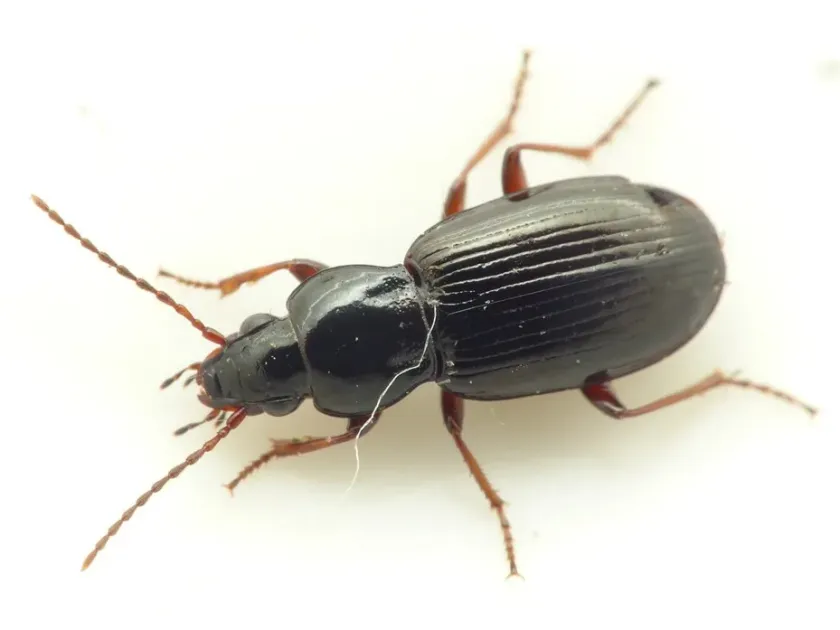
Pterostichus strenuus is a species of ground beetle belonging to the Carabidae family, order Coleoptera. These beetles are relatively small, usually measuring between 6 to 8 mm in length.
Their bodies are typically dark brown or black with a subtle metallic sheen. The shape is elongated and slightly flattened, allowing them to move efficiently through soil crevices.
They prefer moist habitats and are commonly found in fields, meadows, and along the edges of water bodies, often hiding under debris or soil clumps.
Although carabid beetles are generally considered predators, this species can act as an occasional agricultural pest when natural food sources are scarce.
They possess strong mandibles, which are functional both for capturing small soil invertebrates and for feeding on seeds and young plant tissues.
What it damages
The primary agricultural damage occurs during the spring planting season for grain crops, including wheat, barley, and rye, when seeds are most vulnerable.
Adult beetles can consume the germ of the germinating seeds, leading to a significant reduction in stand density and germination rate in affected areas.
They are also known to graze on newly emerged seedlings, effectively cutting the shoots at the soil level and causing plant death.
Damage is typically more severe in waterlogged or high-moisture soil conditions where the beetle's activity is significantly enhanced.
In cases of high population density, these beetles can cause patchy field establishment, which may require remedial re-seeding measures.
When it appears
Adult beetles become active in early spring as soil temperatures rise, following their winter dormancy period in the soil.
The most critical window for crop damage is during April and May, coinciding with the germination phase of most spring-sown cereals.
During the summer months, beetles often move deeper into the soil profile to avoid high temperatures and desiccation, reducing their surface activity.
A second, minor peak of activity may occur in the autumn before they settle into overwintering sites for the cold months.
The lifecycle follows complete metamorphosis, including egg, larval, pupal, and adult stages, with larvae also residing in the soil.
Signs of infestation
The most visible indicator of an infestation is the appearance of gaps or thinning patches in the crop rows shortly after emergence.
Excavating the soil around these damaged areas often reveals the presence of adult beetles or their larvae near the plant roots.
Seeds that have failed to germinate often show mechanical damage, characterized by irregular bites or hollowing out of the grain.
Damage tends to be localized, frequently concentrated in lower-lying areas of the field where moisture levels are higher.
The use of pitfall traps in fields during the early season is an effective way to confirm the presence and density of these beetles.
Control measures
The most effective management strategy is the application of systemic insecticidal seed treatments prior to planting.
Proper crop rotation helps disrupt the beetle's lifecycle and prevents the build-up of local populations in specific fields.
Optimal planting depth and ensuring good seed-to-soil contact can help seedlings establish faster, reducing the window of susceptibility.
Managing weeds and crop residues helps remove alternative food sources and overwintering habitats for the beetles.
In cases of extremely high pest pressure, soil-applied granular insecticides during the planting process can be utilized as a final control measure.
Taxonomy
- Latin name
- Pterostichus strenuus
- Order
- Coleoptera (beetles)
- Family
- Carabidae
- EPPO code
- PTESST
Discussion
No discussions yet — be the first.