
Pterostichus quadrifoveolatus
Pterostichus quadrifoveolatus
Description
How to identify
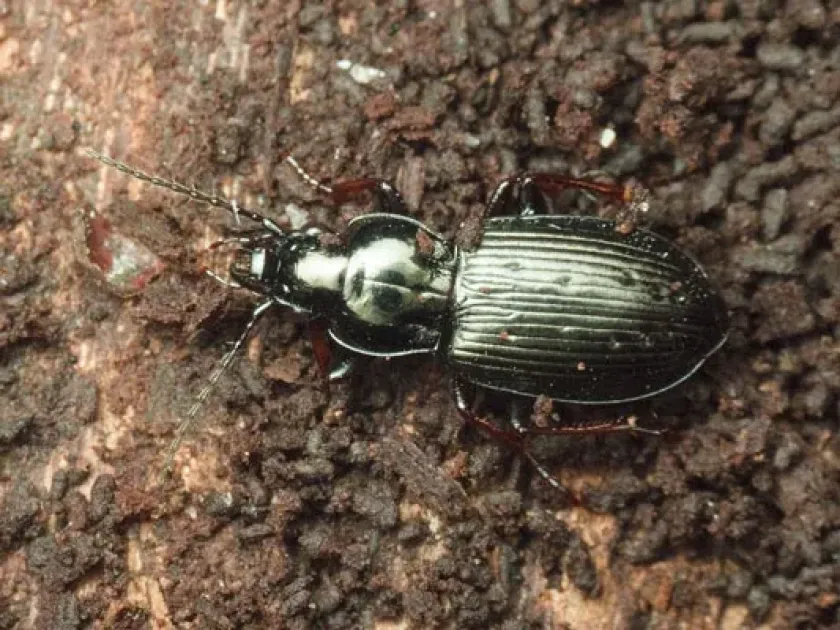
Pterostichus quadrifoveolatus is a member of the Carabidae family, commonly known as ground beetles. The adult beetle is characterized by an elongated, dark-colored body that allows it to blend into soil environments and organic debris.
The specific name of this insect comes from the four distinct depressions located on its pronotum, which serve as a key morphological feature for identification. Its surface is typically smooth, often exhibiting a matte or slightly metallic sheen.
As ground dwellers, these beetles possess strong, well-developed legs designed for rapid movement across the soil surface. They are primarily nocturnal, spending the daylight hours in deep soil cracks or hidden under stones and foliage.
The biological development of this species is heavily dependent on soil moisture levels. They thrive in environments where the soil remains sufficiently damp, which is critical for successful egg-laying and larval survival during the early stages of development.
The larvae are campodeiform and highly mobile, featuring powerful mouthparts that allow them to hunt for small invertebrates or feed on plant tissues. They spend their entire larval stage in the top layers of the soil profile.
What it damages
This beetle is primarily known for causing damage to cereal crops, including winter and spring wheat, rye, and barley. The most severe impact occurs during the germination and seedling phases when the insects feed on underground parts of the plants.
Feeding by adults and larvae involves severing the young stems or roots, which leads to sudden wilting and death of the plant. This damage creates patches of missing crops in the field, often necessitating costly replanting efforts.
Besides cereals, the pest can affect perennial grasses and certain row crops, especially in areas adjacent to forests or high-humidity zones. High levels of post-harvest residue on fields significantly increase the likelihood of infestation.
During massive population outbreaks, the beetles may attack the spikes of cereals at the milk-ripe stage. By eating the grain inside, they directly reduce the yield quality and quantity, causing localized but significant losses.
While many ground beetles are beneficial predators, Pterostichus quadrifoveolatus can shift its diet to crops when natural prey populations are insufficient. This opportunistic feeding behavior makes them a notable risk factor in intensive farming.
When it appears
The activity cycle of Pterostichus quadrifoveolatus begins in early spring as soon as the soil warms up after the winter season. Overwintering adults emerge from their dormant state to seek food and mating opportunities.
The peak of population density and reproduction occurs from late spring through early summer. During this time, eggs are laid in the soil, and larvae develop throughout the warm months, preparing for pupation toward the end of summer.
A new generation of adults typically emerges by late summer or early autumn. These beetles spend the remaining warm weeks preparing for wintering by building up energy reserves and seeking suitable subterranean shelter.
Wintering takes place deep in the soil, usually at depths of up to 20 centimeters. This depth provides protection against freezing temperatures and the fluctuating humidity levels that occur during the cold season.
Periods of extreme summer drought can force the beetles to retreat deeper into the soil, temporarily halting their activity on the surface. When rains return and soil moisture increases, their surface activity resumes almost immediately.
Signs of infestation
The primary symptom of infestation is the emergence of uneven plant stands with patches of dead or wilted seedlings. Inspecting the base of these plants usually reveals uneven, chewed edges on the stem or root structures.
Evidence of beetle presence can also be found through the discovery of small tunnels or holes in the soil near the root zone. Nocturnal monitoring with a flashlight may reveal the beetles actively roaming the field surface.
In the grain-filling stage, damaged spikes may show missing or hollowed-out grains. These signs are more frequent along field borders, where the environment is often more favorable for the beetle's life cycle.
The use of pitfall traps is a standard and highly effective method for diagnosing the presence and density of these beetles in the field. Catching adult beetles in these traps confirms the need for immediate intervention.
Excessive plant residue left on the surface after harvest acts as a signal for potential infestation. Areas with poor tillage or abundant trash cover are highly susceptible to attracting and maintaining large beetle populations.
Control measures
Deep autumn plowing is the most effective agronomic method for controlling this pest. It disrupts the beetles' overwintering sites and exposes larvae and adults to adverse environmental conditions, leading to high mortality.
Effective weed control and the removal of post-harvest crop residues from the edges of fields are essential. By eliminating these habitats, farmers can significantly reduce the beetle's shelter and food sources during the off-season.
Crop rotation serves as a critical strategy to break the life cycle of the insect. Rotating cereal crops with broad-leaved row crops that require intensive tillage helps keep the beetle population under economic thresholds.
Seed treatment with systemic insecticides is a highly recommended practice for protecting young plants. It provides a long-lasting chemical barrier in the root zone, preventing damage during the most vulnerable seedling stages.
If population levels exceed economic thresholds, field-wide or edge-focused insecticide applications are required. Timing these treatments for the evening, when the beetles are most active on the soil surface, maximizes efficiency.
Taxonomy
- Latin name
- Pterostichus quadrifoveolatus
- Order
- Coleoptera (beetles)
- Family
- Carabidae
- EPPO code
- PTESQU
Discussion
No discussions yet — be the first.