
Pterostichus oblongopunctatus
Pterostichus oblongopunctatus
Description
How to identify
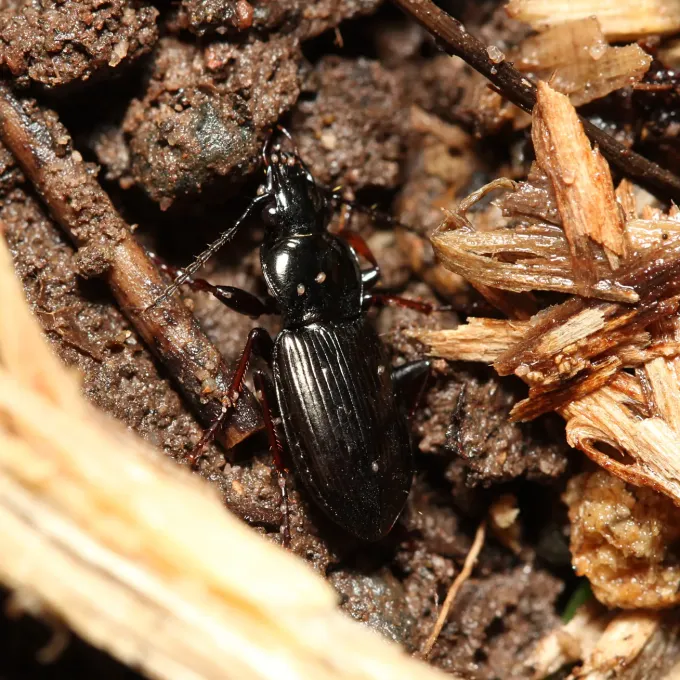
Pterostichus oblongopunctatus is a species of ground beetle belonging to the family Carabidae. It is characterized by a shiny black body, typically measuring between 10 and 13 mm in length.
The name of the beetle comes from its diagnostic features: the elytra (wing covers) display distinct rows of punctured spots, which allows for identification in the field.
They possess a flattened body shape, which is an adaptation for living under surface debris, stones, and within soil crevices where they seek refuge during daylight hours.
The larvae are elongated and inhabit the upper soil layers, moving actively as they seek food within the root zone of various plants.
While many Carabidae are beneficial predators, this particular species can exhibit phytophagous behavior, feeding on crop tissues when natural prey is scarce.
What it damages
The primary damage occurs during the spring season when the beetles emerge from hibernation and feed on newly germinated crops.
Cereal crops like wheat and barley, as well as maize and sugar beets, are particularly vulnerable to their feeding habits during the seedling stage.
Beetles consume the young stems or destroy the growing points of seedlings, which can lead to significant thinning of crop stands in the field.
In cases of high infestation density, farmers may face total loss of seedlings in specific areas, necessitating replanting efforts.
Feeding activity often results in irregular holes in the leaves or cleanly bitten stems, which weakens the plant and stunts its early development.
When it appears
The active season for Pterostichus oblongopunctatus begins in early spring, as soon as the soil temperatures rise and the frost recedes.
The period of greatest concern for agricultural fields is from May to June, coinciding with the rapid growth of seedling plants.
The life cycle involves overwintering as adults, which bury themselves deep within the soil or hide under dense leaf litter until the following spring.
Larval development takes place throughout the summer months, with pupation occurring in specialized soil chambers before the new generation emerges.
As autumn progresses, the beetles decrease their activity and seek suitable hibernation sites to survive the winter months.
Signs of infestation
The most visible sign of infestation is the presence of chewed or severed seedlings, often found in patches across the field.
Inspecting the field at night with a flashlight often reveals the beetles on the soil surface, as they are nocturnal and highly mobile.
Wilted seedlings with damaged stems or roots are a strong indicator that ground beetles are present and actively feeding on the crop.
Soil surface traps (pitfall traps) are the standard method for detecting and monitoring the density of the beetle population before significant damage occurs.
Observation of debris or soil disturbance around the base of the plants can also signal that the beetles are using the area for shelter.
Control measures
Cultural control is key: thorough field preparation and tillage help destroy the overwintering sites of the beetles and reduce their local population.
Crop rotation is highly effective, as it prevents the continuous presence of preferred host plants, forcing the beetle population to migrate or decrease.
Chemical control involving systemic insecticides can be applied if monitoring indicates that the economic injury level has been exceeded.
Seed treatments with modern systemic pesticides provide a critical protective shield for seedlings during the most vulnerable early growth phase.
Ensuring vigorous plant growth through balanced fertilization allows seedlings to outgrow the critical window of susceptibility to beetle feeding.
Taxonomy
- Latin name
- Pterostichus oblongopunctatus
- Order
- Coleoptera (beetles)
- Family
- Carabidae
- EPPO code
- PTESOB
Discussion
No discussions yet — be the first.