
Pterostichus nitens
Pterostichus nitens
Description
How to identify
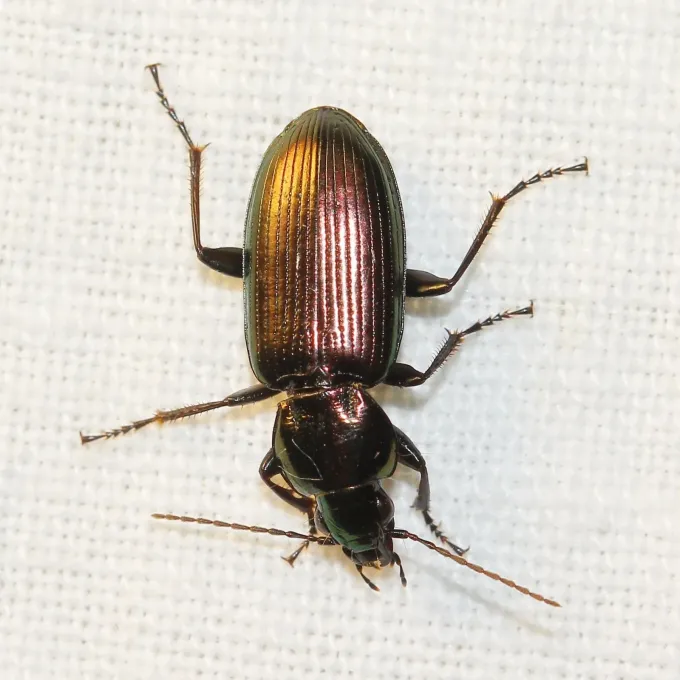
Pterostichus nitens is a species of ground beetle belonging to the family Carabidae, order Coleoptera. While many carabids are considered beneficial predators, this specific species can exhibit phytophagous behavior.
The adult beetle is characterized by a glossy, metallic appearance and an elongated black body, typically measuring around 10–15 mm in length.
The larvae are campodeiform, meaning they are mobile and have well-developed thoracic legs, allowing them to move efficiently through the soil or on the plant surface.
Adult beetles are nocturnal, spending the daylight hours hiding under debris, clods of earth, or within cracks in the soil, which makes them difficult to observe.
The life cycle involves complete metamorphosis, including egg, larval, pupal, and adult stages, with most activity concentrated in the spring and early summer months.
What it damages
This species primarily impacts cereal crops, such as wheat, rye, and barley, particularly during the vulnerable seedling emergence and early vegetative growth stages.
Larvae feed on the roots and the base of the stems, specifically targeting the tillering node, which can severely stunt growth or cause the death of young plants.
Adult beetles may also feed on the foliage of seedlings, creating jagged holes and feeding patterns that reduce the plant's photosynthetic capacity.
Damage is often most severe in fields with high moisture levels, which favor the survival and development of the beetle's populations.
Economic loss occurs when high densities of the pest lead to significant reductions in plant stand, requiring replanting or compensatory field management.
Signs of infestation
The most noticeable sign of an infestation is a patchy emergence of seedlings, where plants in certain areas of the field fail to establish or disappear shortly after sprouting.
Examination of the damaged area often reveals the presence of chewed stem bases or missing leaves, characteristic of the beetle’s chewing mouthparts.
Wilting and yellowing of the plants at the seedling stage are indicators of underground root damage caused by larvae moving in the soil.
Finding adult beetles under surface residues or within the soil profile during early morning inspections is a strong confirmation of the pest's presence.
Monitoring the soil surface for the characteristic shining black beetles during the night can help estimate the population size before significant damage occurs.
Control measures
Integrated pest management strategies are essential, starting with crop rotation to disrupt the life cycle of the beetle and prevent population buildup in a single location.
Deep autumn plowing is a highly effective cultural practice, as it exposes overwintering stages to cold temperatures and natural predators like birds.
Maintaining clean fields by removing weeds reduces alternative food sources and shelter, making the environment less hospitable for the pest.
Seed treatments with systemic insecticides provide essential protection for young seedlings against early-season ground pest attacks.
- Practice crop rotation to manage soil-dwelling pests.
- Use deep tillage to disrupt the larval environment.
- Monitor with pitfall traps during the planting season.
- Apply chemical treatments only when the economic threshold is reached.
Taxonomy
- Latin name
- Pterostichus nitens
- Order
- Coleoptera (beetles)
- Family
- Carabidae
- EPPO code
- PTESNT
Discussion
No discussions yet — be the first.