
Pterostichus nigrita
Pterostichus nigrita
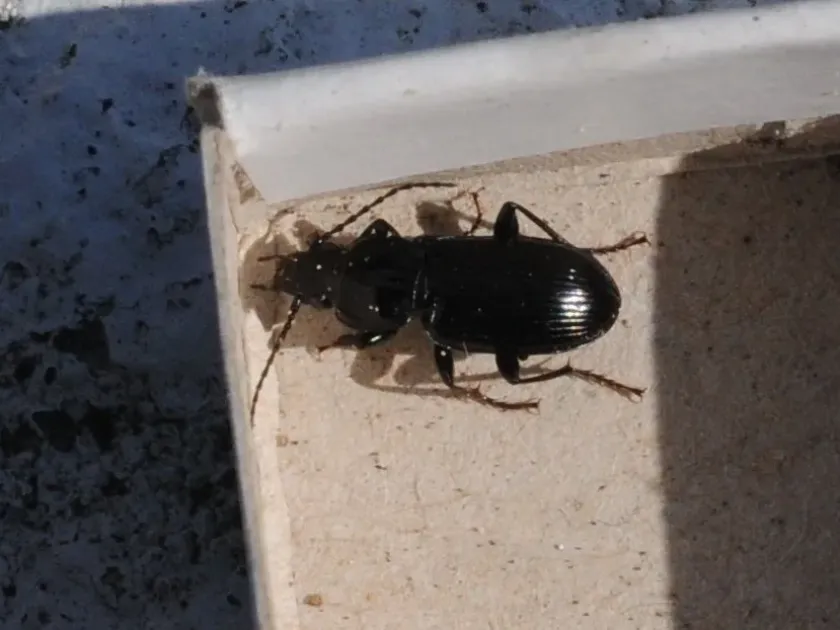
Description
How to identify
Pterostichus nigrita is a species of ground beetle that can occasionally act as a pest in agricultural settings. The adult insect features an elongated body, measuring approximately 8 to 10 millimeters, with a shiny, pitch-black color.
These beetles possess well-developed wings, enabling them to migrate over long distances in search of suitable habitats. Their legs are adapted for rapid running, which is characteristic of the Carabidae family.
The larvae have an elongated and slightly flattened body, often appearing dull white or brownish. Their development involves several instars, during which they feed on organic matter and vegetation.
Systematically, this species belongs to the order Coleoptera and the family Carabidae. Unlike many strictly predatory ground beetles, this species often exhibits mixophagy, consuming both animal prey and plant material.
Differentiating this species from closely related ground beetles requires examining the structure of the pronotum and the punctuation on the elytra under magnification. Precise identification is essential for accurate field scouting.
What it damages
The primary damage occurs in winter and spring cereal crops, particularly during the germination phase and seedling emergence. Both adults and larvae can consume seeds in the soil, hindering crop development.
This insect poses the greatest risk in high-moisture areas, such as low-lying fields or heavy clay soils. Under these conditions, the pest population density increases significantly, leading to localized destruction of emerging crops.
Beyond cereals, Pterostichus nigrita can affect perennial grasses and certain row crops if they are present in areas with high beetle density. Plants are particularly vulnerable during the early stages of vegetation.
Damage symptoms include the destruction of the seed embryo or the gnawing of young seedlings near the soil surface. Affected plants often wither or show significantly stunted growth, leading to sparse field stands.
Mass reproduction of this ground beetle can cause yield losses of up to 10–15% in specific areas, necessitating prompt agronomic intervention. While damage is often localized, it can be extremely intensive.
When it appears
The life cycle of Pterostichus nigrita is closely linked to humid seasons. Beetles exhibit peak activity during spring and autumn, when soil moisture is optimal for their survival and reproductive processes.
They overwinter as adults or late-stage larvae deep in the soil, under plant debris, or within soil fissures. As spring temperatures rise, the overwintered individuals emerge to the surface to begin active feeding.
Adult activity peaks in May and June, which coincides with reproduction and egg-laying in the topsoil. Larvae cause the most significant damage during the period of crop seedling emergence.
During dry summer months, pest activity noticeably declines as beetles seek refuge in deeper soil layers or move toward irrigation sites and water bodies. Moisture levels remain the critical factor for their survival.
The life cycle can range from one to two years depending on the regional climate. In favorable years, the population can rapidly recover from winter mortality events.
Control measures
Effective management begins with proper crop rotation and timely tillage, which disrupts the habitat and breeding sites of ground beetles. Deep plowing can significantly reduce population levels.
Using insecticidal seed treatments before planting is the most reliable method for protecting seedlings from early-stage damage. Systemic active ingredients provide prolonged protection for developing plants.
Regular monitoring of pest density using soil pits or trap grooves in early spring is highly recommended. This data allows agronomists to make informed decisions regarding the necessity of chemical intervention.
Maintaining optimal agricultural practices to ensure rapid and uniform crop germination is essential. Vigorous, healthy seedlings are far more resilient to pest attacks than those that are stressed or slow-growing.
Chemical control measures using pyrethroid or organophosphate-based insecticides should be reserved for instances where the economic threshold is exceeded. Applications should preferably be performed during evening hours.
Taxonomy
- Latin name
- Pterostichus nigrita
- Order
- Coleoptera (beetles)
- Family
- Carabidae
- EPPO code
- PTESNG
Discussion
No discussions yet — be the first.