
Metallic ground beetle
Pterostichus metallicus
Description
How to identify
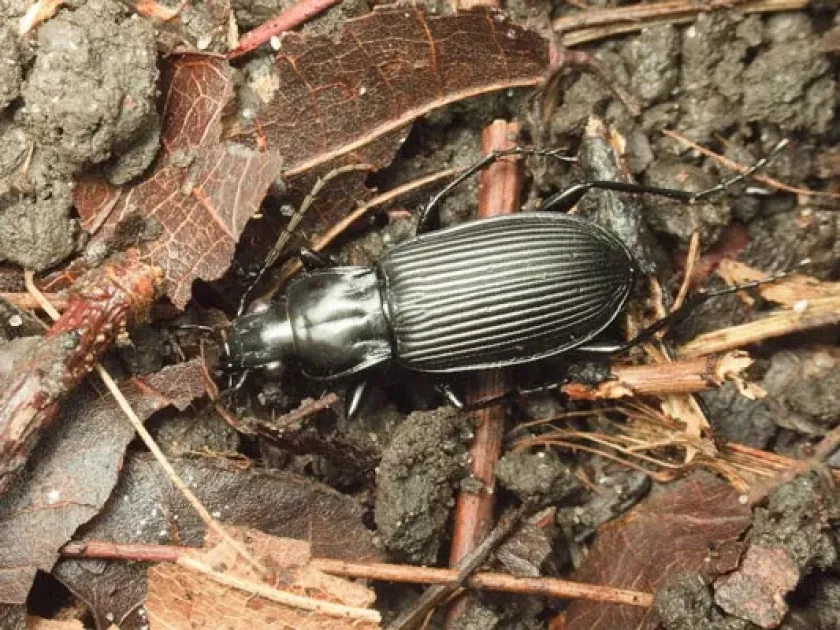
The metallic ground beetle (Pterostichus metallicus) is a member of the order Coleoptera, family Carabidae. This insect typically has an elongated body measuring 12–15 mm, characterized by a distinct metallic luster on its elytra.
The adults possess strong, chewing mouthparts, which they use to feed on both animal prey and plant tissues. Their coloration ranges from dark bronze to blackish-green, aiding in camouflage within soil debris.
Larvae are campodeiform, highly mobile, and possess well-developed thoracic legs. The body is segmented and typically colored in shades of dark gray or brown, allowing them to remain hidden in the topsoil.
The life cycle involves complete metamorphosis, including egg, larva, pupa, and imago stages. Overwintering occurs primarily as adults or late-stage larvae in the soil under organic matter.
While often predatory, these beetles are facultative pests; when natural prey is scarce, they readily shift to feeding on the stems and shoots of young agricultural crops.
What it damages
The pest is most destructive to cereal crops, including winter wheat, barley, and rye. Damage is particularly severe during the seedling emergence phase of plant development.
Both larvae and adults cause damage by biting through stems at the soil surface or excavating tissue near the tillering node, which often leads to the death of the seedling.
Beyond cereals, this beetle can also impact crops such as maize and sugar beets. The extent of damage is highly correlated with population density and regional environmental conditions.
Significant economic losses occur during years with prolonged, wet spring seasons, as these conditions favor beetle activity precisely when crops are most vulnerable.
Damaged plants may show stunted growth and yellowing, and if the damage reaches the primary node, the plant will not recover, leading to gaps in the field crop stand.
Signs of infestation
The first indicator of an infestation is the appearance of bare patches in the field where seedlings have failed to thrive or have been completely severed.
Because the beetles are primarily nocturnal, they are difficult to observe during the day, as they hide within soil cracks or beneath surface soil clods.
Agronomists use soil traps or bait stations to monitor beetle presence and determine if population levels exceed the economic threshold for intervention.
If field scouting reveals gnawed leaves and severed stalks accompanied by the presence of dark-colored larvae in the soil, an immediate management strategy is required.
Additional signs include the presence of adult beetles near the field edges or near vegetation residues during the cooler hours of the early morning.
Control measures
Crop rotation is the cornerstone of effective management. Avoiding the planting of cereals in fields that were previously sown with cereals prevents population build-up.
Deep autumn plowing is a highly recommended practice, as it disrupts overwintering sites and exposes larvae and adults to adverse weather and natural predators.
Seed treatment with systemic insecticides provides a necessary layer of protection for seedlings, preventing early-stage destruction by ground beetle larvae.
In cases of severe infestation, foliar application of approved insecticides—typically organophosphates or pyrethroids—can be utilized to lower pest density rapidly.
- Effective weed control to remove alternative habitats for the beetle.
- Removal of crop residues that provide shelter for the overwintering adults.
- Regular field scouting to assess damage before it becomes irreversible.
Taxonomy
- Latin name
- Pterostichus metallicus
- Order
- Coleoptera (beetles)
- Family
- Carabidae
- EPPO code
- PTESMT
Discussion
No discussions yet — be the first.