
Common black ground beetle
Pterostichus melanarius
Description
How to identify
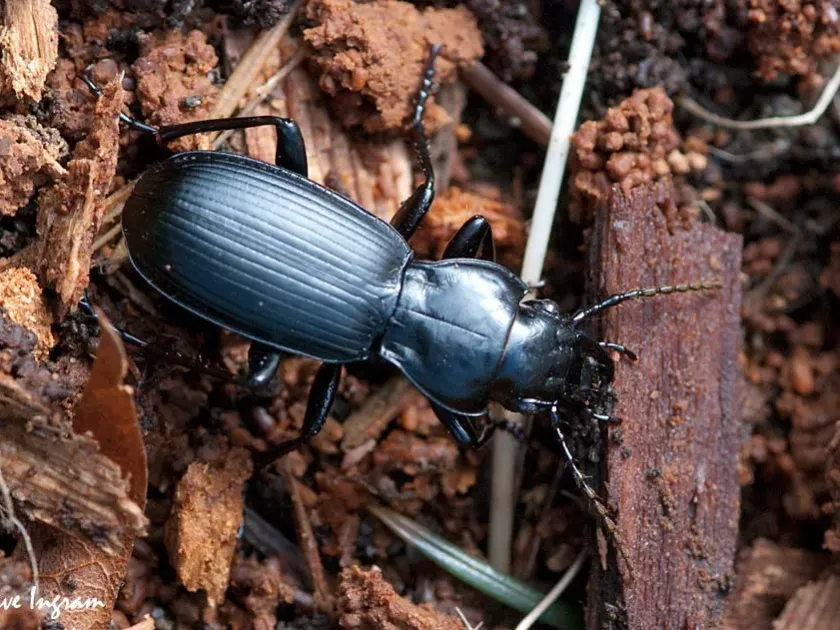
The common black ground beetle (Pterostichus melanarius) is a member of the Carabidae family. The adult beetle typically measures between 12 and 18 mm in length and possesses a shiny, black body.
The insect features an oval-shaped, flattened body with robust mandibles, adapted for predation. Its antennae are thread-like, and its legs are well-developed for rapid movement across soil surfaces.
Larvae have a campodeiform structure, characterized by high mobility and a dark, segmented body. They also exhibit distinct cerci at the posterior end of the abdomen.
These beetles are common in various agricultural and forest ecosystems. While many carabid beetles are beneficial, Pterostichus melanarius can act as a significant crop pest under specific conditions.
Precise identification often requires an examination of the beetle's pronotum and elytra, as it closely resembles several other species within the Pterostichus genus.
What it damages
The primary damage occurs during the germination stage of cereal crops. Beetles feed on the seeds by consuming the embryo, often destroying the plant before it even emerges from the soil.
Besides cereals like wheat and barley, the pest can cause damage to sugar beet and maize crops. Both adults and larvae can attack tender leaves and stems of young seedlings.
Severe infestations are more common in seasons with cool, damp spring conditions, which favor the pest's activity and survival in the topsoil layers.
Damage often manifests as patchy field emergence, necessitating costly reseeding efforts and resulting in reduced overall yields for the affected areas.
The economic impact is concentrated at the seedling establishment stage, making it a critical period for monitoring and preventative interventions.
When it appears
The life cycle involves overwintering as adults or larvae in the soil or under surface debris. Activity begins in spring when soil temperatures reach 8-10 degrees Celsius.
The peak period of damage coincides with the spring sowing of cereal crops. Beetles are nocturnal, remaining hidden in the soil or organic debris during daylight hours.
Summer is the primary phase for reproduction, where females deposit eggs in moist, dense soil. The developing larvae then contribute to the overall population pressure in the field.
Autumn marks the emergence of new larval generations, which may feed on the emerging winter cereal crops, extending the period of potential damage.
The lifecycle generally takes one year to complete, although environmental stressors can occasionally extend the development time of certain individuals.
Signs of infestation
The first indication of a problem is the presence of thinning stands or missing rows in the field. Careful excavation often reveals hollowed-out seeds with damaged embryos.
The visual presence of black beetles hiding under soil clods or crop residue during daytime inspections serves as a warning of high pest density.
Feeding damage on emerging sprouts is characterized by shredded or chewed leaf margins, caused by the beetle's strong, rasping mouthparts.
Soil monitoring using pitfall traps is an effective way to track population density and determine the risk level to newly established crop seedlings.
In infested fields, signs of damage are often more pronounced near field edges or in areas with heavy trash cover from previous crops.
Control measures
Seed treatment with systemic insecticides is the most effective preventative measure, as it provides direct protection to the germinating seed during the most vulnerable period.
Crop rotation helps interrupt the life cycle of the beetle, reducing the buildup of pest populations in fields prone to infestation.
Tillage practices, specifically deep autumn plowing, can physically destroy larvae and pupae in the soil, significantly reducing the overwintering population.
Maintaining a clean field by removing weeds and crop debris eliminates shelter and food sources that allow the population to thrive.
Foliar insecticide applications at night may be necessary if monitoring indicates that the economic injury threshold has been exceeded during early crop stages.
Taxonomy
- Latin name
- Pterostichus melanarius
- Order
- Coleoptera (beetles)
- Family
- Carabidae
- EPPO code
- PTESML
Discussion
No discussions yet — be the first.