
Pterostichus madidus
Pterostichus madidus
Description
How to identify
Pterostichus madidus is a member of the family Carabidae, commonly known as ground beetles, belonging to the order Coleoptera.
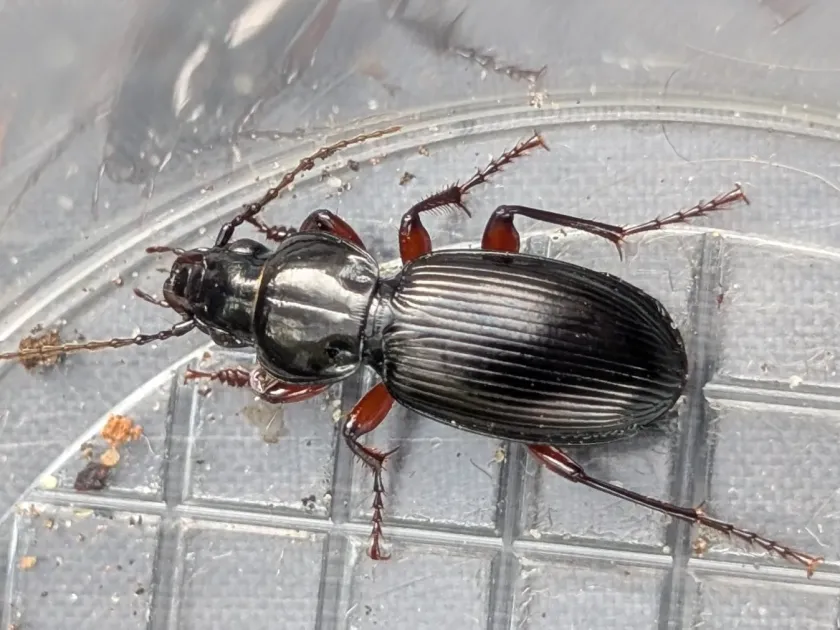
Adult beetles typically measure between 14 and 18 millimeters in length and possess a characteristic dark, glossy black appearance.
The pronotum is broad and rounded, while the elytra feature distinct longitudinal grooves, which is a diagnostic trait for this specific genus.
These insects are primarily nocturnal and possess robust legs adapted for running quickly across the soil surface and navigating within soil crevices.
Larvae are elongated and equipped with powerful, biting mouthparts, allowing them to remain active in the top layers of the soil throughout their development.
What it damages
This species primarily causes damage to emerging cereal crops, including wheat, barley, and oats, particularly during the early seedling stages.
Both adults and larvae feed on the young shoots, often consuming the growing point of the plant, which results in significant thinning of the crop stand.
In some instances, they may cause damage to the seeds and underground stems of various row crops, such as maize, especially under damp conditions.
Economic damage is most severe during springs with high precipitation, which coincides with the period when young seedlings are most vulnerable.
While typically predaceous, these beetles exhibit facultative phytophagy, meaning they shift to plant tissues when their primary insect prey is unavailable.
When it appears
The lifecycle of Pterostichus madidus is closely linked to seasonal moisture and temperature patterns within the upper soil horizons.
Active throughout the warmer months, adults are mainly nocturnal, seeking shelter under crop residues or within soil cracks during the day to avoid desiccation.
The peak risk period for crops occurs during spring germination, as the beetles actively forage for nutrition to sustain their physiological needs.
A second, albeit often less damaging, period of activity occurs in autumn as the insects prepare for hibernation and reproductive cycles.
Overwintering usually takes place in the adult stage, with the beetles retreating deep into the soil profile to protect themselves from freezing temperatures.
Signs of infestation
A primary indicator of infestation is the presence of localized patches where the crop stand has been severely thinned or completely destroyed.
Close inspection of the affected plants often reveals ragged, uneven chewing marks on the stems and leaves near the soil surface.
Nocturnal surveys using pitfall traps or direct observation with a flashlight can confirm the presence of high beetle populations in the field.
The existence of burrows or tunnels in the soil near damaged seedlings is another strong indicator of the presence of this ground beetle.
- Patchy thinning of seedlings.
- Irregular feeding damage on subterranean plant parts.
- Presence of shiny black beetles under debris.
Control measures
Good agricultural practices, such as thorough soil cultivation, can help disrupt the beetle's habitat and reduce larval survival rates.
Effective weed management is essential, as overgrown fields provide the necessary cover and alternative food sources for the beetle population.
Seed treatments with systemic insecticides are recommended in areas with a history of ground beetle problems to protect the seedlings during emergence.
If thresholds are exceeded, the application of foliar insecticides during the evening hours can be effective, as the beetles are most active at night.
Crop rotation serves as a preventive measure, making it difficult for the population to establish in fields subjected to different cultivation requirements.
Taxonomy
- Latin name
- Pterostichus madidus
- Order
- Coleoptera (beetles)
- Family
- Carabidae
- EPPO code
- PTESMA
Discussion
No discussions yet — be the first.