
Pterostichus chalcites
Pterostichus chalcites
Description
How to identify
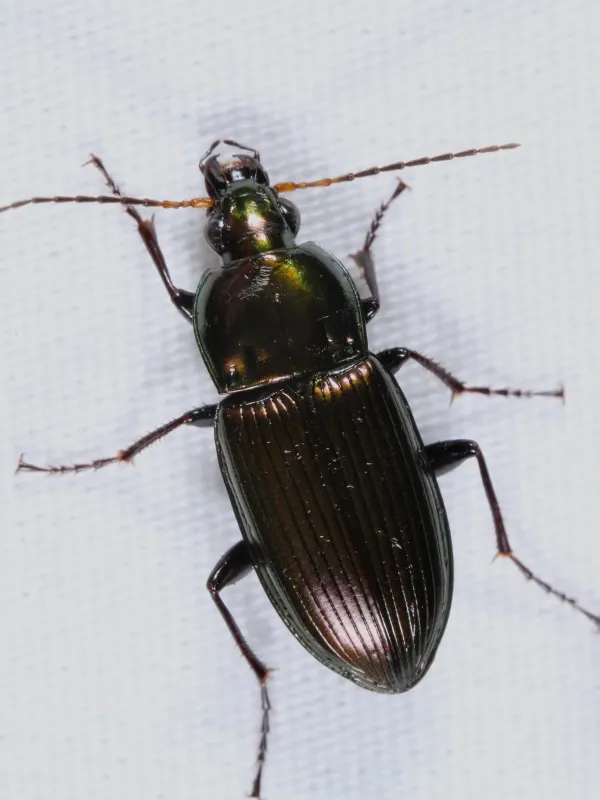
Pterostichus chalcites is a species of ground beetle belonging to the family Carabidae, order Coleoptera. Adult beetles are characterized by a medium body size and a distinct metallic luster on their elytra, ranging from bronze to golden-green.
The beetle's body is oval and slightly flattened, facilitating movement through soil cracks and beneath crop debris. The head and pronotum are finely punctured, and the antennae and legs are typically darker than the main body color.
Larvae have an elongated shape with well-developed thoracic legs and hardened integument, common for predatory and omnivorous carabid larvae. They lead a secretive lifestyle, primarily inhabiting the upper soil layers.
The species' biology is closely linked to soil moisture and the presence of organic debris. Adults are primarily nocturnal, remaining hidden under soil clods or thick vegetation during the day.
The life cycle involves complete metamorphosis: egg, larva, pupa, and adult. They typically overwinter as adults or older larvae deep in the soil, often up to 20 cm below the surface.
What it damages
This species is classified as a facultative pest, which, under specific conditions, shifts from feeding on small soil invertebrates to damaging the vegetative organs of cultivated plants.
Primary damage occurs in cereal crops, especially during seed germination and seedling emergence. Beetles may consume the seed embryo and young roots, leading to reduced plant stands.
The pest poses a threat to wheat, barley, and corn, particularly during dry periods when the natural food source (smaller insects) is limited, forcing the beetles to feed on plant sap.
Damage symptoms include hollowed-out seeds, which prevents successful germination. In some cases, seedlings may exhibit chewed stems at or slightly below the soil surface.
The economic threshold of damage depends on the population density per unit area and soil moisture conditions. High populations can significantly decrease crop emergence and vigor.
Signs of infestation
The first sign of activity is the appearance of gaps or thin spots in fields during early crop growth. These areas may show stunted or missing seedlings within the rows.
Inspecting the soil near affected areas often reveals damaged seeds with hollowed-out endosperms. Adults or their larvae can frequently be found in the immediate vicinity of damaged plants.
Presence can be confirmed through soil sampling or by using pitfall traps (containers buried level with the soil surface) during nighttime hours.
On the soil surface, areas with high pest activity may show evidence of mechanical damage to weeds, which serve as alternative food sources before the crop emerges.
Seedlings damaged by Pterostichus are more susceptible to secondary infections, as micro-wounds provide entry points for soil-borne pathogens, leading to rot and further plant loss.
Control measures
Effective management begins with sound agronomic practices. Proper soil cultivation, including plowing, is vital as it disrupts overwintering sites and reduces the overall population size.
Strict adherence to crop rotation is necessary; avoiding continuous cereal cropping prevents the accumulation of plant debris that harbors the pest from season to season.
Applying insecticidal seed treatments is an effective strategy to protect crops during their most vulnerable stage. Using modern active ingredients ensures a lasting protective effect against early-season feeding.
Timely weed management within fields and along field margins reduces shelter and food sources, forcing beetles to relocate away from productive agricultural areas.
Chemical spraying of crops during the growing season is rarely necessary and is reserved for situations where population levels exceed economic thresholds and prophylactic measures have failed.
Taxonomy
- Latin name
- Pterostichus chalcites
- Order
- Coleoptera (beetles)
- Family
- Carabidae
- EPPO code
- PTESCH
Discussion
No discussions yet — be the first.