
Pterostichus adstrictus
Pterostichus adstrictus
Description
How to identify
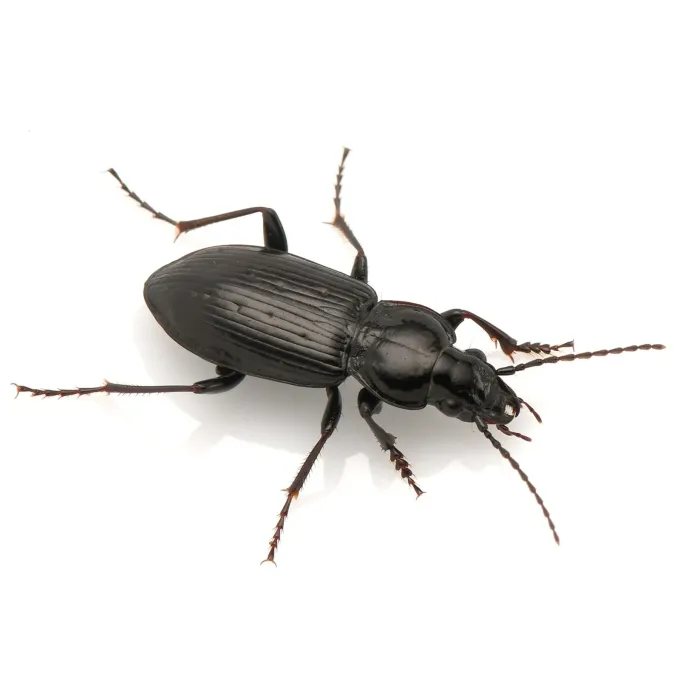
Pterostichus adstrictus belongs to the family Carabidae (ground beetles) within the order Coleoptera. It is a medium-sized beetle known for its elongated, black body that often displays a faint metallic luster.
The adult beetle is equipped with powerful mandibles. While these are primarily used for predation on smaller insects, the beetle occasionally feeds on seeds and young plant tissues when primary food sources are scarce.
The morphology includes well-developed legs designed for rapid movement across the soil surface and through dense vegetation debris. The elytra feature fine longitudinal striae that are distinct under magnification.
The life cycle involves complete metamorphosis: egg, larva, pupa, and adult. The larvae are elongated, mobile, and reside primarily within the upper soil horizons where they hunt for small prey.
Identification of this specific species requires expertise in beetle anatomy, particularly examining the pronotum shape and specialized morphological traits, as many Pterostichus species are morphologically similar.
What it damages
Although ground beetles are generally considered beneficial natural enemies, Pterostichus adstrictus can switch to phytophagy, particularly affecting cereal crop seedlings such as wheat, barley, and rye.
The main damage occurs when beetles or their larvae consume swelling seeds in the soil. By hollowing out the grain, they prevent germination, leading to significant stand gaps in the field.
In addition to seed consumption, adults may graze on young shoots, chewing through the base of the stem. This often causes seedlings to wilt or die shortly after emerging from the soil.
High population densities often result in clustered damage. Fields with high soil moisture or those located near wooded areas or permanent pastures are most susceptible to infestation.
Furthermore, feeding damage can create entry points for soil-borne pathogens. Fungi and bacteria often exploit the injured tissues, leading to secondary infections that weaken the crop further.
When it appears
Adult activity typically begins in early spring, once soil temperatures rise. This emergence period is synchronized with the planting season, placing seeds at high risk of damage.
The period of peak vulnerability is between germination and the two-leaf stage of cereals. During this time, the beetle population is most concentrated in the upper soil layers.
Throughout the summer, activity shifts toward a nocturnal pattern. The beetles avoid the heat of the day by retreating deep into soil crevices or underneath dense organic matter.
Autumn marks a secondary phase of movement as beetles prepare for winter. During this phase, they may attack newly planted winter cereal crops before entering their hibernation sites.
Hibernation occurs mainly in the adult stage. The insects overwinter in the soil or under debris at depths of up to 20 centimeters, protecting them from extreme frost and environmental stress.
Signs of infestation
A primary indicator of infestation is irregular plant emergence and unexpected gaps in rows, despite good sowing conditions and seed viability.
Excavating the soil around missing plants often reveals remnants of damaged seeds with characteristic hollowing that lacks the mushy decay typical of bacterial rot.
Injured seedlings often exhibit ragged, bitten edges at the stem base. In the case of severe damage, the entire shoot might be severed from the root system below the soil surface.
Nighttime field scouting using traps can confirm the presence of high beetle numbers. Finding many ground beetles in soil traps provides immediate evidence of potential threat levels.
Observation of beetle activity near field edges or in areas with thick crop residue is another strong indicator, as these environments provide perfect micro-climates for the pest.
Control measures
An effective management strategy relies on cultural and chemical practices. Crop rotation is essential to prevent the buildup of beetle populations in specific fields over time.
Tillage practices, especially autumn plowing, are highly effective as they disrupt wintering habitats and directly increase the mortality rate of overwintering adult beetles.
Seed treatment using systemic insecticides is considered the most efficient way to protect seeds and seedlings during the critical early growth phase in high-risk areas.
Optimizing planting dates to ensure rapid germination can significantly reduce the time window during which seeds remain vulnerable to beetle feeding.
- Monitor fields using pitfall traps before planting.
- Maintain field hygiene by managing weeds and residues.
- Targeted application of insecticides on field margins when thresholds are exceeded.
Taxonomy
- Latin name
- Pterostichus adstrictus
- Order
- Coleoptera (beetles)
- Family
- Carabidae
- EPPO code
- PTESAD
Discussion
No discussions yet — be the first.