
Siberian flying squirrel
Pteromys volans
Description
How to identify
The Siberian flying squirrel (Pteromys volans) is a rodent species belonging to the Sciuridae family. It is a nocturnal animal distinguished by a furry membrane stretching between its fore and hind legs, which allows it to glide between trees.
The animal is covered in dense greyish fur, featuring a flattened, bushy tail that aids in stability during flight. Large, dark eyes provide excellent night vision, and sharp claws facilitate agile movement across tree bark.
Adult individuals typically measure between 12 and 20 centimeters in length. Unlike many other rodents, they do not hibernate, maintaining activity throughout the winter, which makes them a constant factor in forest health.
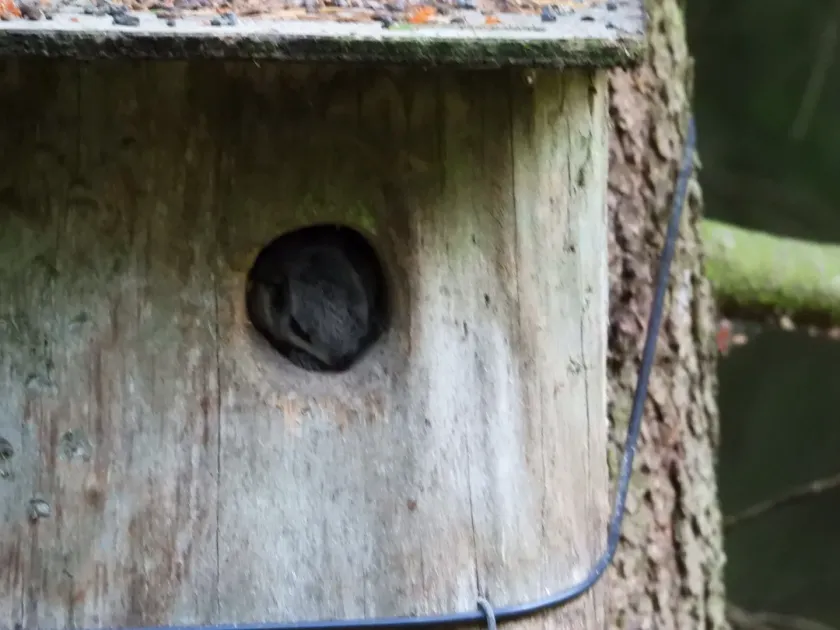
Their natural habitat consists of old-growth mixed forests with a high concentration of birch, alder, and aspen. They primarily nest in abandoned woodpecker holes or natural cavities in these mature trees.
While often living deep within established forests, their proximity to human-managed plantations can lead to regular foraging excursions into young stands, where they can cause localized but significant damage.
What it damages
The damage caused by the Siberian flying squirrel is primarily focused on the buds, shoots, and bark of young trees. Deciduous species like birch and alder are the most susceptible, as they form the core of the squirrel's winter diet.
In cases where preferred food sources are scarce, the squirrels may forage on coniferous species, gnawing on terminal buds. This can lead to severe deformation of the tree's leader shoot and stunted growth.
The feeding behavior causes physical wounds on the branches and trunks. These open wounds serve as entry points for pathogens and wood-boring insects, further compromising the vitality of the tree.
In commercial nurseries, significant feeding activity can delay the development of seedlings, leading to reduced yield and economic losses. Consistent feeding over several seasons can even lead to the death of young saplings.
- Consumption of reproductive and vegetative buds.
- Girdling or gnawing of bark on young stems, leading to branch dieback.
- Structural damage to the leader shoot of saplings.
Signs of infestation
The most reliable sign of squirrel presence is the appearance of distinct, small tooth marks on young shoots. These marks are typically very uniform and clustered, distinguishing them from the larger bite patterns of hares or deer.
Piles of discarded bud scales and small twig fragments found beneath trees indicate active feeding sites. This debris is a clear indicator that the tree has been used as a food source during the night.
Small, cylindrical droppings found at the base of trees or near nesting sites are also characteristic indicators. These pellets can help identify the density of the local squirrel population.
Nocturnal visual identification or the use of motion-activated cameras can confirm the presence of these animals. Additionally, claw scratches on the bark of nearby trees are common, as the squirrels use these as landing points.
Winter tracking is an effective diagnostic tool. Snow trails clearly delineate the movement patterns of the squirrels between their resting cavities and foraging areas, allowing for targeted damage assessment.
Control measures
Control measures must be carefully balanced, especially as the Siberian flying squirrel is a protected species in many jurisdictions. Management strategies should prioritize non-lethal, preventative solutions.
The application of biodegradable, taste-aversion repellents on the buds and stems of young trees is an effective strategy to deter foraging without harming the animal or the environment.
Mechanical barriers, such as protective sleeves or mesh guards placed around the main stems of saplings, are highly effective at preventing the rodents from gnawing on the bark during their most vulnerable growth stages.
Forest management practices should incorporate buffer zones between old-growth forest edges and new plantations. Selective maintenance of nesting sites is crucial to manage population pressure while preserving the ecosystem.
Ongoing monitoring using night-vision equipment or camera traps is essential for early detection. By identifying hotspots, managers can implement focused protective measures only where necessary, maintaining overall forest health.
Taxonomy
- Latin name
- Pteromys volans
- Order
- Rodents
- Family
- Sciuridae
- EPPO code
- PTRMVO
Discussion
No discussions yet — be the first.