
Green Silver-lines
Pseudoips prasinana
Description
How to identify
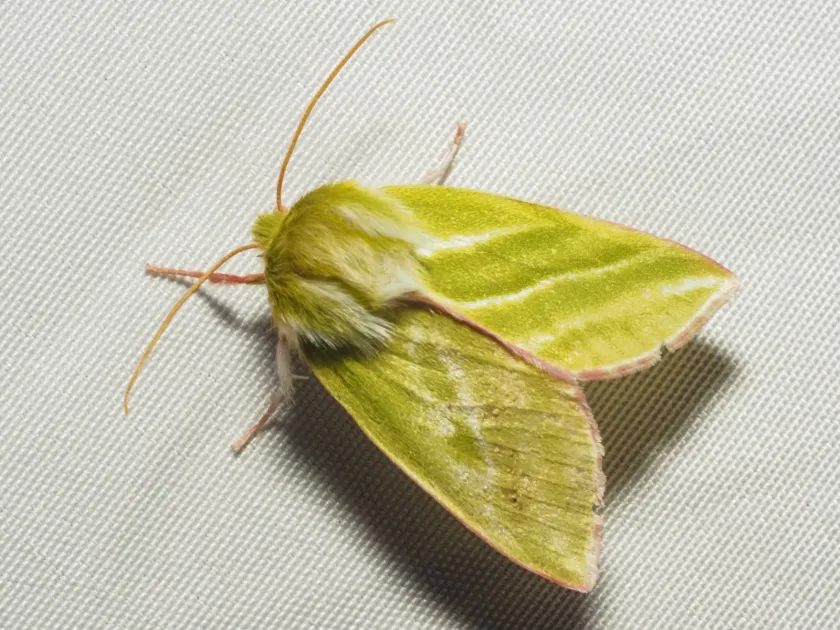
The Green Silver-lines (Pseudoips prasinana) is a moth belonging to the family Nolidae. The adult moth is easily identified by its vibrant green forewings, which feature two or three distinct, diagonal white or yellowish stripes, allowing it to camouflage perfectly among foliage.
The wingspan of the adult moth ranges from 35 to 45 millimeters. The caterpillar has a bright green color, often with light stripes along its back and sometimes subtle reddish or yellow spots, which serve as camouflage against the leaves of host plants.
The species undergoes complete metamorphosis. It typically overwinters in the pupal stage, encased in a tough, boat-shaped cocoon, which the caterpillar cleverly constructs and attaches to tree bark or twigs for protection during the cold winter months.
Adult moths emerge in late spring, aligning their life cycle with the initial growth phase of deciduous trees. Females lay eggs singly on the underside of leaves, ensuring that hatching larvae have immediate access to fresh foliage.
This species is commonly found in forested and woodland areas. Understanding its biological rhythm is crucial for forest managers and nursery owners to accurately predict population spikes and initiate protective measures when necessary.
What it damages
The primary hosts for the Green Silver-lines caterpillars are various deciduous trees, most notably oak, beech, and birch. Hazel and alder can also serve as food sources, especially in mixed woodland environments.
In nursery settings, high populations of these caterpillars can cause significant defoliation of young saplings. Intensive feeding leads to the destruction of leaf tissue, leaving only the veins behind, which severely impairs the plant's photosynthetic capacity.
Repeated or severe defoliation weakens the overall vigor of the tree, leaving it susceptible to secondary infections by fungal pathogens or attacks by wood-boring insects, which can lead to long-term decline.
In landscape gardening, the aesthetic value of trees is compromised by the characteristic damage pattern. Sparse or skeletal crowns are less effective at providing shade and visual appeal, often requiring corrective maintenance and recovery measures.
While the pest rarely kills mature, healthy trees, the cumulative stress of recurring outbreaks can be detrimental. Monitoring leaf health is essential, especially during warm, humid seasons which favor the survival and rapid development of the larvae.
Control measures
Effective management begins with regular monitoring using pheromone traps to detect the presence of adult moths. This data allows for the timing of protective treatments to be synchronized with the most vulnerable stages of the pest.
Cultural control measures focus on maintaining tree health and vigor, which naturally increases resistance to pests. Pruning and removing heavily infested branches or bark where cocoons may be lodged is a practical step for smaller orchards.
Biological control using microbial insecticides, specifically those containing Bacillus thuringiensis, is highly recommended. These treatments are target-specific, minimizing impact on beneficial predatory insects that naturally inhabit the ecosystem.
Chemical intervention should be reserved for severe outbreaks where economic or forest health thresholds are exceeded. Applications of systemic insecticides should be conducted during low-activity hours to prevent harm to honeybees and other non-target pollinators.
Encouraging natural predators such as ichneumonid wasps and predatory bugs is a key long-term strategy. By fostering a biodiverse habitat, the natural population of the Green Silver-lines can be kept in check without heavy reliance on synthetic chemicals.
Taxonomy
- Latin name
- Pseudoips prasinana
- Order
- Lepidoptera (butterflies)
- Family
- Nolidae
- EPPO code
- PIPSFA
Discussion
No discussions yet — be the first.