
Josephine's case-bearer moth
Pseudatemelia josephinae
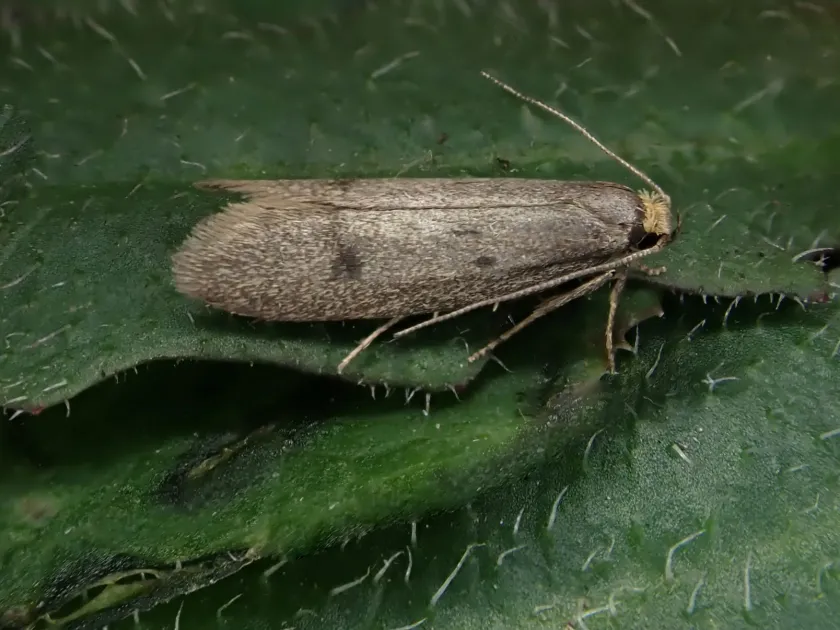
Description
How to identify
Pseudatemelia josephinae is a species of moth belonging to the family Psychidae, commonly known as bagworm moths or case-bearers.
Adult moths are typically small and inconspicuous, having evolved to blend perfectly with the bark of trees and shrubs to avoid detection.
The most distinctive feature of this species is the larval stage, during which caterpillars construct protective cases out of silk and plant debris.
These cases serve as portable homes, allowing the larvae to move along branches and leaves while remaining shielded from environmental stress and predators.
The life cycle involves complete metamorphosis, and in many Psychidae species, females are flightless and remain within their protective cases.
What it damages
The caterpillars are polyphagous, feeding on a wide variety of plant species, including both deciduous trees and ornamental shrubs.
Damage occurs primarily through the ingestion of leaf tissue, where larvae scrape the surface or chew holes, leaving skeletonized sections.
Large infestations can lead to significant defoliation, which hampers the plant's ability to photosynthesize and reduces its overall vigor.
Young shoots and flower buds may also be targeted, potentially causing stunted growth and deformities in the plant's structure.
The constant presence of larvae on branches can lead to further issues, as their accumulation of waste can harbor other secondary fungal pathogens.
When it appears
The activity of these moths is synchronized with the plant growing season, with the larvae being most active from early spring through summer.
They typically overwinter as larvae or pupae inside their well-anchored cases, which are tightly attached to branches or tree trunks.
As spring temperatures rise, the caterpillars emerge from their dormant state and resume feeding on the newly developed foliage.
Pupation takes place within the case, followed by the emergence of adults, which usually mate and lay eggs during the summer months.
The species usually completes one generation per year, though environmental factors can influence the rate of their development.
Signs of infestation
The primary sign of infestation is the discovery of small, cone-shaped cases attached to foliage, twigs, or bark surfaces.
Visual evidence of feeding includes irregular holes in leaves and the presence of partial tissue consumption, often described as skeletonization.
Affected plants may show signs of stress, such as yellowing leaves, slowed growth, or premature leaf drop during the peak feeding season.
During rest periods, larvae cluster their cases together, often making these collections visible in branch forks or crevices on the bark.
An active infestation is confirmed when you observe the movement of these cases, as the larvae frequently relocate to reach fresh food sources.
Control measures
Mechanical removal is highly effective: manually picking and destroying the cases during pruning or dormant seasons significantly lowers population levels.
Chemical control can be implemented using systemic or contact insecticides during the larval feeding stage when they are most exposed.
Biological control methods, such as utilizing Bacillus thuringiensis sprays, are effective against case-bearing larvae while remaining eco-friendly.
Promoting general plant health through balanced fertilization and proper irrigation helps plants tolerate and recover from light feeding damage.
Regular monitoring of garden plants in early spring is crucial for identifying early outbreaks and preventing the spread of the moth population.
Taxonomy
- Latin name
- Pseudatemelia josephinae
- Order
- Lepidoptera (butterflies)
- Family
- Amphisbatidae
- EPPO code
- PTMLJO
Discussion
No discussions yet — be the first.