
Hypercallia
Hypercallia
Description
How to identify
The genus Hypercallia belongs to the family Depressariidae, part of the order Lepidoptera. These are small insects, and in the adult stage, they possess specific wing structures characteristic of this group.
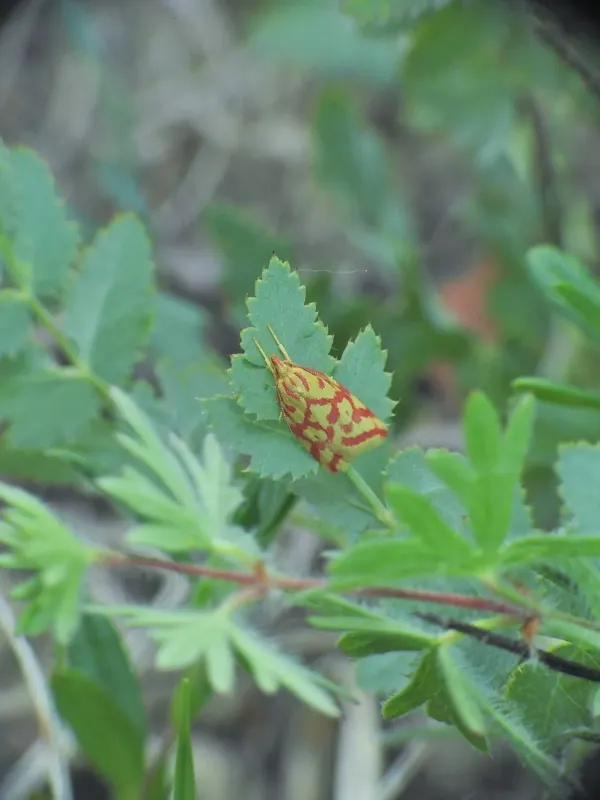
Externally, adult specimens are distinguished by a complex pattern on their forewings, which helps them camouflage against vegetation. The pest's body is slender, covered with fine scales, and the antennae are thread-like.
Hypercallia larvae (caterpillars) go through several stages of development, changing color as they mature. Typically, they have a cylindrical body shape with a well-developed head capsule designed for active feeding on plant tissues.
Species identification is often difficult due to the secretive lifestyle of the larvae, which prefer to stay inside rolled leaves. Accurate identification is possible based on the specific food preferences of a given species.
The biology of the genus is only partially studied, but it is known that active insect reproduction is closely linked to the vegetation periods of their primary host plants, requiring regular field monitoring.
What it damages
Hypercallia primarily damages ornamental plants and some wild species, including specific legumes. Caterpillars show high selectivity in their feeding habits.
The primary damage is caused by the larvae, which skeletonize leaves or chew irregular holes in them during development. With high pest density, massive leaf tissue consumption occurs.
Damage to plant tissues leads to reduced photosynthesis efficiency, which negatively impacts the growth rates and overall development of the affected crop.
In intensive farming, outbreaks of Hypercallia can lead to the loss of product marketability, which is especially critical for nurseries and floriculture farms.
Weakened plants become more susceptible to secondary infections and infestations by other insect pests, complicating the overall phytosanitary situation in the field.
Signs of infestation
The first and most noticeable sign of the pest's presence is rolled or webbed leaves, inside which the caterpillars hide.
Excrement from the larvae can often be found on the surface of damaged leaves, frequently accumulating within their shelters. This is a clear indicator of the presence of the larval stage.
A characteristic sign is the presence of "windowpane" damage, where the leaf epidermis remains intact but the internal tissue is completely consumed, creating translucent patches.
When inspecting plants in the morning or evening hours, one can spot the larvae themselves, which quickly leave the leaf upon the slightest threat, dropping down on a silk thread.
Mass leaf drop in the middle of the growing season can also indicate the activity of a Hypercallia population in the area.
Control measures
Effective protection requires an integrated approach starting with regular visual monitoring of crops for early signs of leaf rolling.
Agrotechnical measures, such as the destruction of plant residues and deep plowing of soil after harvest, help significantly reduce the number of overwintering pupae.
If the economic threshold of harmfulness is exceeded, the use of biological preparations based on Bacillus thuringiensis is recommended, as they are safe for beneficial insects.
In cases of high pest density, the application of systemic and contact insecticides with a broad spectrum of activity against Lepidoptera is justified.
- Regular inspection of plants from June through August.
- Timely weeding of host plants that may serve as reservoirs.
- Use of pheromone traps to monitor adult flight.
Taxonomy
- Latin name
- Hypercallia
- Order
- Lepidoptera (butterflies)
- Family
- Amphisbatidae
- EPPO code
- HPKLSP
Discussion
No discussions yet — be the first.