
Polygala moth
Hypercallia citrinalis
Description
How to identify
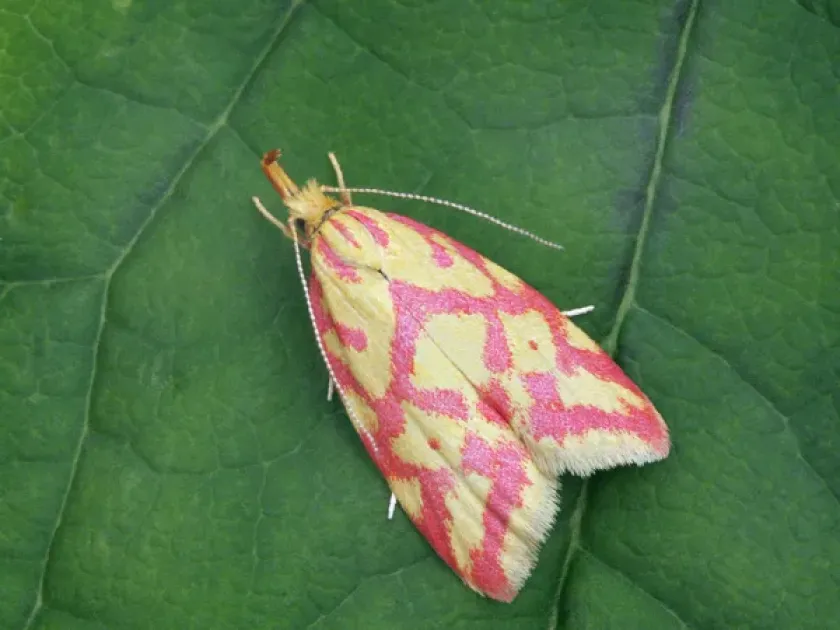
The Polygala moth (Hypercallia citrinalis) is a small moth belonging to the family Depressariidae. The adult moth has a wingspan of approximately 18–22 mm, featuring distinctive bright yellow or ochre-colored forewings adorned with a clear pattern of dark spots and lines.
Adults are primarily nocturnal, spending their days hiding within dense vegetation or under the leaves of host plants. The moth's wing coloration serves as effective camouflage in its natural habitat, making it difficult to detect during flight or while resting.
The caterpillars of this species are notable for their specific body shape and protective coloration, which allows them to blend in with the flowers and stems of Polygala plants. Larvae undergo several developmental stages, gradually increasing in size and becoming more voracious as they approach the pupation period.
Pupation occurs within a dense cocoon, which the caterpillar constructs among the leaves or in the top layer of soil. The pupal stage ensures the insect's survival during unfavorable conditions, enabling the population to successfully persist from year to year.
The insect's life cycle is closely linked to regional climatic conditions. In favorable years, the species can produce multiple generations, significantly increasing the risk of rapid spread across large areas.
What it damages
The primary food source for this species is plants of the Polygalaceae family, particularly Polygala species. The pest prefers young shoots, leaves, and reproductive organs, which directly impacts the plant's ability to flower and produce seeds.
Caterpillars actively consume leaf tissue, leaving behind characteristic skeletonized areas. During periods of population outbreaks, the insect can cause significant damage to ornamental Polygala plantings, reducing their aesthetic value and overall vigor.
Damage to buds and flowers prevents proper pollination, which is critical for plants that reproduce via seeds. Continuous feeding on vegetative mass weakens the plant, making it more susceptible to secondary fungal infections.
In agro-ecosystems or nurseries specializing in the cultivation of medicinal or ornamental Polygala, the Polygala moth is considered a serious pest. The loss of marketability of the plants leads to direct economic losses for producers.
The spread of the pest is often localized, but without population control, it can quickly overwhelm all available areas with suitable host plants. Monitoring the condition of plantings during the spring and summer is essential to prevent widespread damage.
When it appears
Adult Polygala moth activity is observed primarily in the summer months when stable warm weather conditions are established. The timing of adult emergence can vary depending on latitude and specific microclimatic conditions of the area.
The larval feeding period coincides with the active growth of the host plant's vegetative mass. Usually, this occurs in June and July, when larval concentration on host plants is at its peak. During this time, pests are most noticeable and vulnerable to control measures.
Temperature plays a decisive role in the pest's development. Moderately warm weather with sufficient humidity promotes rapid larval development and population growth, whereas drought may slow down the insect's life cycle.
The overwintering stage typically involves the pupa or an adult in diapause. The success of overwintering determines the pest's potential impact at the start of the next season, which is important to consider in long-term protection planning.
Observing the phenology of initial adult emergence allows for precise timing of preventive treatments. The use of light traps at night helps agronomists estimate pest population density and decide on the necessity of insecticide application.
Signs of infestation
The first sign of infestation is the appearance of small holes and bite marks on Polygala leaves, which grow in size over time. A characteristic feature is the use of silken threads by caterpillars to bind leaves together, creating makeshift nests or shelters.
The presence of caterpillar frass on the leaf surface or beneath the plant is direct evidence of active feeding. Upon inspecting the shrubs, one may notice curled or damaged leaves, inside which larvae or already formed cocoons are hidden.
Reduced flowering intensity and premature wilting of buds often indicate hidden damage to the plant's reproductive organs. In neglected cases, plants may appear stunted with visible signs of defoliation.
Visual inspection of the underside of the leaves allows for the detection of both young caterpillars and egg clusters laid by the moths. It is important to perform inspections during morning or evening hours when the pests may be more active outside their shelters.
The use of specialized pheromone traps can serve as a warning of the beginning of mass moth flight. Regular monitoring of these indicators allows for the detection of infestation at the earliest stages, when pest control is most effective.
Control measures
The integrated pest management (IPM) approach includes agrotechnical, biological, and chemical control methods. The agrotechnical approach involves the timely removal of damaged plant residues that may harbor overwintering stages of the pest.
Biological control involves encouraging natural enemies of the moth, such as predatory insects or parasitic Hymenoptera, in the area. The use of biological preparations based on bacteria (e.g., Bacillus thuringiensis) effectively suppresses caterpillar numbers without harming the environment.
Chemical protection should be used selectively, taking into account the flowering times of honey-producing plants to avoid harming beneficial pollinators. The application of contact and systemic insecticides is justified only under high infestation pressure.
It is important to rotate products with different modes of action to prevent the development of resistance in the pest population. Strict adherence to dosage and frequency of applications specified on product labels is key to the effectiveness and safety of control measures.
- Regular plant inspection during the growing season.
- Mechanical destruction of caterpillar nests.
- Use of bio-insecticides during the active growth phase.
- Crop rotation and maintaining spatial isolation of plantings.
- Use of protective nets to shield valuable specimens from oviposition.
Taxonomy
- Latin name
- Hypercallia citrinalis
- Order
- Lepidoptera (butterflies)
- Family
- Amphisbatidae
- EPPO code
- HPKLCI
Discussion
No discussions yet — be the first.