
Blue blowfly
Protophormia terraenovae
Description
How to identify
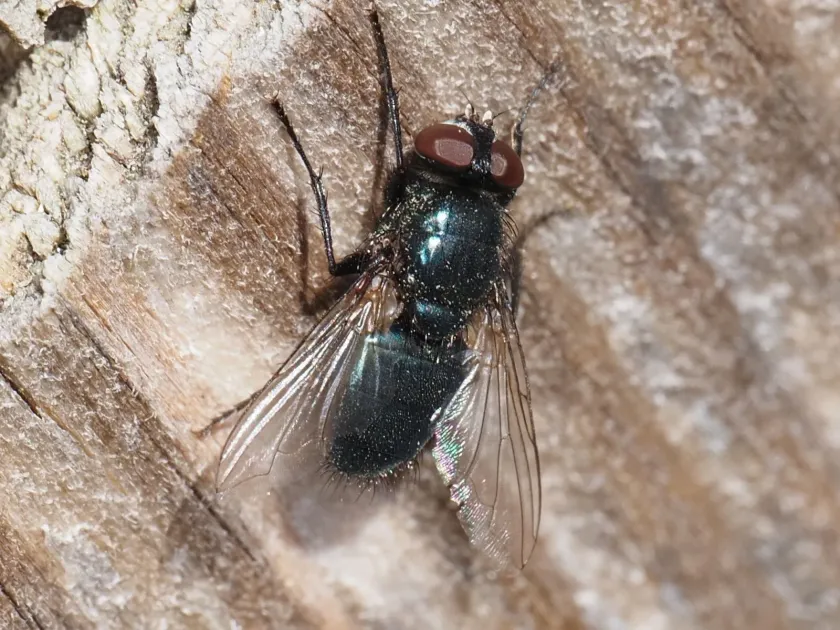
The blue blowfly (Protophormia terraenovae) is a member of the Calliphoridae family, order Diptera. The adult fly is easily recognizable by its metallic blue or blue-green appearance.
Adult flies measure between 6 and 12 mm in length. Their heads possess large, multifaceted eyes, and their mouthparts are designed for lapping up liquids and organic materials.
The wings are clear with distinct venation characteristic of blowflies. The brilliance of the thorax and abdomen can vary based on nutritional quality during the larval stage.
The life cycle consists of the egg, larval (three instars), pupal, and adult stages. This species is highly adaptable, allowing it to thrive in various climates across the globe.
It is a synanthropic species, meaning it frequently interacts with human environments and livestock facilities in search of food and breeding grounds.
What it damages
The primary agricultural damage is caused by the infestation of animal feed, meat products, and carcasses by fly larvae, leading to substantial raw material loss.
In livestock farming, blue blowflies can cause myiasis, where larvae infect open wounds or mucous membranes of animals, causing severe irritation and reduced animal health.
They act as mechanical vectors for numerous pathogens, helminth eggs, and bacteria, transferring them from contaminated waste to animal feed and water supplies.
Facilities processing meat and bone meal often face significant losses due to fly outbreaks, requiring rigorous environmental management to protect stored products.
The presence of high fly populations compromises the sanitary standards of agricultural facilities, necessitating immediate intervention to prevent disease outbreaks.
When it appears
Blue blowfly activity begins in early spring as soon as temperatures rise above 10 degrees Celsius, allowing overwintering adults to become active.
Peak abundance occurs during the summer months when warm conditions accelerate the metabolic processes of larvae, shortening the generation cycle significantly.
As autumn approaches, activity slows, though flies often seek shelter in warmer indoor areas to survive the cooler months in a state of diapause.
The optimal developmental temperature range is between 20 and 28 degrees Celsius, which makes them highly productive in temperate climates.
Seasonal spikes in population are strongly linked to the amount of organic waste available on farms; improved waste management can dramatically limit their seasonal presence.
Signs of infestation
A primary indicator of infestation is the observation of large numbers of metallic-blue flies buzzing around animal waste storage, compost heaps, or meat processing areas.
Egg clusters appearing as small, white, tight masses on organic matter or meat signify that a new generation of flies is currently breeding on the site.
The presence of larvae in feed, carcasses, or wounds on livestock is a critical sign of a severe infestation that requires urgent management.
Small black fecal spots found on walls, windows, and equipment indicate established fly activity and high population density within the facility.
Livestock showing signs of distress or irritation, especially when skin lesions are present, often indicate that blowflies are attacking the animals.
Control measures
Strict sanitation is the most effective control measure: removing animal waste, properly disposing of dead livestock, and keeping feed storage areas clean and dry.
Using larvicides in breeding hotspots, such as manure pits and waste containers, is essential to stop the development of the next generation of adult flies.
Traps, light-based insecticidal lamps, and sticky tapes can be installed in buildings to reduce the number of adult flies that have already emerged.
Biological control methods, such as the use of natural predators or parasitic wasps, can help manage fly populations in manure management systems.
- Routine disinfection of livestock buildings.
- Installing fine-mesh screens on windows and vents.
- Sealing all food and waste containers securely.
- Applying residual insecticides on resting surfaces.
Taxonomy
- Latin name
- Protophormia terraenovae
- Order
- Diptera (flies)
- Family
- Calliphoridae
- EPPO code
- PRTOTE
Discussion
No discussions yet — be the first.