
Protophormia
Protophormia
Description
How to identify
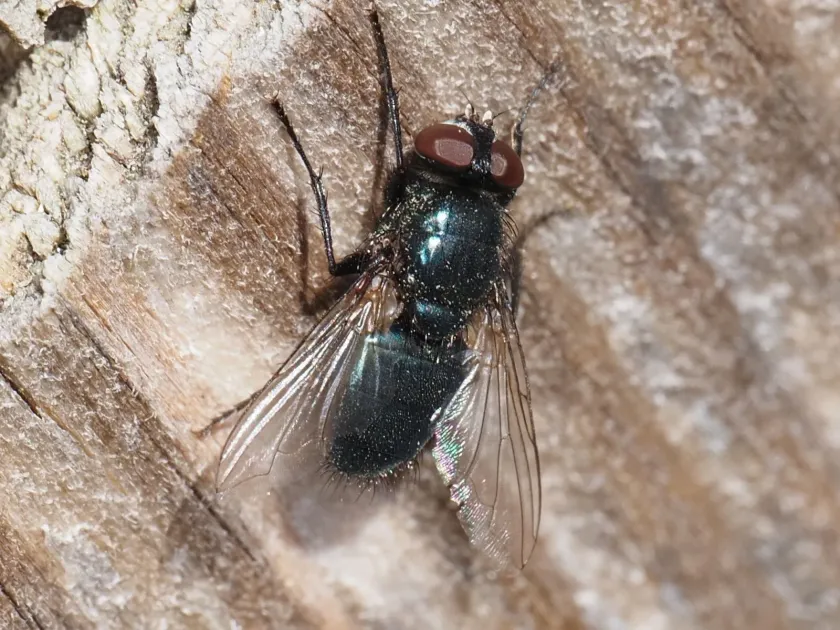
Protophormia is a genus of blow flies belonging to the family Calliphoridae. These insects are easily recognized by their metallic, often blue or black, shiny appearance and robust body structure.
Adult flies possess well-developed compound eyes and mouthparts designed for sponging liquids. They are highly attracted to decaying organic matter, which serves as a breeding ground for their larvae.
The larvae are typical of the family Calliphoridae: they have a cylindrical, legless body that tapers towards the anterior end. They develop rapidly within protein-rich environments.
Accurate identification of Protophormia species often requires examination under a microscope, focusing on the arrangement of bristles and wing venation, as many related species share a similar phenotype.
In agricultural settings, their presence is often an indicator of inadequate sanitation, such as the accumulation of waste or rotting organic matter that requires immediate attention.
What it damages
The primary impact of Protophormia on agriculture is indirect, as they act as vectors for various bacteria, fungi, and pathogens that can contaminate crops and agricultural produce.
When these flies land on healthy produce, they can transfer harmful microorganisms from decay sites to fresh fruits or vegetables, accelerating post-harvest rot and spoilage.
Larval infestation in damaged produce further degrades quality, leading to economic losses and making the products unsuitable for commercial distribution or consumption.
Presence in storage facilities increases the risk of product contamination, potentially violating food safety standards and requiring disposal of the affected goods.
While they do not feed on healthy plant tissues directly, their role in spreading plant diseases and the degradation of organic soil components makes them an unwelcome presence in any controlled farming environment.
When it appears
Protophormia activity is heavily influenced by ambient temperature and environmental conditions. Adult flies become active in early spring as temperatures rise above 10–12 degrees Celsius.
During the warmer summer months, the developmental cycle of these flies accelerates, allowing for multiple overlapping generations within a single growing season if conditions are favorable.
Autumn marks a decline in their activity, although they may persist in protected environments like barns, warehouses, or heated greenhouses until the onset of hard frosts.
The overwintering strategy usually involves the pupal stage, which remains dormant in the soil or beneath debris. This adaptation allows the species to survive low temperatures.
Understanding the seasonal lifecycle is vital for farm management, as targeted interventions in the early spring can significantly reduce the potential for mass outbreaks later in the year.
Control measures
The most effective management strategy is rigorous sanitation. Removing organic waste, decaying plant material, and manure prevents the flies from finding suitable sites for egg-laying.
Installation of physical barriers such as insect-proof screens on greenhouse vents and storage buildings is essential to keep adult flies away from sensitive produce.
Utilizing various traps, including sticky ribbons, light-based insect traps, or bait stations, can help monitor and reduce the population of adult flies in sensitive areas.
Cultural practices like thorough soil cultivation in the autumn help expose and destroy pupae, effectively breaking the life cycle and reducing the overwintering population.
In cases of high infestation, localized insecticide treatments may be used according to safety guidelines to prevent chemical contamination of the crop while maintaining the necessary hygiene standards.
Taxonomy
- Latin name
- Protophormia
- Order
- Diptera (flies)
- Family
- Calliphoridae
- EPPO code
- PRTOSP
Discussion
No discussions yet — be the first.