
Prorops
Prorops
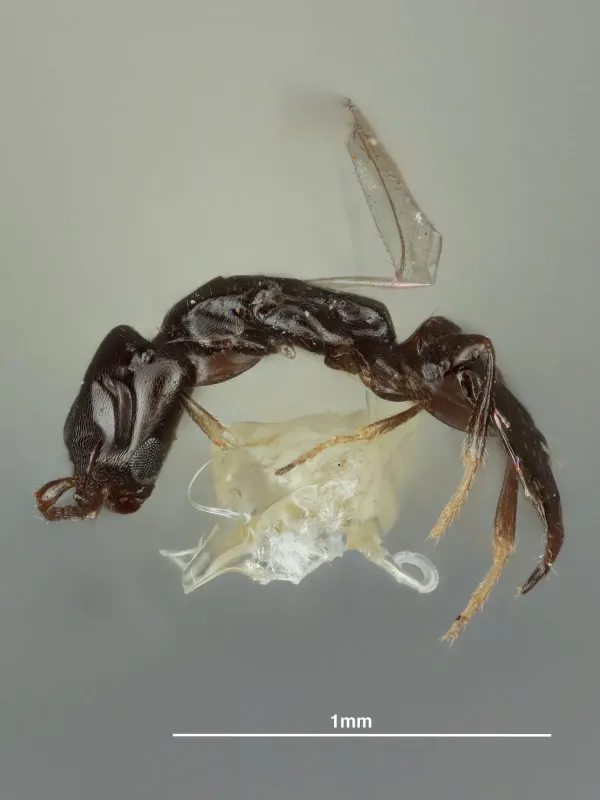
Description
How to identify
Prorops (Prorops nasuta) is a small parasitoid wasp belonging to the order Hymenoptera and the family Braconidae.
This insect is widely recognized in tropical agriculture as a specialized natural enemy of major fruit-boring pests.
The morphology of the adult wasp is highly specialized, allowing it to navigate within the tunnels created by host insects inside coffee berries.
As a biological control agent, it has been studied extensively for its ability to regulate pest populations in sustainable farming systems.
Understanding the biology of this species is essential for agronomists aiming to implement biological pest management strategies.
What it damages
Unlike traditional agricultural pests, Prorops is beneficial; it parasitizes the larvae of the coffee berry borer (Hypothenemus hampei).
The borer causes significant economic loss by damaging coffee beans, and Prorops acts as a natural check on this destructive behavior.
The wasp enters the infested berries, locates the host larvae, and lays eggs on them, effectively terminating the borer's life cycle.
Because it operates internally, this parasitoid provides control that is often inaccessible to standard contact-based chemical treatments.
Consequently, Prorops is considered an asset in maintaining the health and yield quality of coffee plantations worldwide.
When it appears
The presence and activity of Prorops depend on the phenological development of coffee berries and the infestation cycles of the coffee berry borer.
In tropical climates, the population of this parasitoid can fluctuate based on seasonal rainfall patterns and temperature variations.
Adult wasps are most active during the periods when the borer larvae are available as hosts inside the developing fruits.
Agronomists monitor the synchronization between the pest population and the parasitoid to determine the best timing for agricultural interventions.
Optimal humidity levels are critical for the survival of the wasp populations in the field during the dry season.
Signs of infestation
Detecting the presence of Prorops in a plantation is challenging due to its microscopic size and secretive behavior within the coffee fruits.
Field confirmation is usually achieved through specialized sampling programs where berries are opened to check for the presence of the wasp's larvae.
Reduced infestation rates of the berry borer at harvest time serve as a long-term indicator of the effectiveness of the local parasitoid population.
Specialized traps or sticky boards can sometimes be used to capture adult wasps for demographic monitoring.
Microscopic examination of damaged coffee berries remains the most reliable way to identify successful parasitism by Prorops.
Control measures
Management of Prorops in a plantation setting focuses on habitat conservation rather than eradication, as it is a beneficial organism.
Reducing the use of broad-spectrum insecticides is crucial to ensure that the parasitoid population is not adversely affected.
Augmentative biological control, which involves mass rearing and releasing the wasps, is a viable strategy in areas with high borer pressure.
Maintaining ecological diversity around the farm helps provide alternative resources and refuge for the wasps during off-seasons.
- Minimize reliance on synthetic pesticides to protect natural populations.
- Implement periodic releases of lab-reared wasps during peak borer infestation.
- Establish buffer zones with native vegetation to support natural biological control.
Taxonomy
- Latin name
- Prorops
- Order
- Hymenoptera
- Family
- Bethylidae
- EPPO code
- PRRPSP
Discussion
No discussions yet — be the first.