
Sap beetle
Prometopia
Description
How to identify
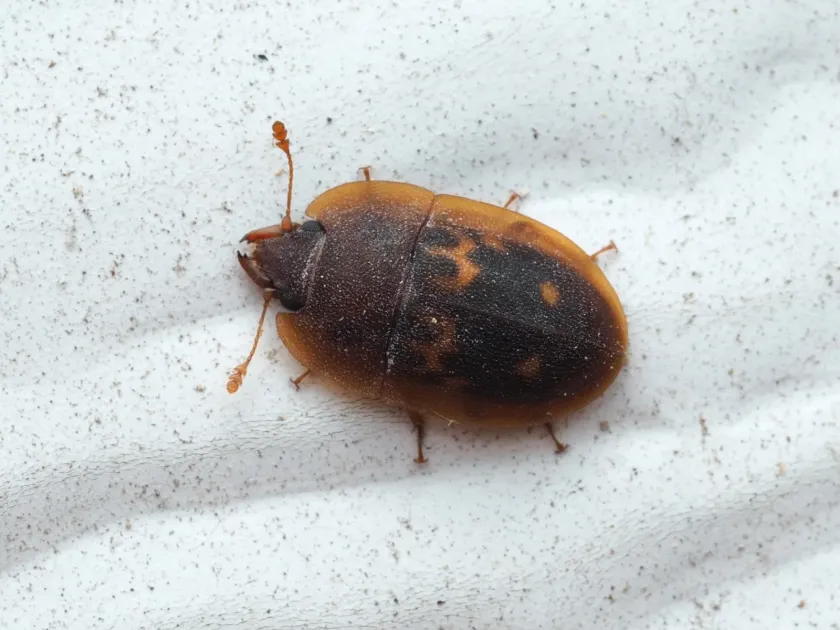
The Prometopia genus belongs to the Nitidulidae family, commonly known as sap beetles. These insects are characterized by their flattened, oval-shaped bodies that allow them to inhabit tight spaces under bark or within decaying plant matter.
Adult beetles typically possess a dark, chitinous exoskeleton, sometimes with slight metallic highlights, and feature clubbed antennae typical of the family.
Larvae are generally mobile and possess well-developed legs, which enable them to move effectively throughout their food source, often flowers or rotting fruit.
Identification at the species level usually requires specialized entomological equipment to examine morphological characteristics such as the punctation of the elytra.
Their cryptic behavior means that infestations often go unnoticed until the insects become sufficiently numerous to cause visible agricultural damage.
What it damages
These beetles primarily target fruit-bearing plants, where they feed on the delicate reproductive structures of flowers, including stamens and pistils.
This feeding behavior disrupts the pollination process and causes direct damage to developing buds, leading to a significant reduction in fruit yield.
Sap beetles are also attracted to fermenting fruit juices, meaning they often occupy wounds caused by other insects or physical damage, exacerbating the rot.
While feeding, they can introduce various fungal pathogens into the plant tissue, leading to secondary infections that further stress the host plant.
In cases of high infestation, the foliage and young fruits may show signs of tissue necrosis and distortion, negatively impacting the plant's overall health.
When it appears
Adults emerge from overwintering sites in the spring, coinciding with the early flowering stages of their host plants as temperatures begin to rise.
The life cycle involves a complete metamorphosis, including egg, larval, and pupal stages, with pupation typically occurring in the soil or ground debris.
Activity peaks during the warm summer months when adults migrate between food sources to feed and lay eggs for the next generation.
By late summer and early autumn, the new generation of adults seeks out protected overwintering locations such as under tree bark or in leaf litter.
Stable microclimates, such as rotting logs or garden compost, provide ideal environments for their development throughout the warmer season.
Signs of infestation
The first indicator of an infestation is the presence of irregular, chewed edges on flower petals or dark spots on the floral tissues.
Gardeners may observe small, dark, flattened beetles congregating on blossoms or feeding on damaged fruit surfaces during the day.
Small mounds of frass or waste products within the flower heads serve as a strong diagnostic indicator of larval activity within the plant structure.
Premature fruit drop or deformed fruits are common late-stage indicators that damage occurred during the early reproductive phases of the plant.
Secondary infections, such as mold or soft rot, occurring in floral structures often suggest that sap beetles have been feeding in those areas.
Control measures
Integrated pest management strategies should begin with strict sanitation, including the removal and destruction of fallen fruit and rotting organic debris.
Chemical control can be effective if applied during the budding stage, though caution is required to protect beneficial pollinators like honeybees.
Maintaining vigorous plant health through proper pruning and irrigation makes plants less attractive to these opportunistic feeders.
Monitoring with specific attractant or fermenting baits can help detect beetle populations early and inform the timing of pesticide application.
- Regular inspection of blossoms during the early growing season.
- Use of physical barriers or netting for high-value crops.
- Encouraging natural predators such as predatory bugs and lacewings.
Taxonomy
- Latin name
- Prometopia
- Order
- Coleoptera (beetles)
- Family
- Nitidulidae
- EPPO code
- PRMOSP
Discussion
No discussions yet — be the first.