
Proisotoma minuta
Proisotoma minuta
Description
How to identify
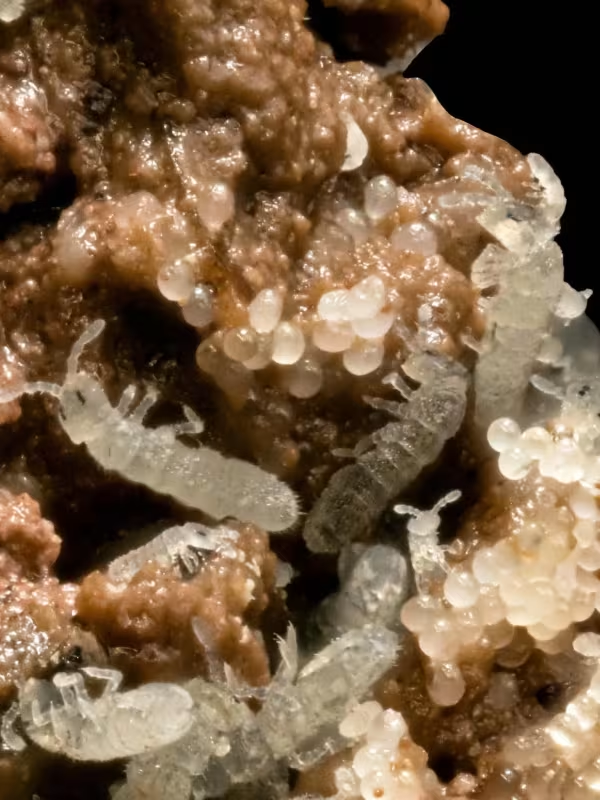
Proisotoma minuta belongs to the class Entognatha, order Collembola (springtails), family Isotomidae. It is a microscopic arthropod, measuring no more than 1–2 mm, with an elongated body ranging from white to grayish in color.
Adults possess a furcula (jumping organ) on their abdomen, allowing them to jump suddenly when threatened or disturbed. They lack eyes or have very primitive visual organs, preferring damp, dark environments deep within the soil profile.
Externally, springtails are often confused with other soil-dwelling organisms, but their high concentration on the soil surface after irrigation is a characteristic sign of the species. They are active primarily in greenhouses, hotbeds, and indoor growing environments.
The life cycle involves several molts without a metamorphosis stage typical of insects. Population levels can reach massive numbers in a very short time if organic matter is abundant and humidity remains high.
Optimal conditions for reproduction include temperatures between +15°C and +22°C and substrate moisture above 70%. Without high humidity, individuals quickly dehydrate and perish, which is why their distribution is strictly linked to irrigation patterns.
What it damages
This pest primarily damages young plants in the seedling or early growth stages. Typical targets include germinating seeds, tender roots, and the hypocotyl of the developing plant.
In greenhouse settings, Proisotoma minuta frequently attacks vegetable crops such as tomatoes, cucumbers, and peppers. Cases of damage have also been recorded in ornamental and flower crops grown in containers or seed trays.
Damage occurs when the pests scrape the epidermal tissues of roots and consume cotyledons. At high population densities, these pests can destroy up to 80% of seedlings, leading to sparse crop stands and significant yield losses.
Root damage triggers secondary infections. Through the micro-wounds left by the springtails, pathogenic fungi and bacteria easily invade plant tissues, leading to "damping off" and root rot diseases.
Furthermore, Proisotoma minuta acts as a bio-indicator of poor agricultural practices, such as over-watering or the use of non-sterile organic substrates rich in decomposing plant residues.
Signs of infestation
The first sign of infestation is the sudden "disappearance" of seedlings or a stunted appearance without visible cause. Close inspection of seedlings with a magnifying glass often reveals superficial ulcers on the roots.
Visually, springtails become apparent on the soil surface immediately after a heavy watering. They appear as a fine layer of "dust" that begins to move erratically or jump when touched.
Leaves that touch the soil may show small, circular holes or necrotic spots. The seedlings begin to lag in growth, yellow, and can be easily pulled from the soil due to root system degradation.
If insect traps are used in the greenhouse, springtails rarely get caught because they live primarily within the soil profile. Therefore, visual inspection of the soil surface during morning hours remains the most effective diagnostic method.
The presence of a musty, decaying organic smell from the substrate is often correlated with Proisotoma minuta colonies, as decomposing organic matter is their primary food source.
Control measures
The primary control method involves normalizing irrigation and allowing the top layer of soil to dry out. Proisotoma minuta cannot survive in dry substrates, so temporary reduction of moisture effectively suppresses their population.
Mandatory sterilization of soil mixes is necessary before sowing. Steam treatment, heat treatment, or the use of high-quality industrial peat substrates minimizes the risk of infestation.
If chemical protection is required, soil-drenching products based on imidacloprid, thiamethoxam, or diazinon are effective. Strict adherence to application regulations is crucial to avoid phytotoxicity to young seedlings.
Biological control methods include the use of entomopathogenic nematodes (such as Steinernema feltiae), which effectively kill soil-dwelling stages of Collembola without harming the plants or the environment.
- Optimize substrate composition (avoid fresh, undecomposed organic matter).
- Regularly loosen the topsoil layer to speed up evaporation.
- Promptly discard and remove heavily infested seedlings.
- Use yellow sticky traps to monitor adult populations.
Taxonomy
- Latin name
- Proisotoma minuta
- Family
- Isotomidae
- EPPO code
- PRMAMI
Discussion
No discussions yet — be the first.