
Folsomia fimetaria
Folsomia fimetaria
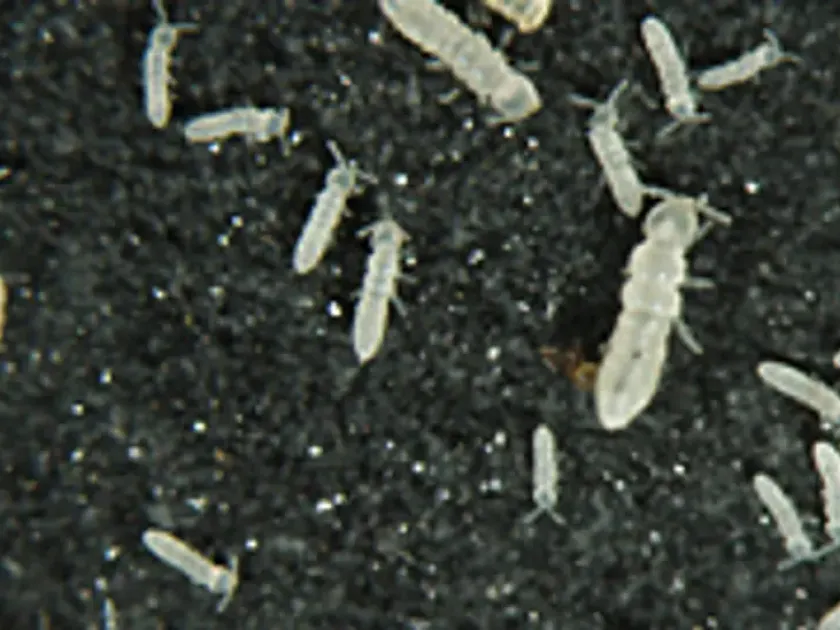
Description
How to identify
Folsomia fimetaria belongs to the order Entomobryomorpha and the family Isotomidae. These tiny arthropods, commonly known as springtails, are ubiquitous inhabitants of damp soils and organic-rich substrates.
Adult individuals are approximately 1-1.5 mm long. Their bodies are elongated and cylindrical, often appearing translucent or white, which allows them to blend perfectly into soil or potting media.
They are characterized by a forked appendage called a furcula on the underside of the abdomen, which they use to catapult themselves away when threatened, giving them the common name "springtail."
Their biological cycle is highly dependent on humidity. Because they lack a waterproof cuticle, they require high levels of moisture to prevent desiccation.
In intensive cultivation systems, Folsomia fimetaria can maintain continuous reproduction cycles, making them a persistent challenge in greenhouses and nurseries.
What it damages
While primarily decomposers that feed on fungi and decaying organic matter, these pests become opportunistic feeders on living plants when food sources are scarce or populations are high.
They cause damage by grazing on the delicate root hairs and root tips of seedlings and young cuttings, which severely limits the plant's ability to absorb water and nutrients.
Root damage caused by these insects often provides entry points for soil-borne pathogens, leading to secondary infections such as damping-off disease.
Commercial crops such as tomatoes, cucumbers, and ornamental bedding plants are particularly vulnerable during the early stages of establishment.
In extreme cases, dense populations can completely prune the root system of a seedling, resulting in wilting, chlorosis, and potential total crop failure in tray-grown transplants.
Signs of infestation
An early indicator of an infestation is the sudden appearance of tiny, jumping white insects on the surface of the soil or near the base of the plant following a watering cycle.
Visible symptoms on the plant include unexplained stunted growth and loss of vigor, despite providing optimal fertilization and lighting conditions.
If the soil is examined closely, especially after a fresh irrigation, the springtails will manifest as a grey or white shimmering layer moving across the wet soil surface.
A musty or earthy odor emanating from the pots may indicate that a large colony of Folsomia fimetaria has significantly altered the microbial balance of the substrate.
Root examination often reveals damaged, brown, or truncated root tips instead of the healthy, white, branched structures expected in a thriving plant.
Control measures
Effective management begins with strict moisture control. Allowing the upper layers of the growing medium to dry out slightly between waterings significantly hinders the survival and reproduction of springtails.
Ensuring that greenhouse benches are well-drained and avoiding standing water in trays is crucial to preventing localized outbreaks.
Biological control agents, such as predatory mites (e.g., Hypoaspis miles or Stratiolaelaps scimitus), are highly effective at preying on these pests within the soil profile.
When chemical intervention is required, drenching the soil with appropriate insecticides is the preferred method, ensuring the product reaches the root zone where the springtails are active.
- Maintain good hygiene by removing old plant debris and dead organic matter.
- Use heat-sterilized or pasteurized media for seedling production.
- Monitor populations using potato traps (slices of potato buried slightly).
- Apply soil drenches containing recommended active ingredients.
Taxonomy
- Latin name
- Folsomia fimetaria
- Family
- Isotomidae
- EPPO code
- FOLSFI
Discussion
No discussions yet — be the first.