
Folsomides
Folsomides
Description
How to identify
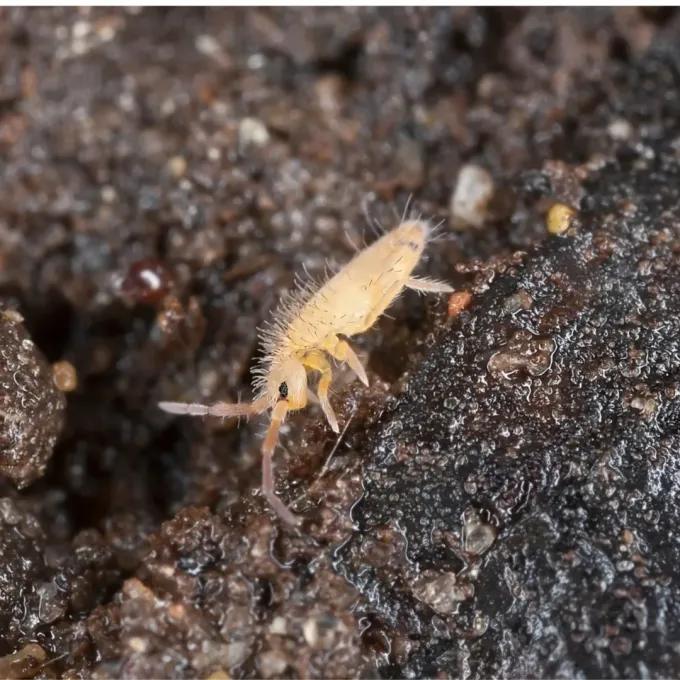
Folsomides is a genus of springtails (Collembola) belonging to the family Isotomidae. These tiny arthropods are commonly found in soil, leaf litter, and moist substrates.
They appear as very small, elongated organisms, typically white, grey, or yellowish in color, usually ranging from 1 to 2 millimeters in body length.
A distinctive feature of these pests is the furcula, a spring-like appendage on the abdomen that allows them to jump several centimeters when disturbed.
Reproduction is sexual and occurs in the soil, where females deposit eggs in cracks or on moist organic matter. Their life cycle is rapid in favorable humid conditions.
Their biology is highly dependent on environmental moisture; they thrive in saturated soils and high-humidity environments typical of greenhouses and nursery trays.
What it damages
Folsomides are primarily considered pests in greenhouses, nurseries, and indoor gardens, where they target tender plant tissues.
Young seedlings, germinating seeds, and newly rooted cuttings are the most vulnerable, as their soft tissues are easily accessible to these small grazers.
While they primarily feed on decaying organic matter, they switch to feeding on living plant tissues when organic food sources are scarce or populations are high.
Feeding damage often manifests as small pits or holes in roots, stems, and cotyledons, leading to stunted growth, nutrient deficiency symptoms, and potential seedling death.
Furthermore, these pests are known to harbor and transport spores of pathogenic fungi, indirectly increasing the incidence of root rot and damping-off diseases.
Signs of infestation
The most obvious sign of an infestation is observing masses of tiny, jumping insects on the surface of the soil, especially immediately after irrigation.
Seedlings may show signs of yellowing, wilting, or general failure to thrive despite adequate water levels, indicating damage to the root system.
A thin, dust-like layer of these insects may be visible on top of the soil, moving erratically when the container is tapped or the surface is brushed.
Pitted damage on the stems near the soil line or small pinholes in the first true leaves often suggest the presence of a localized springtail population.
If plants are growing poorly in a soil mix rich in peat or compost, checking the surface for these active, jumping creatures is a standard diagnostic step.
Control measures
The primary control method for Folsomides is moisture management, as they cannot survive in dry conditions; allowing the top layer of soil to dry out is often effective.
Using sterilized, high-quality potting mixes rather than uncomposted or organic-heavy substrates helps minimize the food source available for their development.
Regular aeration of the soil surface ensures better drainage and prevents the consistent high humidity that favors the rapid multiplication of springtails.
For chemical control, specialized soil-applied insecticides registered for greenhouse use can be utilized if biological methods like drying are insufficient.
Integrated pest management strategies should focus on maintaining hygiene in the greenhouse and inspecting new plants thoroughly before introducing them into the main crop.
Taxonomy
- Latin name
- Folsomides
- Family
- Isotomidae
- EPPO code
- FOLDSP
Discussion
No discussions yet — be the first.