
Antarctic springtail
Cryptopygus antarcticus
Description
How to identify
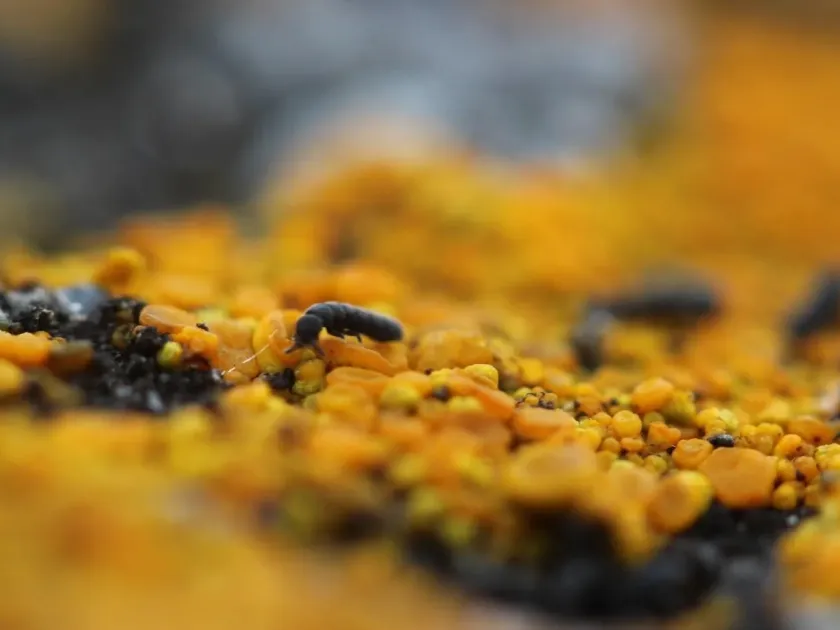
The Antarctic springtail (Cryptopygus antarcticus) is a small hexapod belonging to the order Collembola and the family Isotomidae. Adults typically measure between 1 and 2 millimeters in length.
Their body shape is elongated, which is typical for soil-dwelling organisms. The color ranges from dark grey to black, allowing them to blend into damp potting media.
A distinctive feature of this species is the furcula, or jumping organ, which enables them to leap several centimeters when disturbed or exposed to light.
They are highly adapted to humid environments and are sensitive to desiccation, preferring the dark, moist microclimate found in greenhouse soil or peat substrates.
Identification is best achieved by inspecting the soil surface after watering, as moisture forces them to migrate to the upper layers of the substrate.
What it damages
While Cryptopygus antarcticus primarily feeds on decaying organic matter, it can shift to feeding on living plant tissues under greenhouse conditions when organic sources are depleted.
The damage is most severe on young seedlings and tender cuttings, as the springtails feed on the delicate root hairs and the basal part of the stem.
Feeding activity often causes stunted growth, wilting, and in severe cases, the death of young plants, making them highly problematic for nursery operations.
Root damage caused by these pests creates necrotic spots, which often serve as entry points for secondary fungal infections like damping-off or root rot.
High-value greenhouse vegetables and ornamentals grown in peat-based mixes are particularly vulnerable to population outbreaks of this pest.
Signs of infestation
The most visible sign of infestation is the presence of numerous tiny, jumping insects on the surface of the growing medium, particularly right after irrigation.
Infected plants may exhibit yellowing leaves, lack of vigor, and general poor development despite optimal fertilization and lighting conditions.
Close observation of the root ball often reveals fine pitting or irregular tissue loss on the smallest root branches where the pests have been feeding.
An accumulation of greyish, dust-like particles on the surface of the pot, which disperse upon contact, is a strong indicator of a dense springtail colony.
In greenhouses, sticky traps placed near the soil level can help monitor adult activity and confirm the presence of an active infestation.
Control measures
The primary control method is the management of moisture. Allowing the surface of the growing medium to dry out significantly reduces the survival rate of the springtails.
Sanitation is crucial; using pasteurized or sterilized substrates prevents the initial introduction of the pest into the greenhouse production cycle.
Chemical control involving soil-drench insecticides should be considered only if populations exceed economic thresholds and cultural methods have failed.
Biological solutions, such as the application of entomopathogenic fungi like Beauveria bassiana, offer an effective and eco-friendly way to suppress populations.
- Maintain proper drainage in all greenhouse containers.
- Remove plant debris regularly to limit food sources.
- Monitor populations using potato slice traps buried in the soil.
Taxonomy
- Latin name
- Cryptopygus antarcticus
- Family
- Isotomidae
- EPPO code
- CRYYAN
Discussion
No discussions yet — be the first.