
Folsomia
Folsomia
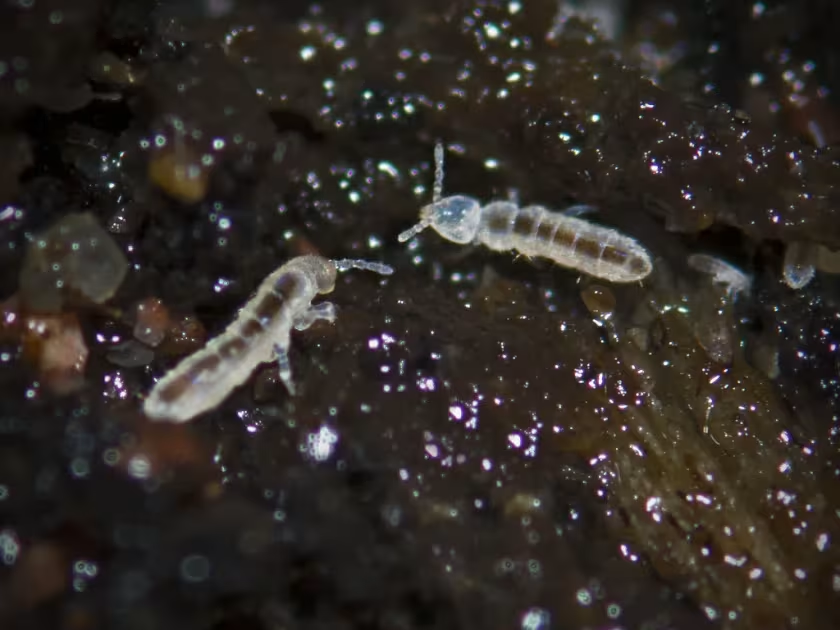
Description
How to identify
Folsomia is a genus of springtails (Collembola) belonging to the family Isotomidae. These tiny, wingless hexapods are common inhabitants of moist soils and organic-rich substrates.
Adult individuals are typically small, measuring between 0.5 and 2 mm in length. Their bodies are elongated, cylindrical, and usually white, pale yellow, or light gray in color.
They possess a specialized appendage called a furcula located on the abdomen, which acts as a spring, allowing the insects to jump rapidly when disturbed.
These organisms are highly dependent on humidity, as they respire through their cuticles. This makes them flourish in damp greenhouses and humid potting environments.
Their life cycle is relatively short, allowing for rapid population explosions under favorable conditions of high moisture and decaying organic matter.
What it damages
Folsomia primarily damages seeds, germinating sprouts, and the delicate root systems of young plants in both greenhouse and indoor settings.
By feeding on fine root hairs, they impair the plant's ability to take up water and essential nutrients, leading to stunted growth and overall physiological stress.
Young seedlings are particularly vulnerable during the early stages of growth, where damage to the hypocotyl or primary root can result in total plant collapse.
The feeding activity creates micro-wounds on the root surface, which often serve as entry points for various soil-borne fungi and bacteria, leading to root rot.
Heavy infestations are often found in stagnant, overly wet conditions where the population density can become high enough to cause significant economic losses in nursery production.
Signs of infestation
The most noticeable sign of a Folsomia infestation is the presence of numerous tiny, jumping insects on the surface of the soil immediately after watering.
Plants may show symptoms of water stress, such as wilting or drooping leaves, despite the soil being moist, indicating damaged root systems that cannot function properly.
Close inspection of the root zone often reveals light-colored feeding marks or irregular, brownish necrotic lesions on the younger roots.
A musty or moldy smell coming from the potting soil is often associated with high moisture levels and high concentrations of springtails.
In cases of severe infestation, the surface of the potting mix may appear to have a moving, grayish layer, which is a clear indicator of a massive population outbreak.
Control measures
The most effective cultural control method is managing soil moisture. Allowing the top layer of the substrate to dry out between waterings significantly reduces their survival rate.
Ensuring that growing containers have proper drainage and avoiding water stagnation in saucers prevents the creation of optimal breeding habitats.
Utilizing sterile potting media is a primary preventive strategy to avoid introducing springtails into new planting areas or indoor collections.
For chemical and biological control, entomopathogenic fungi such as Beauveria bassiana can be applied to the soil to suppress the springtail population.
- Layering dry sand over the soil surface to create an inhospitable environment.
- Removing all decaying organic debris from the pots.
- Regular inspection of propagation trays and greenhouse benches for pest presence.
Taxonomy
- Latin name
- Folsomia
- Family
- Isotomidae
- EPPO code
- FOLSSP
Discussion
No discussions yet — be the first.