
Folsomia candida
Folsomia candida
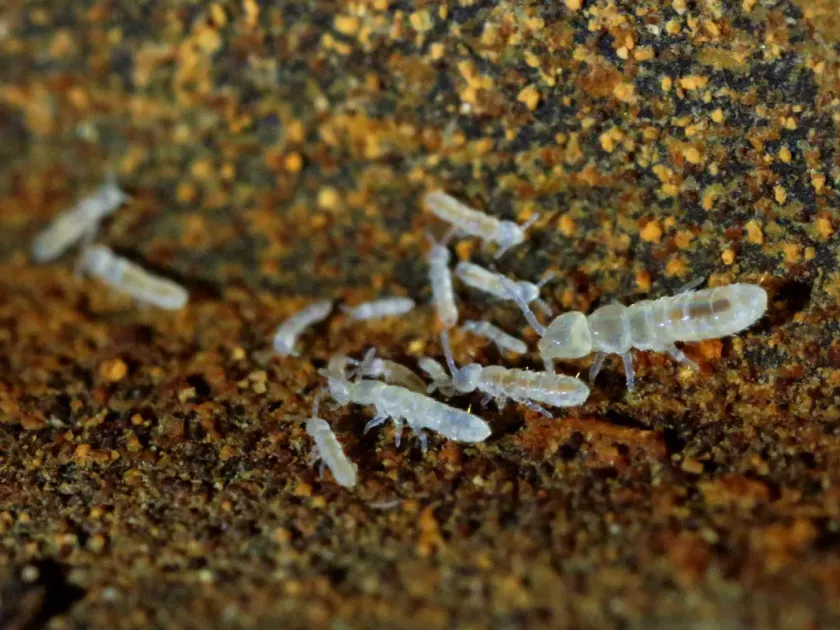
Description
How to identify
Folsomia candida is a tiny, soil-dwelling insect belonging to the Collembola order and the Isotomidae family. Adults typically measure 1–2 mm in length and possess a slender, elongated, and segmented white body.
This species is eyeless and completely unpigmented, perfectly adapted to a life within the dark and humid microenvironment of the soil or organic substrates.
They possess a specialized organ called a furcula, allowing them to jump, although they are more frequently observed crawling on moist surfaces or within soil crevices.
Reproduction is primarily parthenogenetic, meaning that a single female can establish a large population in a greenhouse or pot very quickly.
The entire life cycle from egg to adult takes approximately 3 to 4 weeks under favorable temperatures, and they can remain dormant in dry periods, making them difficult to eradicate.
What it damages
Folsomia candida is considered a pest primarily in indoor environments, greenhouses, and mushroom production facilities, where they feed on roots, seedlings, and mycelium.
They damage plant tissues by gnawing on delicate roots and stems, which weakens the plant's structural integrity and its ability to absorb essential nutrients.
Injuries caused by these pests create entry points for secondary pathogens, such as Pythium and Rhizoctonia, leading to root rot and systemic wilting.
In commercial mushroom production, they cause significant losses by consuming fungal mycelium and damaging the developing fruiting bodies of the crop.
For young seedlings, high densities of these insects can lead to total crop failure as they consume the root systems before the plants can establish.
Signs of infestation
The most common indicator of an infestation is the presence of numerous tiny white insects scurrying across the soil surface immediately after watering.
Affected plants often show signs of stunted growth, leaf chlorosis, and general loss of vitality, even when soil moisture and light levels are optimal.
A closer inspection of the root zone might reveal eroded root tips, small lesions, and missing root hairs, often accompanied by decay near the soil-air interface.
In greenhouses, high populations of these pests are often clustered in areas where standing water persists, such as drainage trays or beneath dense foliage.
Seedlings failing to germinate or collapsing shortly after emergence without visible signs of fungal stem rot are often suffering from intensive root feeding by springtails.
Control measures
The most effective cultural control method is managing soil moisture by allowing the top few centimeters of the substrate to dry out between watering cycles.
Maintaining proper hygiene in the greenhouse and using sterilized potting mixes can prevent the initial introduction of these pests into your collection.
Biological control agents, such as entomopathogenic fungi like Beauveria bassiana or predatory mites, can be used to naturally reduce population numbers.
For severe infestations, drenching the soil with systemic insecticides or insect growth regulators may be necessary to target the larvae and adults in the substrate.
- Regulate irrigation schedules.
- Use sterile growing media.
- Apply entomopathogenic fungi.
- Improve pot drainage.
- Quarantine newly acquired plants.
Taxonomy
- Latin name
- Folsomia candida
- Family
- Isotomidae
- EPPO code
- FOLSCA
Discussion
No discussions yet — be the first.