
Springtails
Isotoma
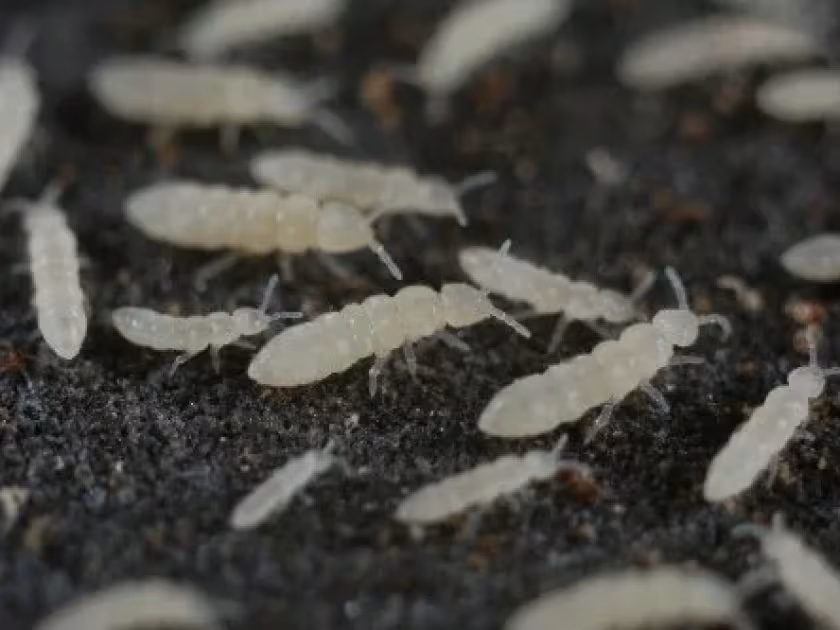
Description
How to identify
Springtails, also known as Collembola (order Collembola, family Isotomidae), are tiny hexapods that typically measure between 1 and 3 mm in length.
These pests usually have a slender, elongated body that can range in color from white or grey to light brown, depending on the specific species.
They are equipped with a unique jumping organ called a furcula, which allows them to leap several centimeters when disturbed or exposed.
Springtails thrive in damp environments with high organic matter content, making moist greenhouse soil or potting mix their ideal habitat.
They are most visible during irrigation when the water forces them to the surface, where their frantic jumping behavior becomes clearly apparent.
What it damages
Springtails primarily attack the delicate root systems of young seedlings, germinating seeds, and tender cuttings in greenhouse conditions.
By grazing on root hairs and outer root tissues, they disrupt the plant's ability to absorb water and essential nutrients, leading to stunted growth.
In cases of high infestation, they may also chew into the lower stem and leaves that are in direct contact with the wet soil surface.
The wounds left by springtail feeding provide entry points for secondary pathogens, such as fungi or bacteria, which can cause damping-off disease.
While they are beneficial decomposers in wild soil ecosystems, their presence in large numbers in a nursery setting is considered a major agronomic threat.
When it appears
These pests are active throughout the growing season provided that soil moisture remains high and ambient temperatures are moderate.
They are particularly problematic during the spring months, which coincide with the start of the seed-sowing and seedling transplantation period.
In greenhouses, springtails are active year-round as the stable internal environment removes the natural constraints of seasonal weather fluctuations.
Population density usually peaks following periods of heavy or excessive irrigation, which keeps the topsoil consistently wet for long durations.
Because they have a short life cycle, populations can expand rapidly if humidity levels are not properly managed through good irrigation practices.
Signs of infestation
The first sign of a springtail infestation is usually an unexplained loss of vigor in seedlings, which may appear yellowed or wilted despite proper watering.
Close observation of the soil surface during and immediately after watering will reveal numerous small, jumping insects moving across the potting mix.
Upon closer inspection, you may notice small, irregular gnaw marks on the root hairs or the base of the stem near the soil line.
Seedlings may fail to establish properly or show slow growth, often accompanied by the development of mold on the affected root tissue.
- Slow development of young plants
- Noticeable jumping activity on the soil during irrigation
- Visible tissue damage at the base of the stems
- Wilting seedlings despite moist soil conditions
- Increased incidence of fungal root diseases
Control measures
The most effective management strategy is to adjust irrigation habits, ensuring the top layer of soil dries out completely between watering sessions.
Applying a thin layer of fine, dry sand over the soil surface can act as a physical barrier that restricts the movement of these moisture-loving pests.
For chemical intervention, use specific soil-applied insecticides that are approved for greenhouse crops, ensuring compliance with local application labels.
Preventative measures include the heat sterilization or pasteurization of all potting media to eliminate springtail eggs and adults before planting.
Biological control, such as the use of predatory mites or specific entomopathogenic fungi, can be highly effective for long-term population suppression.
Taxonomy
- Latin name
- Isotoma
- Family
- Isotomidae
- EPPO code
- ISTASP
Discussion
No discussions yet — be the first.