
Proisotoma
Proisotoma
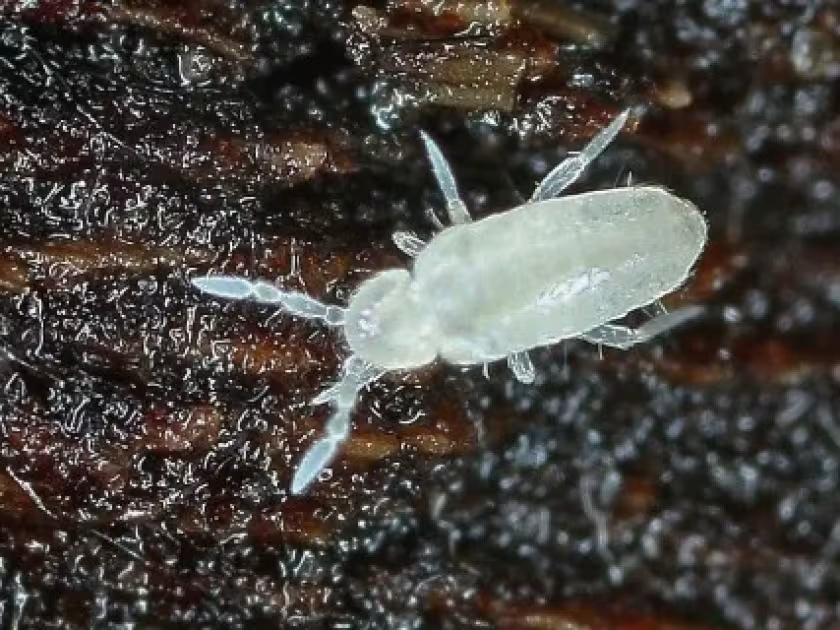
Description
How to identify
Proisotoma belongs to the order Collembola (springtails) and the family Isotomidae. These are microscopic arthropods that typically measure 1 to 2 millimeters in length.
They are characterized by a small, wingless body that is often white or grey. Their most distinct feature is the furcula, a spring-like appendage on the abdomen that allows them to jump away when disturbed.
These pests thrive in humid environments with high concentrations of decaying organic matter, making them common in greenhouses and potted plants.
The biology of Proisotoma involves direct development without metamorphosis, progressing through several molting stages to reach adulthood.
Under favorable conditions, such as high moisture and warm temperatures, their population can increase exponentially within a few weeks.
What it damages
Proisotoma primarily causes damage to young seedlings and plants with sensitive root systems, particularly in nurseries and indoor gardening settings.
The pests feed on delicate root hairs, which impairs the plant's ability to uptake water and essential minerals, leading to stunting.
Severe infestations can result in the destruction of the epidermis of stems near the soil line, creating entry points for opportunistic pathogens like fungi and bacteria.
Plants affected by Proisotoma often show signs of nutrient deficiency, wilting, and reduced vigor despite consistent watering practices.
The economic impact is most significant in greenhouse production, where large populations can cause failure in propagation and seedling establishment.
When it appears
In greenhouses and indoor controlled environments, these pests can be active throughout the entire year due to stable, humid conditions.
In open-field conditions, activity typically begins in early spring as soil temperatures rise above 5–8 degrees Celsius.
Population surges occur most frequently during periods of excessive rainfall or over-irrigation, when soil surface remains constantly damp.
As temperatures drop in autumn, their reproductive rate decreases, but they can successfully overwinter within the soil or under organic debris.
Poor ventilation and drainage in greenhouse settings create the most conducive environments for sustaining large populations during the growing season.
Signs of infestation
The most immediate sign of an infestation is the observation of numerous tiny, jumping insects on the soil surface following a watering event.
Plants may display unexpected wilting or loss of turgor, even when moisture levels appear to be adequate for normal growth.
Upon closer inspection of the root ball, one might see clusters of these small white pests moving actively within the rhizosphere.
- Evidence of feeding damage on fine roots or the base of young stems.
- Development of a moldy odor from the growing medium due to localized tissue decay.
- Noticeable stunting of seedling growth compared to healthy control batches.
Stunted growth combined with overly damp soil is a primary indicator that Proisotoma populations have reached levels requiring intervention.
Control measures
The most effective management technique is proper moisture control; allowing the top layer of soil to dry out between waterings disrupts their life cycle.
Using well-draining potting mixes and ensuring adequate airflow within greenhouses prevents the humid micro-conditions favored by springtails.
Biological control using predatory mites or entomopathogenic nematodes can effectively suppress springtail numbers in organic and greenhouse production.
When chemical intervention is necessary, systemic soil insecticides applied via irrigation can be used to treat the root zone effectively.
Proactive sterilization of planting media, such as heat treatment or steaming, is recommended to prevent the introduction of these pests into clean nursery environments.
Taxonomy
- Latin name
- Proisotoma
- Family
- Isotomidae
- EPPO code
- PRMASP
Discussion
No discussions yet — be the first.