

Pest · Coleoptera (beetles) · affects Winter rapeseed, Winter wheat, Winter barley
Especially harmful
Weevil
Ceutorhynchus sp.
Description
How to identify
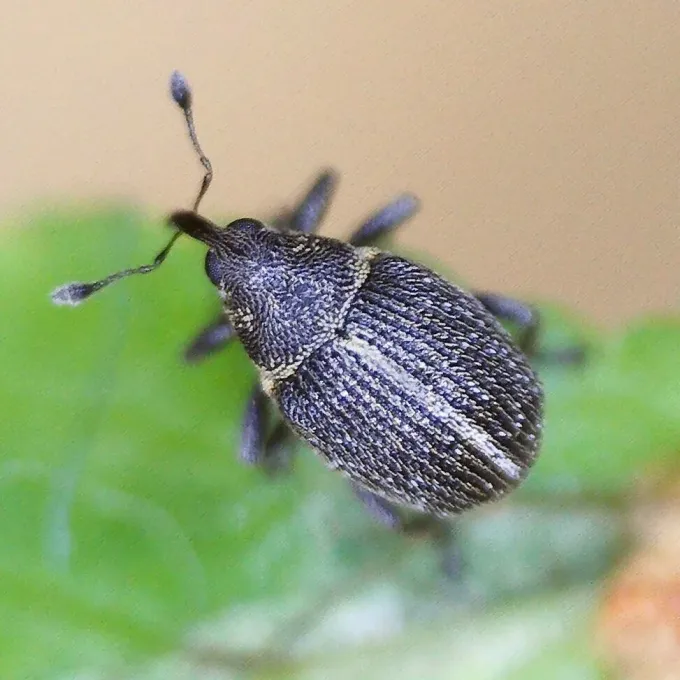
Weevils of the genus Ceutorhynchus are members of the Curculionidae family within the order Coleoptera. They are distinguished by their elongated snout (rostrum), which they use both for feeding and for boring holes into plant tissues to lay their eggs.
Adult weevils are small, typically measuring 2 to 4 millimeters in length. Their coloration ranges from dark gray to black, often with a metallic sheen or patterns of small scales that provide excellent camouflage against soil and plant debris.
The larvae are legless, fleshy, and white to creamy-yellow with a distinct brown head capsule. They live exclusively inside plant tissues, making them difficult to detect during the early stages of an infestation.
The life cycle involves complete metamorphosis, including egg, larva, pupa, and adult stages. Most species overwinter as adults in the soil or under leaf litter, emerging in the spring when temperatures begin to rise.
The development time of the larvae depends heavily on the specific species and the temperature of the environment. Pupation usually occurs in the soil, where the insects transform into adults before the next generation cycle begins.
What it damages
These pests pose a significant threat to a wide range of agricultural crops. Oilseed rape and various brassica species such as cabbage, mustard, and radish are particularly susceptible to their attacks.
In addition to cruciferous plants, the pest can affect sugar beets, soybeans, and sunflowers. Certain species of Ceutorhynchus also attack fruit trees like apple or legumes like alfalfa, making them a diverse agricultural threat.
The larvae cause the most damage by tunneling through stems, leaf stalks, and buds. This feeding behavior disrupts the vascular system of the plant, hindering water and nutrient uptake, which results in stunted growth and organ death.
Adult feeding causes characteristic small holes in the foliage. While this damage is generally less severe than larval feeding, these wounds can serve as entry points for bacterial and fungal pathogens, potentially leading to secondary infections.
High infestation levels can lead to substantial yield losses. If left uncontrolled, the pest can ruin a significant percentage of a crop, especially during the critical stages of budding and early pod development.
When it appears
Adult weevils emerge from their overwintering sites in early spring, typically when soil temperatures reach +8°C to +10°C. They begin by feeding on the newly emerged foliage of host plants to build up energy for mating.
The most dangerous period occurs during the budding and flowering phase of the crop. This is when females lay their eggs inside the developing plant parts, ensuring the larvae have a ready food source upon hatching.
After finishing their feeding cycle, the larvae exit the plants and drop into the soil to pupate. The new generation of adults usually appears late in the summer, though they are often less active than the spring generation before wintering.
Weather conditions in the spring significantly influence the potential for an outbreak. A warm, dry spring often accelerates the lifecycle and increases the overall population density compared to cooler, wetter springs.
Agronomists monitor for the pest using yellow water traps or sweep netting. Early detection is vital for successful management, as treatments are most effective before the larvae move deep into the plant tissues where they become protected.
Signs of infestation
The most common sign of an infestation is the presence of small, circular "pinprick" holes in the leaves, which are the result of adult feeding during the early season.
- Characteristic swelling, galls, or cracks on stems where larvae have been tunneling.
- Wilting, yellowing, and premature dropping of leaves due to the internal disruption of the stem's vascular system.
- Abortion of flower buds in oilseed rape, often leading to missing pods along the stem.
- Presence of small white larvae inside stems or flower buds upon inspection.
- General plant stunting and deformation of stems, making the crop more susceptible to lodging.
Control measures
Good agricultural practices are the first line of defense. Proper crop rotation is essential to break the pest cycle and prevent the build-up of weevil populations in a particular field.
Post-harvest soil tillage can help destroy pupating larvae and prevent overwintering adults from surviving. Controlling weeds in the mustard family around field edges is also crucial, as these act as alternative hosts.
Chemical control involving systemic insecticides is often necessary when infestation levels reach the economic threshold. Timing is critical: applications must occur while adults are active but before they lay eggs within the plant tissue.
During the flowering stage, insecticide use must be carefully managed to avoid harming pollinators like honeybees. Integrated Pest Management (IPM) strategies emphasize the use of selective products and careful monitoring.
Biological control methods include encouraging natural predators and parasitoids in the field environment. Maintaining hedgerows and buffer zones can support these beneficial populations, contributing to long-term sustainable pest management.
In brief
18
Damages crops
Content graph
Damages crops · 18
Content graph
Connections · Weevil
Most often together:
Marketplace
Products · 2

Biology
Taxonomy
- Latin name
- Ceutorhynchus sp.
- Order
- Coleoptera (beetles)
- Family
- Curculionidae
- EPPO code
- CEUTSP
Community
Discussion
No discussions yet — be the first.