
Oak Carpenterworm
Prionoxystus macmurtrei
Description
How to identify
The Oak Carpenterworm (Prionoxystus macmurtrei) belongs to the Cossidae family, known for their wood-boring larvae.
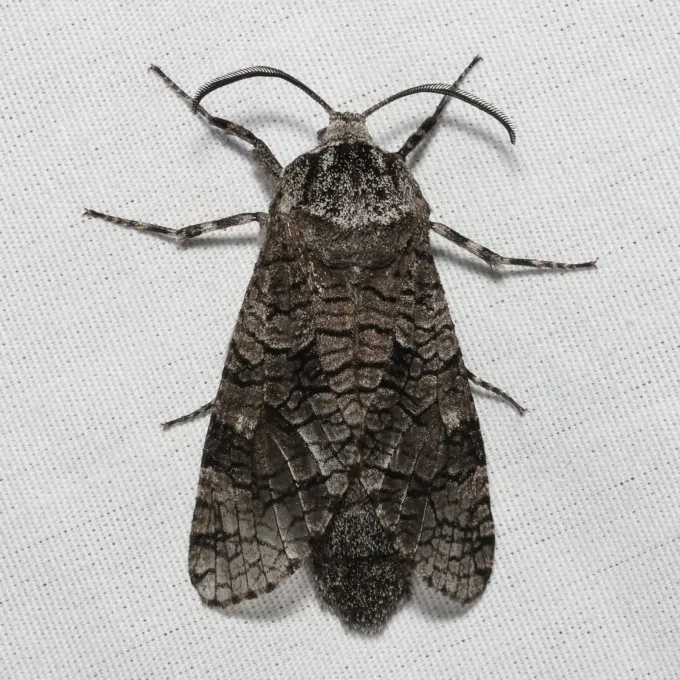
Adult moths are large with mottled gray-brown wings that blend perfectly into tree bark textures.
The larvae are robust, creamy-white or pinkish caterpillars equipped with powerful mouthparts capable of chewing through dense wood.
These insects are primarily nocturnal, making visual detection of adult moths extremely rare for foresters and gardeners.
Morphological identification is often performed by entomologists examining the specific shape of the larvae or the exit holes left in the trees.
What it damages
This pest mainly targets oak species, causing significant structural damage to the stems and main branches.
The larvae bore deep into the heartwood, creating extensive tunnels that compromise the tree's internal vascular system.
While healthy trees can sometimes withstand limited infestations, stressed or aging trees are highly susceptible to severe damage.
The tunnels facilitate the entry of wood-decay fungi and other pathogens, accelerating the decline of the host tree.
In high-density populations, the larvae can cause the death of major branches or even entire trees due to structural failure.
When it appears
The adult moth flight period typically occurs during late spring and summer months, depending on the local climate.
Females lay eggs in crevices of the bark or around existing wounds on the tree surface.
The larval stage is long-lived, spanning several years as the caterpillar progressively expands its tunnel network inside the wood.
Larvae overwinter deep within the wood, which provides protection from extreme temperatures and predators.
Pupation occurs inside the gallery, followed by the adult moth emerging through a circular hole to begin the next reproductive cycle.
Signs of infestation
The most reliable sign of an infestation is the presence of frass (larval excrement and wood shavings) accumulating at the tree base.
Sap staining on the bark is often visible where larvae have created entry or exit points through the cambium layer.
Dieback in the canopy, especially in older oak trees, is a common symptom of extensive internal tunneling by the larvae.
Circular exit holes, roughly 1 cm in diameter, are visible on the trunk after the adult moth has emerged.
During the active feeding phase, one might hear faint chewing sounds if the infestation is heavy and near the surface of the bark.
Control measures
Management strategy focuses on maintaining tree vigor and removing heavily infested materials to prevent population spread.
- Sanitation thinning: Remove and destroy severely infested trees during winter months.
- Pheromone traps: Used to monitor flight activity and time protective measures accordingly.
- Biological control: Introducing entomopathogenic nematodes to tunnel areas can help suppress larvae.
- Systemic insecticides: May be injected into galleries for high-value ornamental trees.
Promoting a healthy ecosystem that supports woodpeckers and other natural predators can keep local populations in check.
Preventative care is essential, as avoiding mechanical damage to tree trunks significantly reduces the chances of egg-laying success.
Taxonomy
- Latin name
- Prionoxystus macmurtrei
- Order
- Lepidoptera (butterflies)
- Family
- Cossidae
- EPPO code
- PRIXMC
Discussion
No discussions yet — be the first.