
Olive orthezia
Praelongorthezia olivicola
Description
How to identify
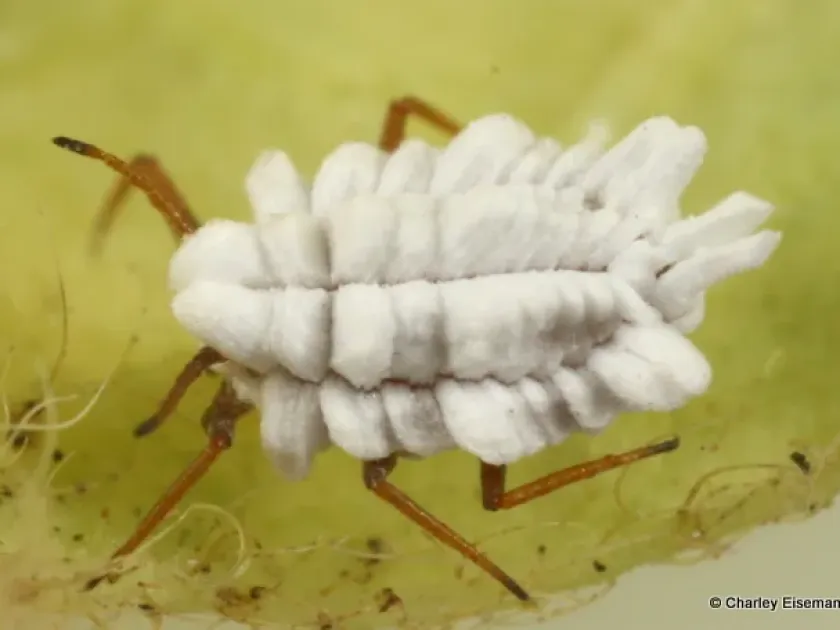
The olive orthezia (Praelongorthezia olivicola) belongs to the Ortheziidae family. These insects are characterized by their white, waxy plates that cover the adult body and often form a specialized ovisac used for protecting eggs.
Adult females are sedentary and typically remain attached to the underside of leaves or on succulent young stems. The first-instar nymphs, known as crawlers, are mobile and actively spread across the tree canopy to find suitable feeding sites.
Due to their white, waxy secretion, they are often mistaken for fungal growth or mold at a quick glance. A closer inspection with a magnifying glass reveals a segmented body with specific waxy structures, distinguishing them from other scale insects.
The life cycle includes egg, nymphal stages, and adult phases. Unlike many other coccids, the olive orthezia can remain active and feed even during cooler conditions, allowing it to maintain pressure on the host plant year-round.
Reproduction is sexual, with females laying batches of eggs inside a waxy sac. Their high fecundity enables them to rapidly colonize entire branches and eventually the whole tree if left unchecked.
What it damages
The primary host for this pest is the olive tree (Olea europaea). The orthezia feeds by sucking sap from the plant tissues, which significantly drains the tree's vigor and reduces its ability to produce high-quality yields.
As they feed, they excrete honeydew, which creates a perfect substrate for sooty mold growth. This black fungal layer covers the foliage, impeding photosynthesis and severely stressing the tree.
Heavy infestations lead to the deformation of young shoots, yellowing of foliage, and premature leaf drop. The weakened trees become more susceptible to environmental stressors and other opportunistic diseases.
In terms of agricultural impact, the pest degrades the overall health of the orchard and reduces fruit size and oil quality. This poses a significant economic threat to olive production if the infestation is not managed properly.
In severe cases, without intervention, the cumulative damage leads to branch dieback and can even be lethal for young trees or saplings in nursery environments.
When it appears
The pest's activity is closely linked to temperature and moisture levels. Peak reproduction and spread typically occur during the spring and early summer months, coinciding with the tree's new growth phases.
While high temperatures in mid-summer may slightly slow down reproductive rates, the species remains present on the host throughout the entire growing season.
A second wave of nymphal emergence is often observed in the autumn as conditions become more favorable. This is a critical time for orchard monitoring, as the population prepares for the winter months.
Overwintering usually occurs as older nymphs or fertilized females tucked away in bark crevices or protected spots near the base of leaves. Their waxy covering provides them with a degree of protection against winter chills.
Initial signs of crawler activity usually correspond with the beginning of sap flow and bud break, marking the start of the primary infestation period for the new season.
Signs of infestation
The most prominent sign is the appearance of white, cotton-like masses on leaves, stems, and flower spikes. These white patches are diagnostic of Ortheziidae presence and should not be confused with mealybugs.
The accumulation of black sooty mold on the upper surface of leaves is a clear indicator that sucking insects like orthezia are actively feeding on the tree.
Yellowing, curling, and abnormal development of leaves in specific areas are common symptoms of localized sap depletion caused by feeding colonies.
Premature leaf abscission is a sign of severe infestation, indicating that the tree can no longer support the energy drain caused by the pest colony.
High ant activity around the tree is another indicator. Ants are often attracted to the honeydew produced by the orthezia and will actively protect the colony from natural predators.
Control measures
Management must be integrated, combining cultural, biological, and chemical methods to effectively keep population levels below the economic injury threshold.
Cultural practices, such as proper pruning, are essential to improve air circulation and light penetration, making the canopy a less favorable habitat for the pest.
Chemical control is most effective when targeting the crawler stage. Mineral or plant-based oils can be applied to coat the insects, suffocating them while minimizing the chemical load on the orchard.
- Regular canopy thinning to ensure proper aeration.
- Application of systemic insecticides during peak infestation periods if necessary.
- Promotion of natural enemies (predatory beetles or parasitic wasps).
- Bark cleaning or mechanical removal of colonies on young trees.
- Sanitation of pruning tools to prevent the spread of nymphs between trees.
Biological control methods represent a sustainable approach, utilizing natural predators to maintain the ecological balance and suppress orthezia populations naturally.
Taxonomy
- Latin name
- Praelongorthezia olivicola
- Order
- Hemiptera (bugs, aphids, leafhoppers)
- Family
- Ortheziidae
- EPPO code
- ORTHOL
Discussion
No discussions yet — be the first.