
Cottony Orthezia
Newsteadia floccosa
Description
How to identify
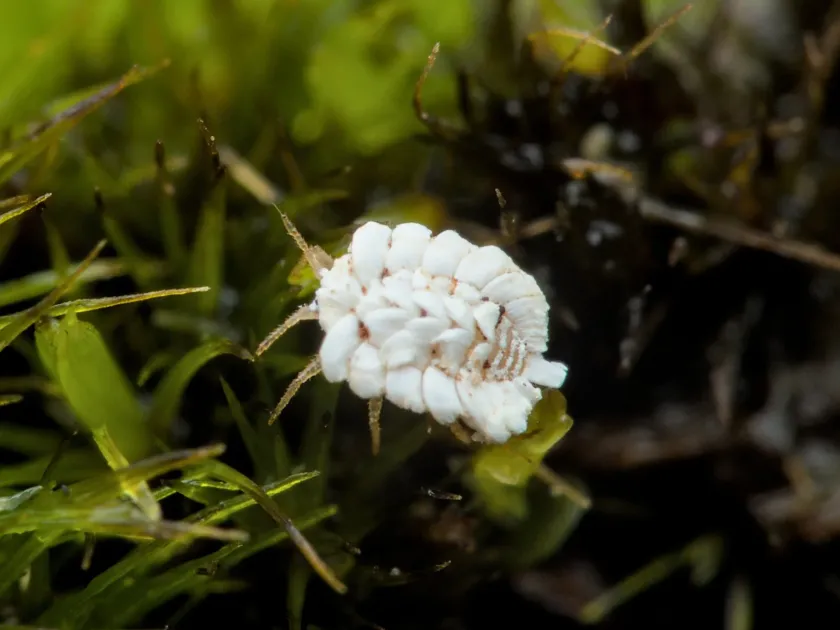
Newsteadia floccosa, commonly known as a type of cottony orthezia, belongs to the family Ortheziidae. These insects are easily identified by the white, waxy, fluff-like secretions that cover the bodies of adult females.
The adult females have an oval-shaped body, typically brownish or yellowish, which is hidden beneath a protective layer of white waxy filaments, giving them a distinct cotton-like appearance.
The nymphs, or crawlers, are very small and highly mobile. This life stage is responsible for the spread of the infestation throughout the host plant and to adjacent plants in the growing area.
Unlike common mealybugs, the cottony orthezia has a specific arrangement of wax plates and a unique anal ring structure that distinguishes it at the microscopic level.
Because of their protective wax covering, these insects can survive in various microclimates, making them resilient to minor environmental fluctuations in greenhouses.
What it damages
The cottony orthezia primarily targets the root system and the root collar of host plants, often hiding in the top layer of the soil or near the base of the stem.
By feeding on the plant's sap, these insects deplete the host's vitality, leading to stunted growth, wilting, and, in severe cases, the death of young shoots.
The infestation often causes a general decline in plant health, characterized by leaf yellowing and reduced vigor, which can be mistaken for nutrient deficiencies or drought.
The honeydew produced by the insects acts as a substrate for sooty mold growth, which covers the plant tissues and inhibits photosynthesis, further weakening the plant.
In containerized plants or ornamental nursery stock, heavy infestations can lead to significant root damage, compromising the plant's ability to absorb water and nutrients.
When it appears
Inside greenhouses and interior plantscapes, the cottony orthezia can complete its life cycle year-round, as the temperature and humidity remain constant and favorable.
Reproductive rates typically peak during the warmer months, when metabolic activities are high, leading to rapid expansion of the population if left unmanaged.
In outdoor environments, their activity is dictated by soil temperature and moisture. They thrive in damp, shaded environments where the soil provides protection from desiccation.
The movement of crawlers is often facilitated by watering practices, as high moisture levels in the substrate allow them to migrate more easily between plants.
During the winter, while growth may slow down, the population remains active in the root zone, serving as a persistent source of re-infestation for the coming season.
Signs of infestation
The most common sign is the presence of white, cottony masses around the base of the plant or on the surface of the soil, which are often mistaken for fungal growth.
Plants showing signs of water stress, such as drooping or yellowing leaves despite adequate soil moisture, often indicate root damage caused by these insects.
Sticky, shiny residue on the soil surface or the lower parts of the stem indicates the presence of honeydew, a hallmark of sap-sucking insects like orthezia.
Closer inspection of the roots or the soil-root interface will reveal the insects clustered together, often firmly attached to the root tissues.
The presence of ants on the plant is a strong indicator of an active infestation, as they are attracted to the honeydew secreted by the cottony orthezia.
Control measures
Effective management begins with strict quarantine protocols for new plants to prevent the introduction of the pest into clean greenhouse environments.
Physical measures, including the removal of heavily infested plant material and the replacement of topsoil, are essential for reducing initial population numbers.
Systemic insecticides are the most effective chemical approach, as they are absorbed by the plant and ingested by the insects during feeding, ensuring targeted control.
Biological control using predatory beetles or parasitic wasps can be implemented in integrated pest management (IPM) programs to suppress population growth.
Routine monitoring of the root zones and maintaining proper irrigation levels can prevent the creation of favorable microclimates that encourage the spread of this pest.
Taxonomy
- Latin name
- Newsteadia floccosa
- Order
- Hemiptera (bugs, aphids, leafhoppers)
- Family
- Ortheziidae
- EPPO code
- NEWSFL
Discussion
No discussions yet — be the first.