
Arctorthezia
Arctorthezia
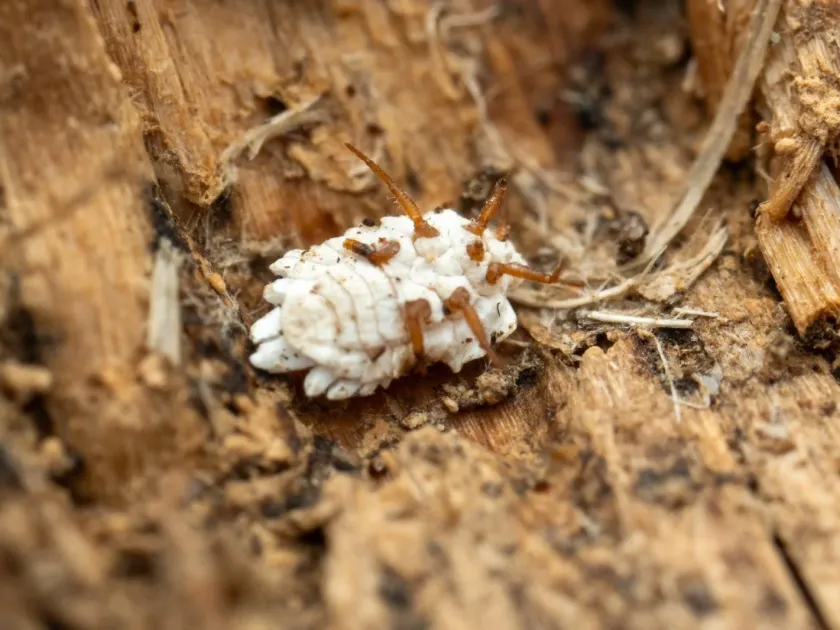
Description
How to identify
Arctorthezia is a genus of insects belonging to the Ortheziidae family, within the suborder Coccoidea. These pests are often visually similar to mealybugs, characterized by white waxy secretions covering their bodies.
Unlike many other scale insects, adult female Arctorthezia maintain their mobility throughout their life cycle, allowing them to move across the plant in search of optimal feeding sites.
A distinctive biological feature of this genus is the presence of a marsupium, a brood pouch where the female carries her eggs, providing them with protection against environmental stressors.
The first-instar nymphs, commonly referred to as crawlers, are highly active and are the primary agents for the dispersal of the population across the plant and to neighboring hosts.
Males are rarely encountered and do not significantly contribute to the feeding damage, as their primary role is reproduction, and their lifespan is notably short.
What it damages
Arctorthezia species are polyphagous, meaning they attack a wide range of decorative, fruit, and forestry plants by piercing the plant tissues and extracting sap.
They preferentially target young shoots, leaves, and flower stalks, which are the most nutrient-rich parts of the plant and essential for healthy development.
Infestations are often more severe on weakened plants or those growing in suboptimal conditions, such as poor ventilation, high humidity, or excessive shade.
In greenhouses and interior landscapes, these pests can become a serious problem, spreading rapidly if proper quarantine and sanitary measures are not enforced.
Chronic feeding by these insects depletes the plant's resources, leading to reduced vitality, stunted growth, and increased susceptibility to secondary diseases.
When it appears
The seasonal activity of Arctorthezia is strongly influenced by temperature, with the peak of population growth occurring during warmer periods of the year.
In greenhouse environments, the pest can undergo multiple generations annually, as the controlled temperature and humidity allow for continuous reproduction and development.
Outdoor populations typically peak during the summer months when sap flow is at its maximum, providing an abundant food source for the growing nymphs.
As temperatures decline in autumn, the developmental rate slows, although females may successfully overwinter in protected areas like bark crevices or leaf axils.
The spring dispersal of crawlers is a critical time for monitoring, as this is when the population expands to new, succulent vegetative growth.
Signs of infestation
The most prominent sign of an Arctorthezia infestation is the accumulation of white, waxy, cotton-like secretions on the underside of leaves and along stems.
Plants affected by this pest often show visible signs of decline, including yellowing leaves, deformation of shoots, and premature foliage drop due to sap loss.
The honeydew excreted by the insects serves as a substrate for sooty mold, a fungus that covers leaves in a black layer, thereby inhibiting photosynthesis.
- Presence of white waxy clumps on stems and leaf undersides;
- Deformation or curling of young leaves;
- Sticky honeydew residue on foliage;
- Development of black sooty mold;
- General stunted growth of the host plant.
Control measures
Effective management of Arctorthezia requires an integrated approach that combines regular scouting, sanitation, and targeted chemical applications.
Pruning and removing heavily infested branches is an important sanitary practice that significantly reduces the localized population of the pest.
For chemical control, systemic insecticides are highly recommended as they move within the plant's vascular system, ensuring the pest is exposed while feeding.
Due to the protective waxy covering on the insects, applications must be thorough, particularly focusing on the undersides of leaves and leaf nodes.
Maintaining optimal plant vigor through proper fertilization, watering, and light exposure helps the plant tolerate and resist potential infestations.
Taxonomy
- Latin name
- Arctorthezia
- Order
- Hemiptera (bugs, aphids, leafhoppers)
- Family
- Ortheziidae
- EPPO code
- ARKTSP
Discussion
No discussions yet — be the first.