
Greenhouse orthezia
Insignorthezia insignis
Description
How to identify
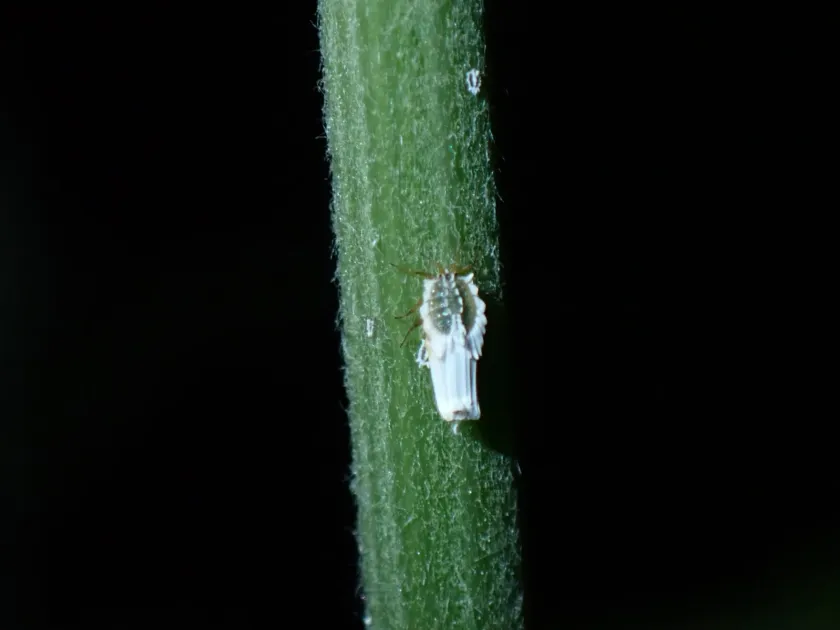
The greenhouse orthezia (Insignorthezia insignis) is a member of the Ortheziidae family within the order Hemiptera. Adult females are easily recognized by their white waxy plates that form symmetrical rows along their bodies.
A distinctive morphological feature of the female is the presence of an elongated, grooved ovisac at the rear of the body. This structure, which holds the eggs, gives the insect a fluffy, cotton-like appearance that is quite unique among scale-like insects.
Unlike many other scale insects, these pests are relatively mobile throughout most of their life cycle. Both nymphs and adults move actively along stems and leaf veins, frequently changing their feeding positions on the host plant.
Reproduction is primarily parthenogenetic, meaning females produce offspring without the need for fertilization. This capability allows a single introduced individual to initiate a significant infestation within a short period of time.
The greenhouse orthezia is thermophilic, flourishing in stable, warm conditions typical of greenhouses and indoor botanical environments. They can sustain year-round reproduction if temperature and moisture levels are kept optimal.
What it damages
This species is a generalist pest that attacks a wide variety of greenhouse plants, foliage ornamentals, and agricultural crops. Common hosts include chrysanthemums, coleus, pelargoniums, citrus species, and coffee plants.
Damage is caused by the insertion of piercing-sucking mouthparts into plant tissues, particularly young stems and the undersides of leaves. This process extracts vital nutrients and causes systemic weakening of the host plant.
Like many hemipterans, these pests excrete large quantities of honeydew. This sticky substance covers the leaves, providing an ideal substrate for the growth of sooty mold, which physically blocks photosynthesis.
Symptoms of heavy infestation include stunted growth, chlorosis, leaf deformation, and premature leaf drop. The aesthetic value of ornamental plants is often severely degraded due to the presence of mold and the lack of vigor.
In severe cases, the depletion of sap combined with the impact of secondary infections can lead to the death of the plant. The pests' habit of hiding in leaf axils often means infestations go unnoticed until significant damage has already occurred.
Signs of infestation
The most reliable sign of an infestation is the appearance of white, wax-like masses on the undersides of leaves or along the nodes of the stems. These clusters are often mistaken for cotton wool or fungal patches.
The presence of a shiny, sticky residue (honeydew) on foliage is a major warning sign. When sooty mold begins to colonize this honeydew, leaves will appear black and dirty, indicating a well-established colony.
Plant distress, characterized by wilting even when soil moisture is adequate, points to high pest density. The insects drain the sap, compromising the plant's vascular system and its ability to maintain turgor pressure.
Ant activity on a plant is a strong indicator of a sucking pest colony. Ants are attracted to the honeydew and will often "farm" the orthezia, protecting them from natural predators.
Close inspection of stems and leaf veins will reveal the slow-moving, white-plated adult females. Their presence is a clear diagnostic feature for this specific pest compared to sedentary armored scales.
Control measures
Successful management begins with rigorous quarantine procedures. Inspect all incoming plant materials thoroughly to ensure that new arrivals do not introduce the pest to the greenhouse environment.
Systemic insecticides are generally the most effective chemical control method, as they are absorbed by the plant and provide residual protection. However, they must be used carefully, following local regulations regarding greenhouse safety.
Physical removal is feasible for minor infestations. Using a cotton swab dipped in rubbing alcohol to manually remove and kill the insects is an effective, albeit labor-intensive, way to manage the population.
Biological control options include introducing natural predators such as coccinellid beetles or parasitic wasps. These methods are preferred in integrated pest management (IPM) programs to maintain ecological balance.
- Isolate infested plants immediately to prevent spread.
- Prune and destroy heavily infested branches or shoots.
- Maintain proper humidity, as extreme dryness can sometimes exacerbate pest population explosions.
- Regularly disinfect tools and surfaces to minimize the risk of mechanical transfer of nymphs.
Taxonomy
- Latin name
- Insignorthezia insignis
- Order
- Hemiptera (bugs, aphids, leafhoppers)
- Family
- Ortheziidae
- EPPO code
- ORTHIN
Discussion
No discussions yet — be the first.