
Newsteadia
Newsteadia
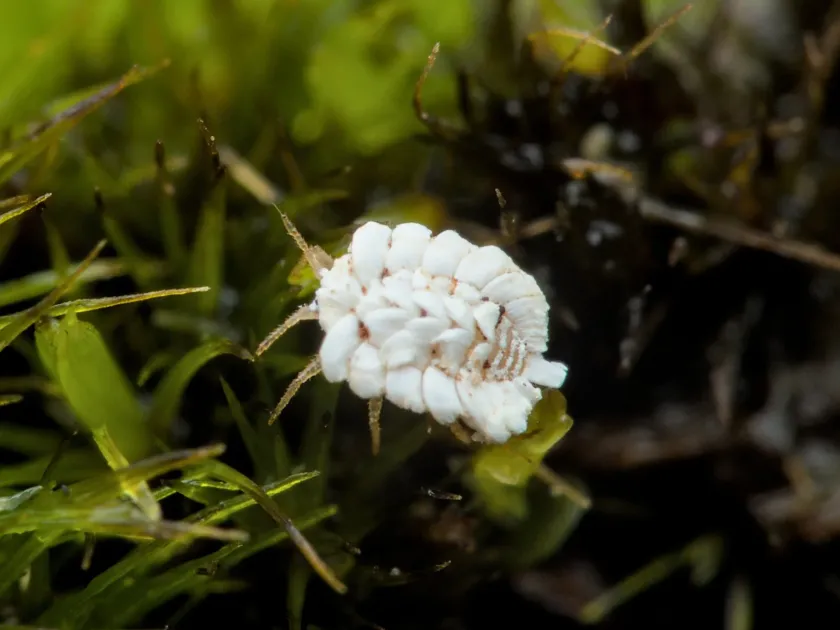
Description
How to identify
Newsteadia belongs to the Pseudococcidae family, commonly known as mealybugs. These small, sap-sucking insects are characterized by a protective waxy covering that makes them highly resilient to various environmental stressors and chemical treatments.
Adult females are typically wingless and immobile, covered in a white, cotton-like substance which serves as a protective layer for their eggs. These waxy nests are often found in tight spaces, such as leaf axils or near the base of the stem.
Male Newsteadia differ significantly from females as they are winged and capable of flight during their brief adult stage, which is dedicated solely to finding a mate to reproduce.
Their life cycle consists of several stages: egg, nymph, and adult. In controlled greenhouse environments, these pests can reproduce continuously, with multiple generations emerging within a single year.
Due to their small size and tendency to hide, identification often requires the use of a magnifying glass. Consistent monitoring of plant crevices is essential for early detection before an infestation becomes severe.
What it damages
Newsteadia causes damage by piercing plant tissues with their needle-like mouthparts to extract vital sap. This constant extraction leads to the loss of nutrients, stunted growth, and visible wilting of affected foliage.
As the insects feed, they secrete a sugary substance known as honeydew. This sticky residue covers the leaves, providing an ideal substrate for the growth of sooty mold, which blocks light and impairs photosynthesis.
Leaves infested with Newsteadia often show signs of chlorosis, curling, and premature senescence. The overall aesthetic value of ornamental plants is rapidly compromised, making them unsuitable for display or sale.
In severe cases, the depletion of the plant's resources can lead to the death of young seedlings or weakened specimens. The stress caused by the infestation also makes plants more susceptible to secondary infections.
The damage is particularly insidious because it often occurs in concealed parts of the plant, meaning the infestation is frequently advanced by the time it is finally discovered by a grower.
When it appears
In greenhouse settings, Newsteadia lacks a specific seasonal cycle. With stable temperatures and humidity levels, the pest remains active throughout the year, posing a constant threat to nursery stock and indoor plants.
Population surges are most common when environmental conditions are optimal for rapid development, specifically in warm, sheltered environments with poor air circulation that prevent natural drying.
Spread within a facility typically occurs through the movement of infested plants, contaminated tools, or by the transport of mobile crawler nymphs, which can be dispersed by air currents.
During the cooler months, activity may appear to decline; however, the population often persists in the deep core of the plant crown, ready to proliferate once conditions become favorable again.
Constant vigilance is required. Growers should not wait for specific seasons to monitor for Newsteadia, as their ability to reproduce rapidly under glass can lead to an outbreak in just a few weeks.
Signs of infestation
The most recognizable sign of a Newsteadia infestation is the presence of white, cotton-like waxy deposits on the underside of leaves and around stem junctions. This "fuzzy" appearance is often the first indicator for the grower.
A secondary sign is the sticky, shiny honeydew coating found on the upper surface of leaves. Over time, this sticky substance turns black as sooty mold begins to colonize the surface.
Stunted development, yellowing of foliage, and leaf drop are general indicators of health issues, but when accompanied by the white waxy spots, they specifically point to a mealybug infestation.
The presence of tiny, flying insects around the foliage suggests that the pest population has matured, and the reproductive cycle is well underway, necessitating immediate intervention.
Observation of ants trailing up and down the stems is also a common indirect sign, as ants are frequently attracted to the honeydew produced by the mealybugs.
Control measures
Effective control requires a multi-faceted approach, starting with strict quarantine procedures for any new plant material entering the facility to prevent the introduction of the pest.
For minor infestations, mechanical removal is effective. Wiping the affected areas with a cotton swab soaked in rubbing alcohol or a mild insecticidal soap can remove both the insects and their protective wax.
Systemic insecticides are generally the most effective long-term strategy for greenhouse operations. These treatments are absorbed by the plant and kill the pests as they feed on the sap, reaching even those hidden in crevices.
Improving cultural practices, such as increasing air circulation and avoiding overhead irrigation, can create an environment less favorable for the survival of the pest.
- Regular monitoring of all plant inventory for early signs of waxy nests.
- Introduction of biological control agents like parasitic wasps or ladybird beetles.
- Sanitation of workspaces, including pots and irrigation equipment.
- Isolation and destruction of highly infested specimens to protect the rest of the collection.
Taxonomy
- Latin name
- Newsteadia
- Order
- Hemiptera (bugs, aphids, leafhoppers)
- Family
- Ortheziidae
- EPPO code
- NEWSSP
Discussion
No discussions yet — be the first.