
Mexican orthezia
Insignorthezia mexicana
Description
How to identify
The Mexican orthezia (Insignorthezia mexicana) is a small insect belonging to the family Ortheziidae. It is a highly specialized sap-sucking pest that often goes unnoticed until a significant population has established.
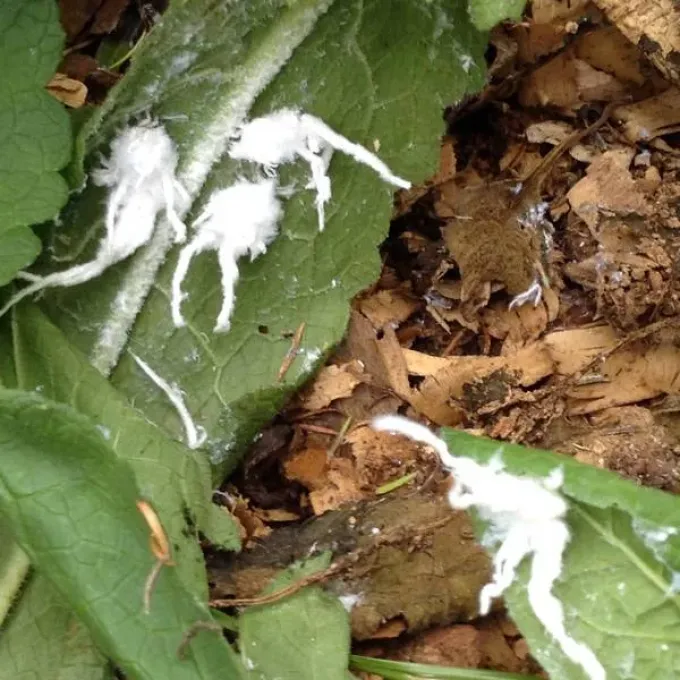
Adult females are recognized by their distinct appearance: their bodies are covered with white waxy plates arranged in rows. A prominent, elongated white ovisac is attached to the rear of the female, which protects her eggs.
Males are rarely seen; they are winged and much smaller than females. The presence of the female and her white, cottony egg sac is the most reliable morphological characteristic for identification in the field.
Due to their small size and ability to blend into plant tissues, they are often mistaken for mealybugs. However, the structured, rigid white plates of the orthezia distinguish it from the soft, powdery appearance of mealybugs.
Inspection should focus on the undersides of leaves, leaf axils, and young terminal shoots, where these insects prefer to congregate for feeding.
What it damages
The Mexican orthezia is a broad polyphage, meaning it infests a wide range of plants, including ornamentals, fruit trees, and various agricultural crops. It thrives by draining vital plant fluids.
By removing plant sap, the insect weakens the host plant, leading to stunted growth, loss of vigor, and deformation of young developing tissues such as flower buds and new leaves.
In addition to direct feeding damage, the insects excrete honeydew, a sugary waste product. This creates an ideal substrate for the growth of sooty mold, which blocks sunlight and hinders photosynthesis.
Heavy infestations can cause leaves to yellow, curl, and prematurely abscise (drop off). In severe cases, the entire plant may exhibit signs of severe drought stress despite adequate watering.
The pest is particularly dangerous in nursery and greenhouse environments where the lack of natural predators allows its population to explode in a short period, potentially killing the plants.
When it appears
The life cycle of the Mexican orthezia is heavily influenced by environmental temperature. In tropical or protected greenhouse conditions, the pest can reproduce and cause damage throughout the year.
In outdoor environments, the activity of the pest is most pronounced during the warmer spring and summer months, when temperatures promote the rapid development of nymphs (crawlers).
High humidity levels and moderate warmth are the ideal conditions for the survival and dispersal of the nymphs, which crawl across the plant to establish new feeding sites.
Multiple generations can occur within a single growing season. This rapid multiplication is a primary reason why constant monitoring of sensitive crops is essential from late spring onwards.
While cold temperatures can slow down the reproduction rate, the orthezia is resilient and can survive in protected micro-habitats, such as deep within plant bark or debris, until better conditions return.
Signs of infestation
The primary symptom of infestation is the appearance of white, cottony, wax-like masses found along leaf veins or stems. These masses are the females and their egg sacks.
Sticky, shiny residue (honeydew) on the upper surface of leaves or on the soil beneath the plant is a clear sign that a sap-sucking pest colony is present above.
The presence of a black, powdery coating (sooty mold) covering the leaves confirms that the honeydew has been present for some time and that the infestation is established.
Visible changes to plant health, such as yellowing, curling of leaves, and a general lack of growth, are advanced signs that the orthezia colony is severely stressing the host.
A closer look at the plant's axils will often reveal a high density of mobile nymphs, which appear as tiny, pale, and fast-moving points, indicating active colonization.
Control measures
Prevention starts with strict quarantine measures. Any new plant material should be carefully inspected before being introduced into an existing collection or greenhouse facility.
Physical control, such as washing plants with a strong stream of water or manually removing and destroying infested parts, is effective for small, localized infestations.
Chemical control should rely on systemic insecticides. Because the waxy plates protect the insect from direct contact sprays, systemic products that move through the plant sap are far more effective.
Applying horticultural oils or neem oil can help dissolve the waxy protection of the insects. This makes them significantly more vulnerable to subsequent treatments with standard insecticidal agents.
Integrated Pest Management (IPM) practices, including the release of specific natural predators or parasitoids, can be highly effective in managed greenhouse settings to keep populations below the economic injury level.
Taxonomy
- Latin name
- Insignorthezia mexicana
- Order
- Hemiptera (bugs, aphids, leafhoppers)
- Family
- Ortheziidae
- EPPO code
- ORTHME
Discussion
No discussions yet — be the first.