
Pontia
Pontia
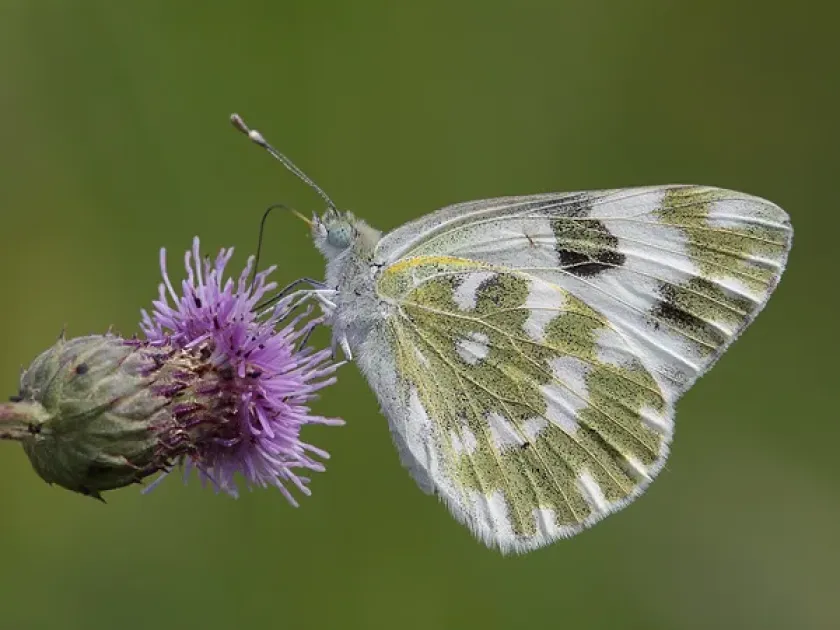
Description
How to identify
The genus Pontia belongs to the Pieridae family of the order Lepidoptera. These butterflies are characterized by their white wing coloration with intricate dark markings on the underside, providing essential camouflage among vegetation.
Adults are active during sunny weather, feeding on nectar. Females typically lay eggs singly on the undersides of host plant leaves, a behavior that makes early detection through routine field inspections difficult for growers.
Larvae, commonly known as caterpillars, have cylindrical bodies sparsely covered in fine hairs. Their coloration is predominantly green, often with longitudinal stripes, which allows them to blend in perfectly with the foliage of their host plants.
Pupae are distinguished by their pointed protrusions and are attached to substrates such as plant stems or remnants via a silken girdle. This stage serves as a hardy overwintering phase for the species.
The life cycle encompasses a complete metamorphosis: egg, larva, pupa, and imago. Depending on the local climate and temperature, multiple generations can occur within a single growing season.
What it damages
The primary damage is caused by the larval stage, which feeds voraciously on the foliage of cruciferous crops, including cabbage, broccoli, radish, and mustard. Their feeding habits can lead to severe crop losses.
Large populations of larvae can skeletonize leaves, consuming all soft tissues and leaving only the major veins. This damage severely impairs the plant's ability to photosynthesize, resulting in stunted growth or plant death.
Infestation during the early developmental stages of plants, particularly when the growing point is targeted, can prevent the plant from developing properly or forming a marketable head or root system.
Beyond physical consumption, the larvae's feeding sites provide entry points for secondary bacterial or fungal infections. These opportunistic pathogens can cause rot, further compromising the quality and yield of the crop.
In high-density infestations, the accumulation of frass (caterpillar excrement) on the plant surface also renders the vegetable unmarketable, causing significant economic losses for commercial growers.
When it appears
The flight period of the first generation of adults typically begins in spring as temperatures rise, coinciding with the transplanting of young seedlings into open fields or the germination of direct-seeded crops.
Successive generations emerge throughout the summer months. Warm and dry weather conditions accelerate the insect's development, often leading to rapid increases in population density across infested areas.
The peak of larval activity usually occurs during mid-to-late summer, where overlapping generations may present a continuous threat to the crop, requiring vigilance and consistent field monitoring.
As autumn temperatures decline, the final generation of larvae pupates in sheltered locations to survive the winter. This cycle ensures the pest's persistence in the agricultural landscape from year to year.
Effective pest management relies on understanding these seasonal patterns, allowing growers to time their control interventions when larvae are most vulnerable to treatment before substantial damage occurs.
Signs of infestation
The first indicator of an infestation is the presence of white butterflies fluttering over the fields. Close inspection of the underside of leaves may reveal individual eggs, which appear as small yellow or orange objects.
Early-stage feeding damage appears as small, irregular holes in the leaf tissue. As the larvae grow, these holes enlarge, leading to ragged leaf margins and a significant reduction in the overall leaf area.
The accumulation of dark, granular frass on the leaves or near the base of the plant is a definitive sign of active larval feeding. This observation usually suggests that the population is well-established.
In some cases, young larvae may feed in clusters on the undersides of leaves. As they mature, they disperse across the plant, often hiding in crevices or deep within the developing foliage where they are difficult to spot.
Severe infestations are marked by plants exhibiting a "skeletonized" appearance, where only the tough, structural veins remain. Such visual symptoms indicate that immediate control actions are required.
Control measures
Integrated Pest Management (IPM) strategies are essential. Cultural practices such as crop rotation help break the pest's cycle and prevent the buildup of local populations in a specific field.
Sanitation is critical; removing cruciferous weeds from field margins reduces alternative food sources for the larvae. Tillage after harvest can help destroy pupae overwintering on plant debris.
Biological controls, such as the application of Bacillus thuringiensis, are highly effective against younger larvae while remaining safe for beneficial insects and pollinators in the environment.
For chemical intervention, growers should monitor for economic thresholds. If exceeded, authorized insecticides with contact or systemic action should be applied, ensuring strict compliance with pre-harvest intervals.
Physical barriers like fine-mesh row covers can effectively exclude butterflies from laying eggs on crops, offering a non-chemical protection method that is especially useful for small-scale garden production.
Taxonomy
- Latin name
- Pontia
- Order
- Lepidoptera (butterflies)
- Family
- Pieridae
- EPPO code
- PNTISP
Discussion
No discussions yet — be the first.