
Saddle-backed bush cricket (genus Polysarcus)
Polysarcus
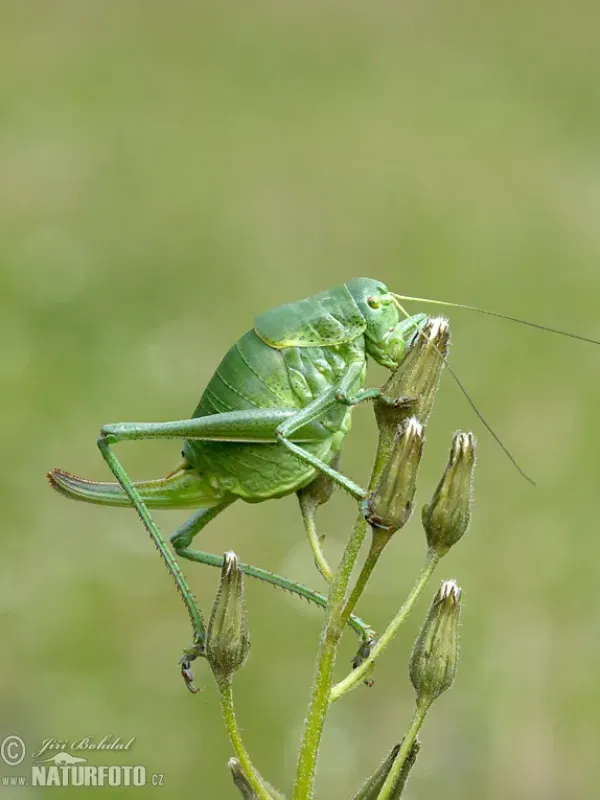
Description
How to identify
The genus Polysarcus belongs to the order Orthoptera and the family Tettigoniidae. These insects are robust bush crickets characterized by their stout bodies, often with green or brownish coloration, which provides excellent camouflage within dense vegetation.
Morphologically, they possess strong, mandibles adapted for chewing tough plant matter. Unlike migratory grasshoppers, they are poor fliers and tend to remain in specific habitats such as meadows, grasslands, and field margins.
The life cycle involves an egg stage that diapauses in the soil throughout the winter. Eggs are deposited by females into the soil using a prominent ovipositor, which protects the offspring from harsh environmental conditions.
Nymphal development is highly dependent on spring weather patterns. Moist and moderately warm conditions are ideal for hatching, while extreme drought can significantly reduce population levels.
They are primarily diurnal, though they are most active during the cooler parts of the day, feeding on various plant species depending on the availability of high-quality foliage in their habitat.
What it damages
These insects pose a significant threat to various crops, including cereals, sunflowers, and diverse vegetables. In cases of high population density, they are capable of stripping field margins entirely, moving inward as food sources are depleted.
Young seedlings are particularly vulnerable, as the pests can consume the growth point of the plant. This mechanical damage often leads to stunted growth or total plant failure, necessitating replanting in severely affected areas.
On larger crops, they feed on leaves, creating large, ragged holes. This damage reduces the overall photosynthetic capacity of the plants, ultimately lowering the total biomass and grain yield potential.
Besides foliage, they often target generative organs such as flowers and developing inflorescences. This behavior significantly impacts the seed production and reproductive success of the targeted crops.
The damage is usually patchy, reflecting the movement of the pest population from adjacent fallow lands or natural grasslands into the cultivated field area.
Signs of infestation
The primary sign of a Polysarcus infestation is the presence of irregular, ragged leaf edges. This distinguishes their feeding from the smoother edges caused by smaller larvae or different types of beetles.
Visual inspection of the base of the stems and the ground level often reveals fecal pellets, which act as a telltale sign of their presence. During the day, they may be found hiding among plant debris at the base of the crop.
In mid-summer, the distinctive, rhythmic chirping of the males is a reliable indicator of their presence in the field, even if they remain hidden from view within the dense crop canopy.
Wilting of young plants or individual branches, especially at field margins, is a strong signal that the pests have been feeding on stems or causing localized root-zone stress.
Increased activity of birds, particularly predators of orthopterans, near the field edges can sometimes signal a high density of these crickets, as the birds actively hunt them during the day.
Control measures
Cultural control via deep autumn plowing is highly effective, as it disrupts the egg-laying sites in the soil, significantly reducing the hatching success of the next generation in the spring.
Managing field margins and neighboring fallow land is critical. Keeping these areas free of dense weeds and tall grasses reduces the primary habitats that allow the population to build up before migrating into crops.
Chemical control should be targeted. Spraying insecticides along the borders of the field can be sufficient to stop the migration of the pest into the interior, minimizing the need for whole-field applications.
Monitoring should be conducted early in the season by counting nymphs per square meter. This threshold-based approach helps ensure that insecticides are only applied when strictly necessary.
- Maintaining crop rotation to break the pest's cycle.
- Encouraging natural predators such as carabid beetles and insectivorous birds.
- Using barrier strips of bare soil or treated borders to prevent movement into the main crop.
Taxonomy
- Latin name
- Polysarcus
- Order
- Orthoptera (locusts)
- Family
- Phaneropteridae
- EPPO code
- POLSSP
Discussion
No discussions yet — be the first.