
Olive scale
Pollinia pollini
Description
How to identify
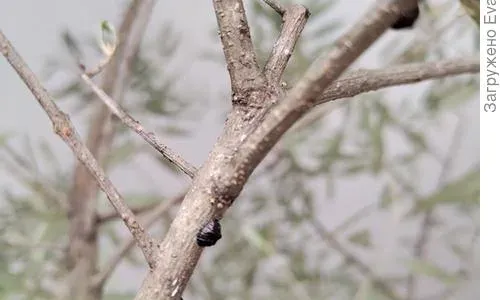
The Olive scale (scientific name: Pollinia pollini) is a species of scale insect belonging to the order Hemiptera and the family Coccidae. Adult females are small, inconspicuous insects that spend most of their lives protected by a hard, waxy shell or "scale" of brownish-gray color.
The scale covering is perfectly camouflaged against the bark of olive tree branches, making the pest extremely difficult to spot during routine inspections. Males are rarely observed as they are short-lived and have a completely different, more mobile appearance.
The first-instar nymphs, commonly called "crawlers," represent the most active phase of the life cycle. These tiny, leg-bearing insects move across the plant surface to locate suitable feeding sites, typically favoring young, succulent shoots or bark cracks.
Once settled, the nymphs insert their piercing-sucking mouthparts into the plant tissue, lose their mobility, and begin to secrete their protective waxy cover. Throughout their development, they remain sedentary, relying on the constant flow of plant sap for sustenance.
Entomologists distinguish this species by microscopic examination of the scale structure and the morphological features of the female body. Proper identification is vital, as different scale species require specific timing for treatment and management strategies.
What it damages
The primary host for the Olive scale is the cultivated olive tree (Olea europaea). The insect specializes in feeding on the thinner, younger wood of the branches, where it can easily access the nutrient-rich phloem sap.
By constantly extracting sap, the pest drains the tree of vital resources, leading to significant metabolic stress. This reduction in vigor is reflected in slower growth rates and reduced overall yield, as the tree redirects energy from fruit production to recovery.
Severe infestations often cause chlorosis, premature leaf drop, and the death of young shoots. When branches are heavily encrusted with scale, they may become brittle and susceptible to secondary infections or environmental damage.
The secretion of honeydew by the scales creates a sticky substrate on the tree surface. This substance encourages the growth of sooty mold, a black fungus that covers the leaves and bark, hindering photosynthesis and reducing the market quality of the olives.
In young orchards, heavy scale colonization can significantly stunt the growth of trees, delaying their maturation and reducing their lifespan. Persistent infestations lead to long-term economic losses for growers if not addressed promptly.
When it appears
The life cycle of the Olive scale is highly dependent on environmental temperatures. In typical Mediterranean climates, the insect overwinter in the second-instar nymph stage, finding shelter in the deep crevices of the olive tree bark.
As spring temperatures rise, the overwintered nymphs resume feeding and mature. The reproductive cycle usually peaks in late spring and early summer, when environmental conditions are optimal for the emergence of the next generation of crawlers.
The crawler stage is the most sensitive period for the pest. Monitoring for this phase is essential for successful control, as the waxy shell of adult females makes them virtually immune to many standard contact insecticides during other times of the year.
Populations tend to reach their maximum density by the end of the summer season. A mild, warm autumn can allow for extended feeding periods, potentially leading to higher pest pressure in the subsequent growing season if no interventions are made.
Climate patterns, including drought or heatwaves, can influence the timing of crawler emergence. Agronomists often use degree-day modeling to predict the peak crawler activity and schedule treatments with high precision.
Signs of infestation
Early warning signs of an infestation include the appearance of tiny, crust-like bumps on the bark of twigs. These bumps can often be manually dislodged, revealing the soft body of the insect beneath, which may discharge a yellowish fluid.
The presence of ants patrolling the branches is a classic indicator of scale insect activity. Ants are attracted to the honeydew produced by the scales and will actively defend these colonies from predators, further complicating natural pest control efforts.
Sooty mold accumulation, manifested as a dark, charcoal-like coating on leaves and branches, is a secondary sign. This fungus is a direct consequence of the honeydew excretion and usually signals a well-established colony of scale insects.
Visual decline in tree health, such as yellowing leaves and sparse canopy coverage, often accompanies heavy scale infestations. The damage to the vascular system of the branches results in the gradual dying back of terminal shoots.
When comparing infested trees to healthy ones, the infested plants often exhibit rougher, darkened bark surfaces due to the presence of thousands of individual scale covers clustered together in the protected woody sections of the tree.
Control measures
Sanitation is a cornerstone of management. Pruning and removing heavily infested branches help reduce the initial pest population. It is critical to destroy these infested materials away from the orchard to prevent re-infestation.
Chemical control programs are most effective when timed to coincide with the crawler emergence. Systemic insecticides are highly recommended as they move through the plant's vascular system, ensuring that nymphs are exposed to the poison while feeding.
Horticultural oils or mineral oils provide an excellent alternative by suffocating the insects. This method is generally safer for beneficial insects and can be applied during the dormant season to target the overwintering population.
Biological control involves conserving natural enemies, such as parasitic wasps and ladybird beetles. Avoiding the use of broad-spectrum insecticides allows these predators to thrive and keep scale populations below economic damage thresholds.
- Use sticky traps for monitoring the timing of crawler emergence.
- Apply dormant oil sprays in late winter to suppress overwintering nymphs.
- Incorporate systemic neonicotinoid or growth-regulator insecticides during active growth phases.
- Ensure balanced fertilization and proper irrigation to bolster the tree's natural defense.
Taxonomy
- Latin name
- Pollinia pollini
- Order
- Hemiptera (bugs, aphids, leafhoppers)
- Family
- Asterolecaniidae
- EPPO code
- POLNPO
Discussion
No discussions yet — be the first.