
Asterolecanium
Asterolecanium
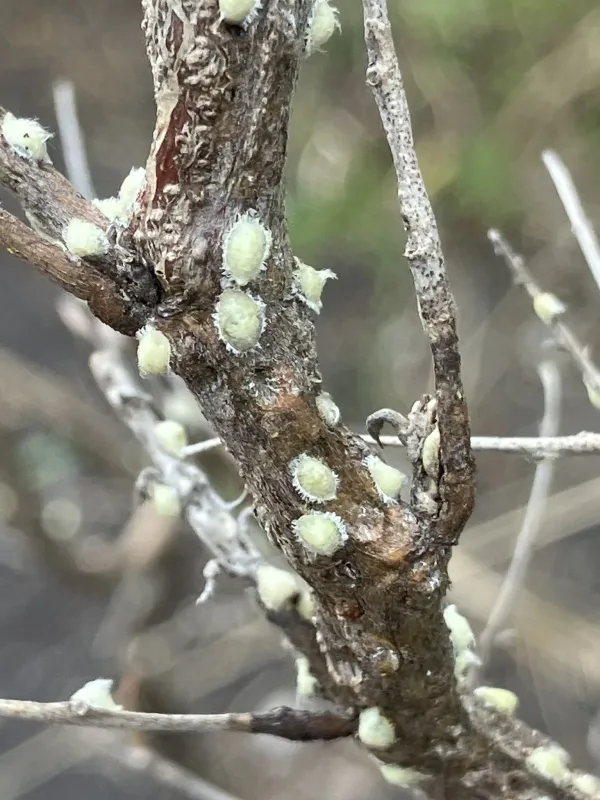
Description
How to identify
Asterolecanium species belong to the family Asterolecaniidae, part of the Coccoidea superfamily. These are small, sap-sucking insects that remain almost stationary in the adult stage.
A distinctive feature is the presence of a dense protective test (scale) formed by wax gland secretions. The shape of the female body often resembles a circular or oval pit on the bark.
Adult individuals are characterized by a significant reduction of legs and antennae. The color of the scale varies from greenish-yellow to brown, making them difficult to spot against the branches.
The larvae, known as "crawlers," are mobile and possess well-developed legs. This is the stage when the pest spreads throughout the plant canopy and to neighboring specimens.
The male, unlike the female, has wings and developed sensory organs, but it lives for a very short time, does not feed, and serves exclusively for reproduction.
What it damages
This pest primarily affects woody plants and shrubs, including oaks, bamboo, linden trees, and many exotic ornamental cultures. It is also frequently found in greenhouses.
Insects prefer to colonize young shoots, branches, and tree trunks. Sometimes, the infestation can even affect leaves along the veins.
While feeding, Asterolecanium insects inject saliva containing enzymes into the plant tissues, causing local necrosis and deformation of plant cells.
Under heavy infestation, the pest can cause significant growth suppression, twisting of young shoots, and premature leaf drop.
Severe infestations lead to the gradual dieback of individual branches, which significantly reduces the ornamental value and overall health of the plantings.
When it appears
The life cycle of Asterolecanium is usually univoltine (one generation per year), although in warm climates or greenhouses, several generations can occur annually.
They most often overwinter as fertilized females or late-stage larvae under the protection of their waxy scales on the bark of the host tree.
In spring, when temperatures become favorable, females begin laying eggs, which develop directly under their protective covering.
The emergence of crawlers usually coincides with the start of active sap flow and bud break, ensuring the larvae have immediate access to food sources.
The period of active dispersal and attachment of new larvae to the bark is a critical window, as the pest is most vulnerable to external control measures at this stage.
Signs of infestation
The first sign of infestation is the appearance of characteristic indented spots or depressions on smooth bark, often surrounded by a ridge of swollen plant tissue.
In areas of colonization, the bark often changes color, becomes bumpy, or cracks, which can facilitate secondary infections.
A noticeable indicator is the presence of dense, shiny, or matte scales on the branches that cannot be removed without damaging the bark.
In cases of severe damage, the plant may show general chlorotic foliage conditions and reduced annual shoot growth.
- Deformation of shoots in areas of pest accumulation.
- Specific "pit-like" formations on the bark.
- Drying and dieback of young branch tips.
- Premature yellowing and leaf fall.
Control measures
The primary control method involves early spring spraying with mineral oil-based products, which suffocate the pests by blocking their access to oxygen.
During the crawler emergence period, treatments with systemic insecticides are effective, as the young insects lack a dense protective shield and are actively feeding.
It is important to perform regular sanitary pruning of heavily infested branches, followed by their disposal or burning to reduce the overall population in the garden.
In greenhouses and indoor environments, it is advisable to use biological control methods, including the release of specific entomophages that feed on scale insects.
Cultural practices include maintaining high growing standards, such as regular watering, fertilization, and weed control, which improve the immunity of woody plants against pest attacks.
Taxonomy
- Latin name
- Asterolecanium
- Order
- Hemiptera (bugs, aphids, leafhoppers)
- Family
- Asterolecaniidae
- EPPO code
- ASTLSP
Discussion
No discussions yet — be the first.