
Japanese pit scale
Asterodiaspis japonica
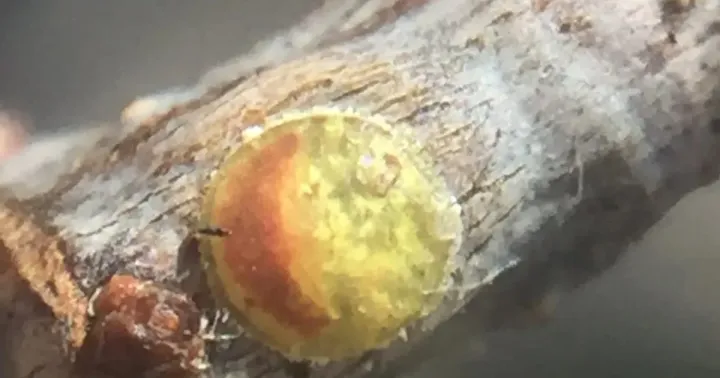
Description
How to identify
The Japanese pit scale (Asterodiaspis japonica) is a member of the Asterolecaniidae family. It is a small, sap-sucking pest that resides on the bark of its host trees.
Adult females are characterized by a waxy, pit-like test (covering) that provides excellent protection against external environmental factors and predators.
The insects are generally immobile once they settle on a feeding site. They are very small, often measuring less than 2 mm, which makes them difficult to detect early.
Reproduction is primarily parthenogenetic, meaning females can produce offspring without mating. This reproductive strategy allows the population to explode quickly in suitable conditions.
The species is highly specialized, having evolved to thrive on specific woody tissues where it creates small depressions or pits in the bark as it feeds.
What it damages
The primary hosts for Asterodiaspis japonica are oak species (Quercus). It prefers feeding on younger, succulent twigs and stems of both nursery stock and established trees.
By sucking the sap from the phloem and cambium, the pest disrupts the tree's vascular system, leading to overall decline and reduced vigor.
Heavy infestations can cause localized tissue death, bark cracking, and the formation of galls, which significantly weakens the structural integrity of the affected branches.
In forest or landscape settings, severe outbreaks can lead to branch dieback, especially in the lower canopy, and may ultimately contribute to the mortality of young trees.
Nursery owners should be particularly concerned, as infested trees are often unmarketable due to the aesthetic damage and the risk of spreading the pest to new locations.
When it appears
The life cycle of the Japanese pit scale is tightly synchronized with the host tree's growing season. Adult females overwinter under their protective tests on the bark.
Activity begins in the spring as temperatures rise. The females grow and develop, preparing for the reproductive phase that occurs as the season progresses.
Crawlers, the mobile juvenile stage, typically emerge in early to mid-summer. This is the period when they actively disperse to find new feeding sites on the tree.
The species completes one generation per year. After the crawler stage, the insects settle down, develop their waxy covering, and remain stationary through the rest of the season.
Autumn marks the transition into dormancy. As temperatures drop, the insects cease feeding and prepare to withstand the winter months in their sheltered position.
Signs of infestation
The most visible sign of an infestation is the presence of small, characteristic pits or circular depressions on the surface of young twigs and branches.
Careful inspection of the bark may reveal small, brownish, wax-coated insects. These are often clustered near nodes or along the lenticels of the stems.
Trees heavily infested may show stunted growth, chlorotic foliage, or premature leaf drop. The overall canopy may appear thin and unhealthy compared to neighboring trees.
In cases of high pest pressure, twigs may become brittle and break easily, and the bark may show signs of peeling or premature senescence.
- Characteristic pit-like depressions on twigs.
- Small, wax-covered insects on the bark.
- Stunted twig growth and internode shortening.
- Early leaf chlorosis and canopy thinning.
Control measures
Management requires targeting the crawler stage. Systemic insecticides applied during the peak emergence of crawlers are generally the most effective control method.
Proper timing is essential. Monitoring the emergence of crawlers using sticky traps or simple visual inspection helps in timing chemical treatments for maximum impact.
Cultural control includes pruning out and destroying heavily infested branches. This practice reduces the localized population and limits further spread within the tree.
Maintaining tree health through adequate irrigation and nutrient management is crucial, as vigorous trees are more capable of resisting and recovering from scale damage.
Encouraging natural predators, such as lady beetles and parasitoid wasps, can provide long-term suppression of scale populations in integrated pest management programs.
Taxonomy
- Latin name
- Asterodiaspis japonica
- Order
- Hemiptera (bugs, aphids, leafhoppers)
- Family
- Asterolecaniidae
- EPPO code
- ASTLJA
Discussion
No discussions yet — be the first.